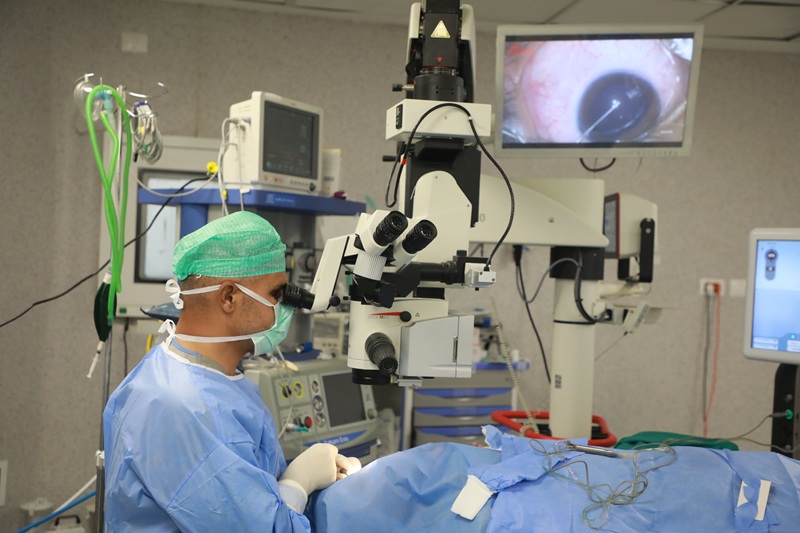

Doha, Qatar – The Qatar Red Crescent Society (QRCS), in collaboration with the Palestine Red Crescent Society (PRCS), has initiated a critical project to bolster healthcare capabilities at Al-Amal Hospital in Khan Yunis, Gaza. This effort focuses on providing essential eye surgery to residents facing a dire shortage of medical resources amidst the ongoing conflict. The project aims to perform 850 procedures and improve the hospital’s infrastructure.
The initiative, launched in response to the escalating humanitarian crisis, will directly address the growing need for specialized medical care in the Gaza Strip. Al-Amal Hospital, a vital medical center in southern Gaza, has been overwhelmed by casualties and a lack of supplies since the start of hostilities in October 2023. The QRCS and PRCS partnership seeks to alleviate some of this pressure.
Addressing the Urgent Need for Eye Care in Gaza
The project encompasses the complete outfitting of two operating rooms within Al-Amal Hospital’s Ear, Nose, and Throat (ENT) department. This includes the provision of necessary tools, surgical instruments, and medical supplies for a range of procedures. Furthermore, comprehensive maintenance will be conducted on the existing operating rooms to ensure optimal functionality.
Dr. Akram Nassar, Director of QRCS’s office in Gaza, emphasized the project’s timeliness. He stated the initiative is a direct response to the critical shortage of medications and medical supplies exacerbated by the conflict and border closures. The goal is to enable medical teams to provide continuous care despite the extremely challenging conditions surrounding the hospital.
The Impact of Conflict on Vision Health
The situation regarding vision health in Gaza is particularly concerning. According to recent data from the Palestinian Ministry of Health, over 1,500 individuals have experienced complete vision loss since the commencement of the conflict in October. This alarming statistic is attributed to both a lack of access to treatment and the widespread malnutrition affecting the population.
Malnutrition can significantly impair vision, and the disruption of healthcare services prevents timely intervention for treatable conditions. The ongoing conflict has also led to a rise in trauma-related eye injuries, further straining the limited resources available. The lack of access to basic healthcare is compounding these issues.
Nahid Blata, Chairman of the Administrative Committee of PRCS in Gaza and the North, highlighted the importance of the continued partnership with QRCS. He expressed hope that this collaboration will ensure the sustained delivery of medical services to the people of Gaza, especially given the immense challenges facing the health sector. The ophthalmology team has already begun performing surgeries as part of the first and second phases of the project.
The total cost of the project, titled “Supporting Al-Amal Hospital of the Palestine,” is QR5.555m (approximately $1.53 million USD). This funding will be crucial in providing immediate relief and establishing a more sustainable foundation for eye care services within the hospital. The project also aims to improve the overall capacity of Al-Amal Hospital to respond to the ongoing health crisis.
Beyond eye surgery, the initiative contributes to broader efforts to stabilize the collapsing healthcare system in Gaza. The region has faced decades of political and economic instability, resulting in chronic shortages of medical personnel, equipment, and essential supplies. The current conflict has dramatically worsened these pre-existing vulnerabilities. The World Health Organization has repeatedly warned of the catastrophic consequences of the ongoing disruption to healthcare access.
Looking ahead, the success of this project hinges on the continued ability of QRCS and PRCS to operate within Gaza and maintain a consistent supply of medical resources. The ongoing security situation and potential restrictions on aid delivery remain significant concerns. Monitoring the number of surgeries completed and the impact on patient outcomes will be crucial in assessing the project’s effectiveness and informing future interventions. Further support for Al-Amal Hospital and other medical facilities in Gaza will likely be needed to address the long-term consequences of the conflict and the ongoing humanitarian crisis.
The need for ophthalmic care in Gaza extends beyond emergency surgeries, encompassing preventative measures and treatment for chronic conditions. Qatar Red Crescent Society continues to assess the evolving needs of the population and explore opportunities to expand its support. The situation demands a sustained and coordinated international response to prevent further deterioration of the health infrastructure and protect the well-being of civilians. The availability of medical supplies is a key factor in the success of these efforts.