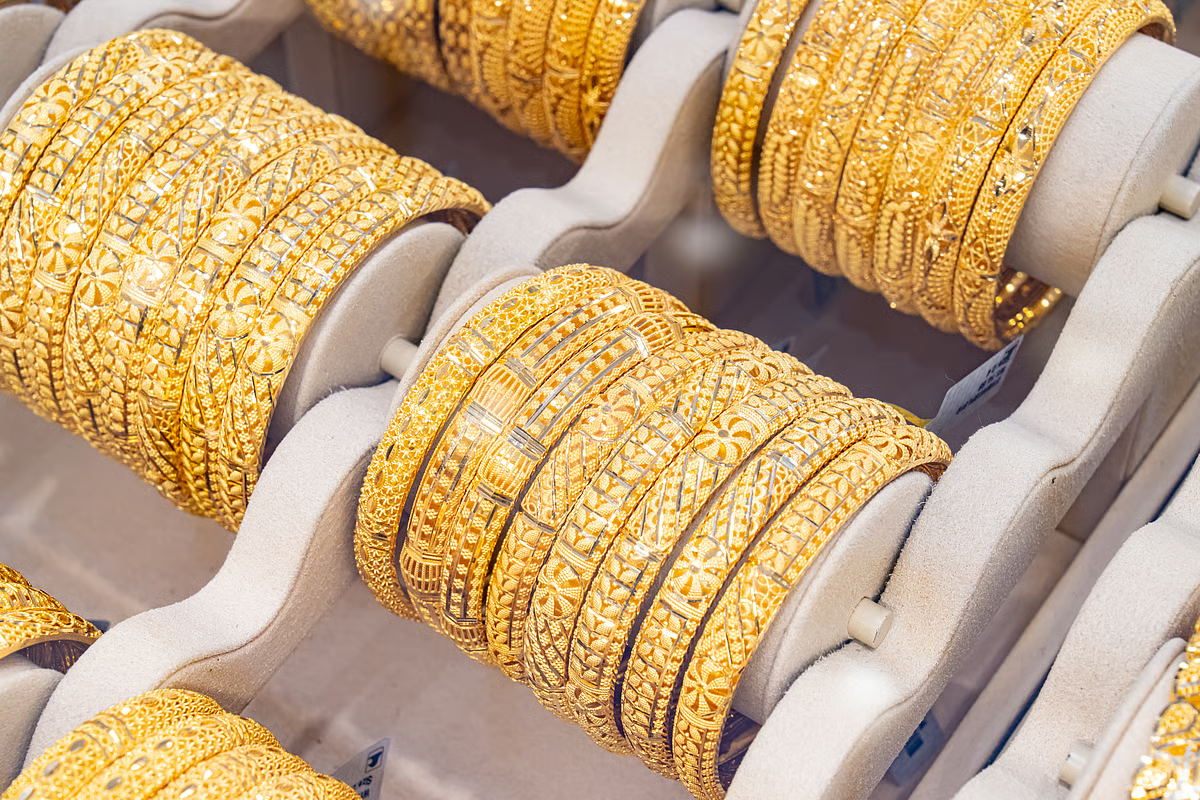

Gold prices continued their relentless climb throughout December, reaching a significant milestone as demand surged amidst expectations of interest rate cuts and escalating geopolitical tensions. The precious metal experienced a more than 9% increase in value over the course of the month, closing out the year with its strongest annual performance since 1979. This sustained rally reflects a complex interplay of economic factors and global uncertainties driving investors towards safe-haven assets.
The upward trend was particularly pronounced in the United Arab Emirates, where 24-karat gold traded at approximately Dh530 per gram by December 22nd, a substantial increase from Dh495 at the start of November. This surge highlights the growing appeal of gold as a store of value in a volatile global landscape. The price of 22-karat gold followed a similar trajectory, exceeding Dh490 during the same period.
Factors Driving the Gold Price Surge
Several key factors contributed to the recent surge in gold prices. A primary driver is the anticipation of easing monetary policy by the U.S. Federal Reserve. Traders are increasingly betting on rate cuts in the coming year, making non-yielding assets like gold more attractive. Lower interest rates reduce the opportunity cost of holding gold, as there is less return available from interest-bearing investments.
Federal Reserve Policy and Safe-Haven Demand
Earlier in the year, trade policies enacted by the U.S. and pressure on central banks further fueled the rally. According to reports from Bloomberg, central bank hoarding and consistent inflows into gold Exchange Traded Funds (ETFs) – with only a slight dip in May – played a significant role in the 70% yearly increase. This demonstrates strong institutional confidence in gold’s long-term value.
Geopolitical Risks
Meanwhile, escalating geopolitical tensions added to the safe-haven demand for gold. The tightening of the U.S. oil blockade against Venezuela, for example, increased global risk aversion. Investors often turn to gold during times of political and economic uncertainty as a way to preserve capital.
The Resilience of Gold Demand
Despite the rising prices, demand for gold has remained remarkably resilient. The rally is testing budgets for some, but the enduring appeal of gold as both an investment and a cultural tradition continues to underpin its value. Central bank activity remains dominant, and even with some retail hesitation, the underlying structural demand is strong.
Debasement Fears and Central Bank Activity
Concerns about potential currency debasement are also contributing to the demand for gold. As governments and central banks implement expansionary monetary policies, some investors fear that the value of fiat currencies will decline, leading them to seek refuge in gold, which is perceived as a hedge against inflation. The increased purchasing by central banks globally further validates this perspective.
Impact on the Jewelry Market
The rising price of gold is also impacting the jewelry market, a significant component of demand, particularly in regions like the Middle East and India. While higher prices may lead to some moderation in jewelry purchases, the cultural significance of gold in these regions is expected to limit any substantial decline. Silver prices, a related precious metal, have also seen increased activity.
Looking ahead, the outlook for gold remains positive, though subject to various uncertainties. The timing and extent of Federal Reserve rate cuts will be a crucial factor influencing prices. Geopolitical developments and global economic conditions will also continue to play a significant role. Analysts will be closely watching central bank activity and ETF inflows in the coming months to gauge the sustainability of the current rally. The next key data point will be the January meeting of the Federal Open Market Committee, where further guidance on monetary policy is expected.