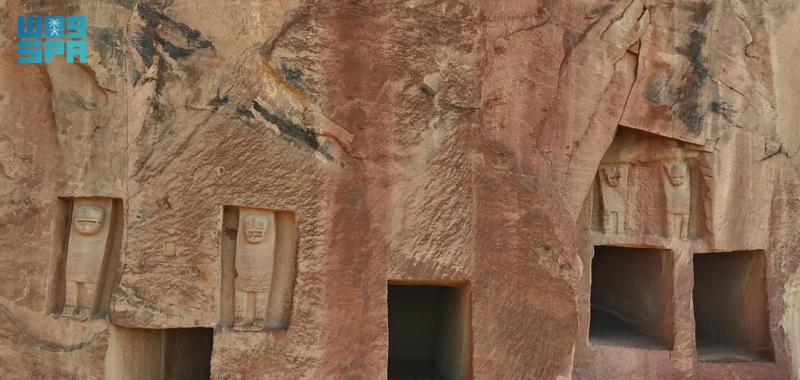

AlUla, Saudi Arabia – The recently highlighted Lion Tombs of AlUla represent a crucial archaeological site offering new insights into the ancient cultures of the Arabian Peninsula. Dating back to the early first millennium BCE, these rock-cut tombs at the base of Mount Dadan showcase a unique artistic style and provide valuable information about burial practices and symbolic beliefs of the time. The site is gaining increased attention as Saudi Arabia continues to invest in archaeological tourism.
Located in the AlUla Governorate of northwestern Saudi Arabia, the Lion Tombs are distinguished by the four carved lions adorning the façade of one particular tomb. These carvings, discovered and studied by archaeologists over several decades, are now the focus of renewed preservation and research efforts. The area surrounding AlUla is rich in historical significance, with evidence of Nabataean, Lihyanite, and Roman presence.
Understanding the Significance of the Lion Tombs
The Lion Tombs are not isolated structures; they are part of a larger complex of rock-cut tombs varying in size and complexity. Some tombs contain multiple burial chambers, while others are simpler, single-niche structures carved deep into the sandstone cliffs. However, the tomb featuring the lions is unique due to its elaborate decoration and the symbolic weight of the animal imagery.
Symbolism of the Lions
Across the ancient Near East, lions were frequently associated with royalty, power, and protection. According to archaeological reports, the inclusion of lion imagery in funerary architecture likely served to safeguard the deceased and denote the status or authority of the individual buried within. The stylized and geometric nature of the carvings suggests a distinct artistic tradition specific to the region.
The lions themselves are depicted in a rather minimalistic style, with facial features and manes represented by simple horizontal lines. Despite this simplicity, the figures possess a striking presence and convey a sense of strength and dignity. This artistic choice may reflect the cultural preferences of the people who created them, or potentially limitations in available carving techniques.
Dating and Cultural Context
The tombs are generally attributed to the early first millennium BCE, a period when the region was inhabited by various nomadic and semi-nomadic groups, including the Lihyanites. The Lihyanites established a kingdom in the area, and the Lion Tombs are believed to be associated with their elite members. The ministry of culture has indicated that further research is underway to refine the dating and establish a more precise cultural attribution.
Additionally, the architectural style of the tombs shows influences from neighboring civilizations, such as those in Mesopotamia and Egypt. This suggests that AlUla was a crossroads of cultural exchange, with ideas and artistic motifs traveling along trade routes. The presence of these influences highlights the region’s importance as a link between different parts of the ancient world.
Recent Developments and Preservation Efforts
In recent years, AlUla has become a major focus of Saudi Arabia’s tourism development plans. The government has invested heavily in archaeological research, site preservation, and infrastructure improvements. The Lion Tombs are a key component of this initiative, attracting both domestic and international visitors.
Preservation efforts are currently focused on stabilizing the sandstone cliffs and protecting the carvings from erosion and weathering. The Saudi Heritage Commission is employing advanced conservation techniques to ensure the long-term survival of the site. Meanwhile, ongoing archaeological investigations are aimed at uncovering more information about the people who built and used the tombs.
The AlUla region, including sites like Hegra (Mada’in Saleh), a UNESCO World Heritage site, is experiencing a surge in archaeological discoveries. This has led to a greater understanding of the region’s rich history and its role in ancient trade networks. The increased attention is also driving economic growth and creating new opportunities for local communities.
In contrast to previous limited access, the Saudi government is actively promoting responsible tourism to the area. This includes developing visitor centers, guided tours, and educational programs to enhance the visitor experience and raise awareness about the importance of cultural heritage. The development of sustainable tourism practices is a priority, aiming to balance economic benefits with the need to protect the fragile archaeological landscape.
The future of the Lion Tombs and the surrounding archaeological sites in AlUla depends on continued research, preservation, and responsible tourism. The Ministry of Tourism has announced plans for a comprehensive site management plan, expected to be finalized by the end of 2024. Further excavations are planned for the coming years, and the report indicates that these may reveal additional tombs and artifacts. What remains uncertain is the full extent of the archaeological treasures hidden within the sandstone cliffs of AlUla and how future discoveries will reshape our understanding of the ancient Arabian Peninsula.