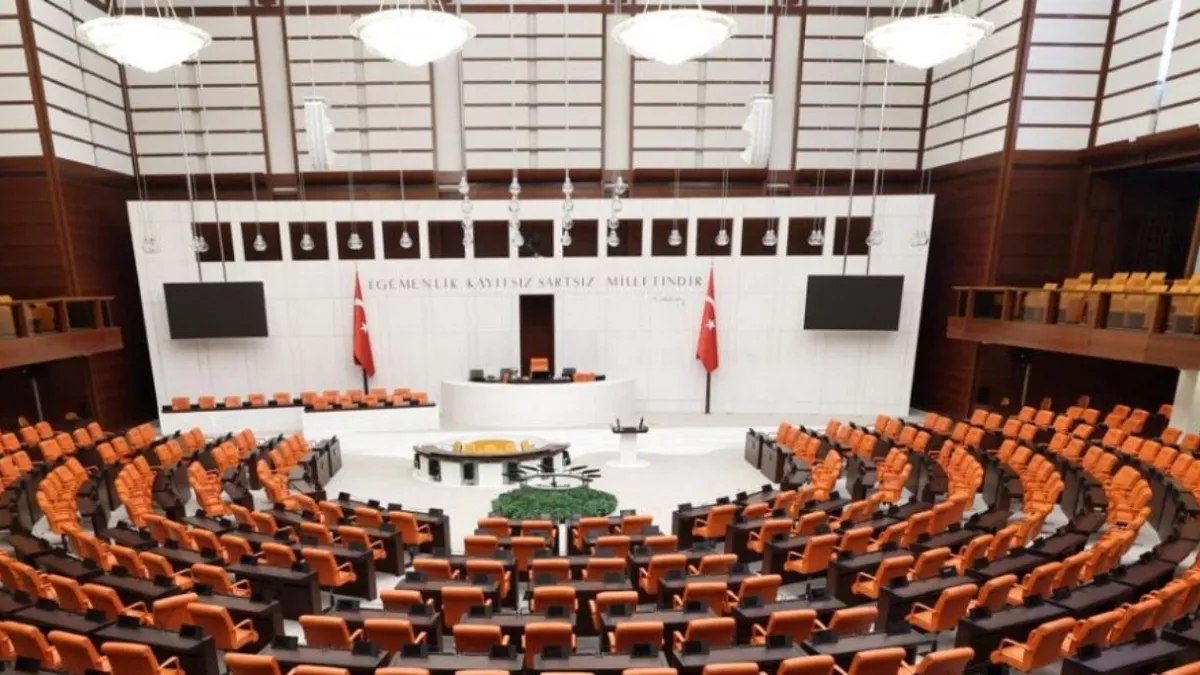

A physical altercation erupted in the Turkish Grand National Assembly on Sunday as lawmakers debated the 2026 budget proposal, highlighting deep political divisions within the country. Despite the chaotic scenes, both the 2026 budget and a bill accounting for 2024 finances were ultimately approved by a majority vote. The incident underscores the challenges facing Turkish politics as the nation grapples with economic pressures and internal strife.
The brawl occurred in Ankara during a session focused on reviewing and voting on the government’s financial plans for the coming year. Lawmakers from the ruling AK Party and the opposition Republican People’s Party (CHP) were involved in the physical confrontation, prompting a temporary suspension of proceedings. The assembly resumed work and completed voting on the bills shortly after.
Approval of Turkey’s 2026 Budget Follows Heated Parliamentary Clash
The dispute initially began with remarks made by AK Party MP Mustafa Varank, criticizing CHP Chairman Özgür Özel regarding images taken at the graveside of a deceased politician, Kamer Genç. Günaydın of the CHP responded, accusing the AK Party of intentionally instigating conflict during the crucial budget discussions.
The debate then escalated into a more profound disagreement regarding the legacy of Mustafa Kemal Atatürk, the founder of the Turkish Republic. Accusations and counter-accusations intensified, leading to MPs confronting each other directly. Security personnel and other lawmakers attempted to intervene, but the situation quickly deteriorated into pushing and shoving, and eventually, physical blows were exchanged.
The fighting reportedly lasted approximately ten minutes, with intermittent scuffles continuing even during a scheduled recess. Lawmakers on both sides were seen actively engaged in the confrontation, a rare and unsettling event in the Turkish Parliament.
Vote Breakdown and Presidential Response
Following the unrest, the assembly proceeded with the vote on the 2026 budget law proposal, which passed with 320 votes in favor and 249 against. The 2024 final account was also approved, receiving 316 votes in favor and 247 against. This marks a significant win for President Recep Tayyip Erdoğan and his government.
President Erdoğan swiftly reacted to the vote, expressing his confidence in the economic trajectory of Turkey. In a post on X (formerly Twitter), he stated, “I wish that the 2026 Central Government Budget Law Proposal, which was adopted in the Grand National Assembly of Turkey this evening, will be auspicious for our country, our nation and our economy.”
The approved budget is expected to focus on addressing Turkey’s ongoing economic challenges, including high inflation and currency devaluation. Reuters reported in January that the country was already taking measures to address these issues, notably a significant increase in the minimum wage.
However, the opposition CHP has consistently voiced concerns over the government’s economic policies, arguing they are unsustainable and exacerbate inequalities. They likely will continue to scrutinize the execution of the budget and advocate for alternative economic strategies. Additionally, analysts are watching how international markets react to the approved financial plans, especially given concerns about Turkey’s monetary policy.
The incident also raises questions about the state of political discourse in Turkey. Observers note that tensions between the ruling party and the opposition have been escalating, and the physical altercation represents a worrying manifestation of this trend. The CHP and other opposition parties have accused the AK Party of authoritarian tendencies and limiting democratic freedoms.
The upcoming months will be crucial for assessing whether the approved budget can effectively address Turkey’s economic vulnerabilities and maintain social stability. The parliamentary debate, and subsequent violence, reflects the significant pressures facing the nation and the challenges of finding common ground among its political factions. Stay informed about developments in Turkish economic policy and political events by following reputable news sources.