






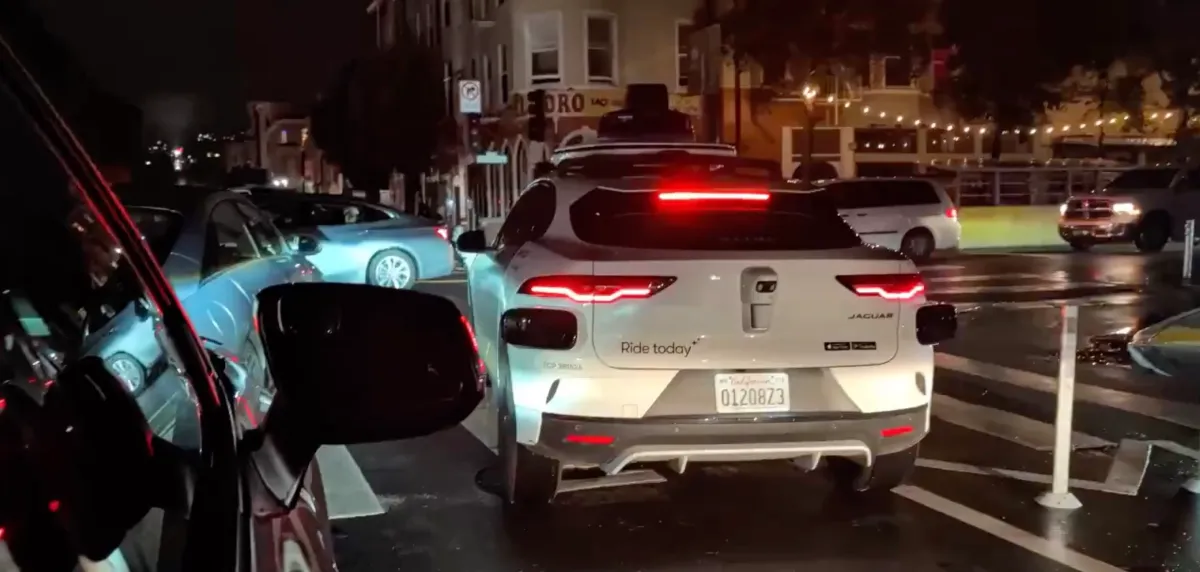

Waymo’s robotaxi service experienced a temporary disruption in San Francisco this weekend after a large-scale power outage impacted the city. The autonomous vehicle company suspended operations Saturday evening following reports of numerous vehicles becoming stalled at intersections. Service has since been restored, but the incident raises questions about the reliability of self-driving systems in unforeseen circumstances and their integration with existing city infrastructure.
Images and videos circulated widely on social media depicted Waymo vehicles halted at traffic signals, causing delays for other drivers. The outage, caused by a fire at a Pacific Gas & Electric (PG&E) substation, affected roughly 120,000 customers, and highlighted the potential vulnerabilities of even advanced technologies when faced with traditional infrastructure failures.
Waymo Robotaxi Service and the San Francisco Blackout
According to a statement released by Waymo, the decision to pause service was a precautionary measure. The company explained that its autonomous systems are programmed to treat unlit intersections as four-way stops, but the sheer volume of impacted intersections slowed operations considerably. While the majority of ongoing trips completed successfully, the extended stationary periods of some vehicles created localized congestion.
Impact on City Traffic and Infrastructure
The power outage wasn’t limited to Waymo’s operations. San Francisco’s traffic lights were largely disabled, impacting overall traffic flow. Additionally, the city’s Muni mass transit system experienced significant disruptions, leading Mayor Daniel Lurie to advise residents to avoid unnecessary travel. The widespread nature of the outage underscored the interdependence of modern city systems.
PG&E reported that most customers had power restored by late Saturday. However, approximately 35,000 customers remained without electricity as of Sunday morning. The utility company’s website continued to show active outages in various parts of San Francisco throughout the weekend.
Growth and Current Operations
Waymo has been steadily expanding its autonomous vehicle operations in San Francisco and other cities. A recently leaked letter from Tiger Global Management indicated Waymo is currently providing around 450,000 robotaxi rides per week. This represents nearly a doubling of ridership compared to figures released by the Alphabet-owned company earlier in the year, signaling increased public acceptance and utilization of the service.
The company has been operating a fully driverless ride-hailing service in San Francisco, albeit with geographical limitations that have been expanding over time. This makes it one of the first companies to offer this level of service to the general public. The incident highlights the nuanced challenges of deployment; while the technology functions reliably under normal conditions, unpredictable events require further refinement.
Waymo’s response to the blackout involved temporarily halting operations and then resuming once conditions stabilized. The company emphasized its commitment to integrating lessons learned from the incident to improve its systems’ resilience. This dedication includes ensuring its technology can better navigate traffic patterns during infrastructure failures.
The incident quickly spurred discussion within the tech and transportation sectors about the broader implications of relying on interconnected systems, and the need for robust contingency plans. Industry analysts suggest these types of events will become increasingly common test cases for companies developing advanced driverless technology.
The reliance on functioning traffic signals, even for vehicles programmed to handle their absence, reveals a critical dependency. The scale of the outage overwhelmed the system’s current capacity to independently assess and navigate multiple intersections simultaneously. This points to a need for enhanced sensor capabilities and improved algorithms for handling widespread disruptions, perhaps even coordination with city traffic management systems in real-time.
The way artificial intelligence will work in the future depends greatly on the ability to navigate and predict events like this. This is where the future focus will be as the technology expands.
Looking ahead, Waymo will likely focus on enhancing its system’s ability to operate safely and efficiently during widespread infrastructure failures. Further testing and refinement of its algorithms – particularly those governing intersection management – are expected. The company will also need to collaborate closely with city officials and utility providers to improve response coordination during similar events. The long-term impact on public trust and regulatory scrutiny remains to be seen, especially given the ongoing debate surrounding the safe and responsible deployment of autonomous vehicles.