

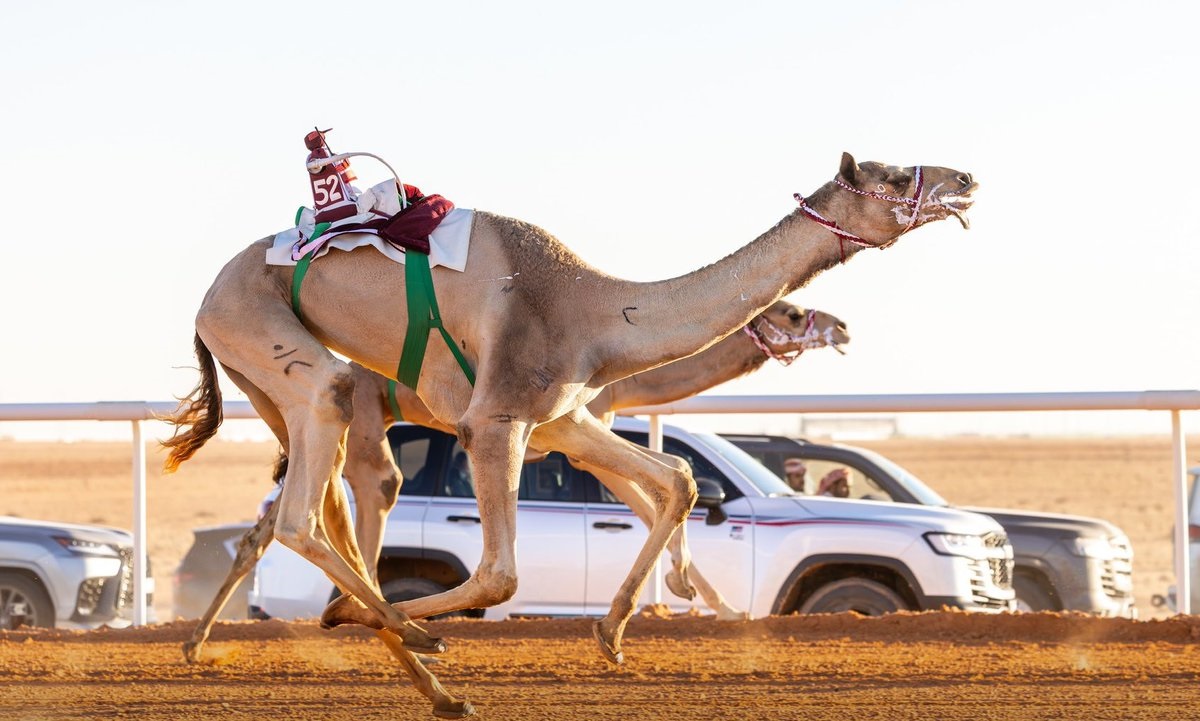

Riyadh, Saudi Arabia – Al Shahaniya camels secured their inaugural victories at the tenth King Abdulaziz camel racing Cup, held at the Al Sayahid Track on Saturday. The event drew a record number of participants from across the Gulf Cooperation Council (GCC) states, showcasing the growing popularity of the traditional sport. The competitions featured both male and female camel races over a 5-kilometer distance, solidifying the event’s position as a premier regional competition.
The King Abdulaziz Camel Racing Cup, a significant event in the Arabian Peninsula, concluded with intense competition and demonstrated the dedication of camel owners and trainers. Qatari camels also achieved notable success, winning the seventh and eighth races, further highlighting the strength of camel racing within the nation. The event underscores the cultural importance of camels in the region and the continued investment in preserving this heritage.
The Rise of Competitive Camel Racing
Camel racing has deep roots in Arabian culture, traditionally serving as a social event and a display of tribal prestige. However, in recent decades, the sport has undergone significant modernization, with increased investment in training, breeding, and technology. This has led to a surge in competitiveness and a growing professionalization of the industry.
According to reports from regional sports outlets, the tenth King Abdulaziz Cup saw a substantial increase in both the number of participating camels and the prize money offered. This growth is attributed to the Saudi government’s commitment to promoting traditional sports and attracting international attention to the region’s cultural heritage. The modernization includes the use of robotic jockeys, replacing human riders for safety and ethical reasons.
Competition Details and Results
Saturday’s races were divided into cup races and open races for both male and female camels. The cup races typically feature higher prize money and attract the most accomplished camels and jockeys. The Al Shahaniya team’s victory in the main race marked a significant milestone for the stable, establishing them as a force to be reckoned with in the camel racing circuit.
The Qatari teams’ success in the seventh and eighth races demonstrated the nation’s continued commitment to the sport. Qatar has invested heavily in camel breeding programs and training facilities, resulting in consistently strong performances in regional competitions. This success also reflects the broader growth of equestrian sports within Qatar, fueled by national initiatives.
Additionally, the event provided a platform for breeders and owners to showcase their animals and network with potential buyers. The sale of high-performing camels can fetch substantial prices, further incentivizing investment in the sport. The increasing commercialization of camel racing is attracting new participants and driving innovation within the industry.
Regional Collaboration and Future Growth
The participation of camels from across the GCC states highlights the collaborative spirit within the region’s camel racing community. The event fosters friendly competition and provides an opportunity for breeders and owners to share knowledge and best practices. This regional cooperation is crucial for the continued development and sustainability of the sport.
Meanwhile, the Saudi government has announced plans to further expand the Al Sayahid Track and increase the frequency of races. These investments are expected to attract even more participants and spectators, solidifying Saudi Arabia’s position as a leading hub for camel racing. The Ministry of Sport has indicated a focus on attracting international sponsors and promoting the sport globally.
In contrast to some traditional sports, camel racing is experiencing significant growth in popularity, particularly among younger generations. This is partly due to the modernization of the sport and the increased accessibility of information through social media and online streaming. The use of technology, such as live tracking and virtual reality experiences, is further enhancing the appeal of camel racing to a wider audience.
Looking ahead, organizers are expected to announce the dates for the next major camel racing event in the coming months. The focus will likely be on attracting even greater participation from across the GCC and exploring opportunities for international collaboration. The long-term success of the sport will depend on continued investment in infrastructure, breeding programs, and marketing initiatives.