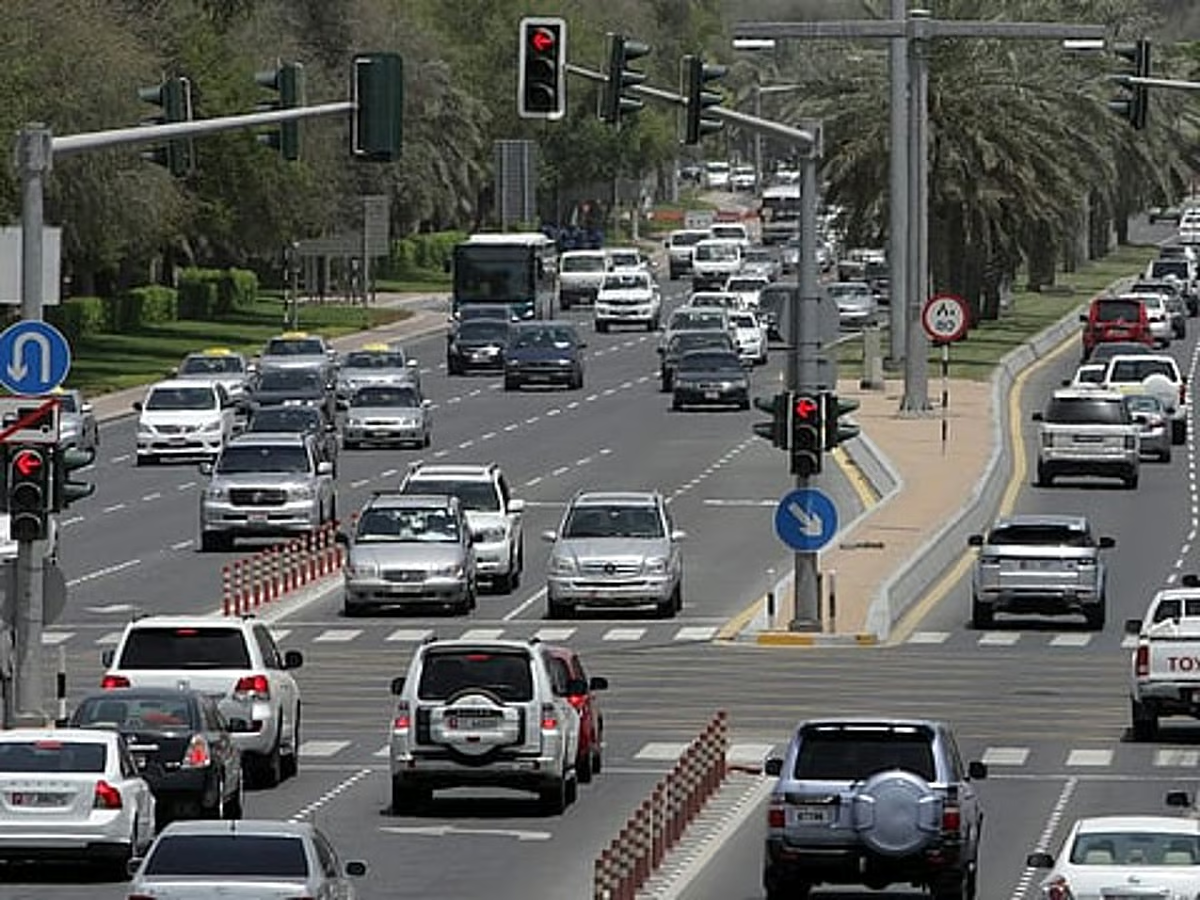

Abu Dhabi is rapidly deploying a cutting-edge, real-time smart traffic management system, marking a significant advancement in the region’s transportation infrastructure. The initiative, spearheaded by the Integrated Transport Centre, leverages artificial intelligence and predictive analytics to move beyond reactive incident response toward proactive traffic safety interventions. This represents a fundamental shift in how the Emirate approaches road safety and congestion, with the goal of creating a more efficient and secure transportation network for all.
The system’s implementation comes as Abu Dhabi seeks to drastically reduce traffic fatalities and improve the overall travel experience for residents and visitors. Officials report that this new approach allows for a more dynamic assessment of traffic conditions and risks than traditional methods. According to Sumaya Al Niyadi, Head of the Traffic Safety Section at the Integrated Transport Centre, the new system focuses on identifying risky behaviors and predicting potential accident locations before incidents occur.
The Rise of AI in Smart Traffic Management
This development isn’t isolated; globally, cities are increasingly turning to AI-powered solutions to address growing traffic challenges. Traditional traffic control relies on static timing and historical data, which often fails to account for real-time fluctuations. The integration of artificial intelligence offers a way to overcome these limitations and create a truly responsive system.
The Abu Dhabi system utilizes several key technologies. Computer vision analyzes traffic footage from surveillance cameras to detect patterns and anomalies. Heat maps visually represent areas of high risk in real-time, enabling targeted deployment of resources. Furthermore, predictive AI algorithms assess the likelihood and potential severity of accidents, offering valuable lead time for preventative measures.
Predictive Capabilities & Data-Driven Insights
The ability to predict accidents is a core component of the new approach. By analyzing vast datasets—including traffic flow, weather conditions, and historical incident data—the system identifies patterns that indicate an increased risk of collisions. This allows authorities to proactively address potential hazards, such as adjusting speed limits or deploying additional enforcement.
An interactive dashboard provides stakeholders with continuous monitoring of key safety indicators and detailed daily reports. This detailed reporting enhances the accuracy of evaluations and supports swift, informed decision-making. Al Niyadi emphasized that this enhances on-ground response and allows for earlier intervention to protect road users.
The system doesn’t operate in isolation. It’s designed to be fully integrated with existing traffic monitoring, signal control, and incident management platforms. Additionally, data from the Department of Health related to accident outcomes is incorporated, creating a holistic view of traffic safety. This integration promises improved traffic flow, reduced congestion, and faster emergency response times – addressing a major contributing factor to accidents.
Vision Zero and Long-Term Goals
The push for a smarter traffic system directly supports Abu Dhabi’s commitment to “Vision Zero,” an ambitious goal of achieving zero traffic fatalities by 2040. This initiative requires a comprehensive strategy that goes beyond simply responding to accidents; it necessitates a proactive approach to identifying and mitigating risks. Smart traffic management, fueled by data analysis and predictive modeling, is central to this strategy.
Beyond immediate safety improvements, the system is expected to contribute to greater efficiency and sustainability within the transport network. Reduced congestion translates to lower emissions and improved air quality, aligning with the Emirate’s broader environmental goals.
Future Enhancements and Connectivity
Looking ahead, the Integrated Transport Centre plans to expand the system’s coverage to include more roads and intersections. This expansion will be accompanied by an increase in the number of smart cameras and the development of more sophisticated accident prediction algorithms, focusing on analyzing human behavior patterns.
Further development involves creating new applications, such as enhanced predictive modeling and a smart traffic safety guide offering evidence-based recommendations. A key future element also includes integrating the system with connected vehicles. Real-time data transmitted by these vehicles will enhance the overall efficiency of the transport ecosystem. By leveraging Vehicle-to-Everything (V2X) communication, the system can acquire more granular information about traffic conditions and optimize its response accordingly.
The implementation of this real-time system represents a strategic investment in Abu Dhabi’s future transportation infrastructure. The Centre anticipates the next phase of development will focus on refining the predictive algorithms and increasing the integration with connected vehicle technologies. Officials have not yet specified a firm deadline for the full rollout of these planned enhancements, but continue evaluation of the system’s performance will be crucial in determining the speed and scope of future expansion.