





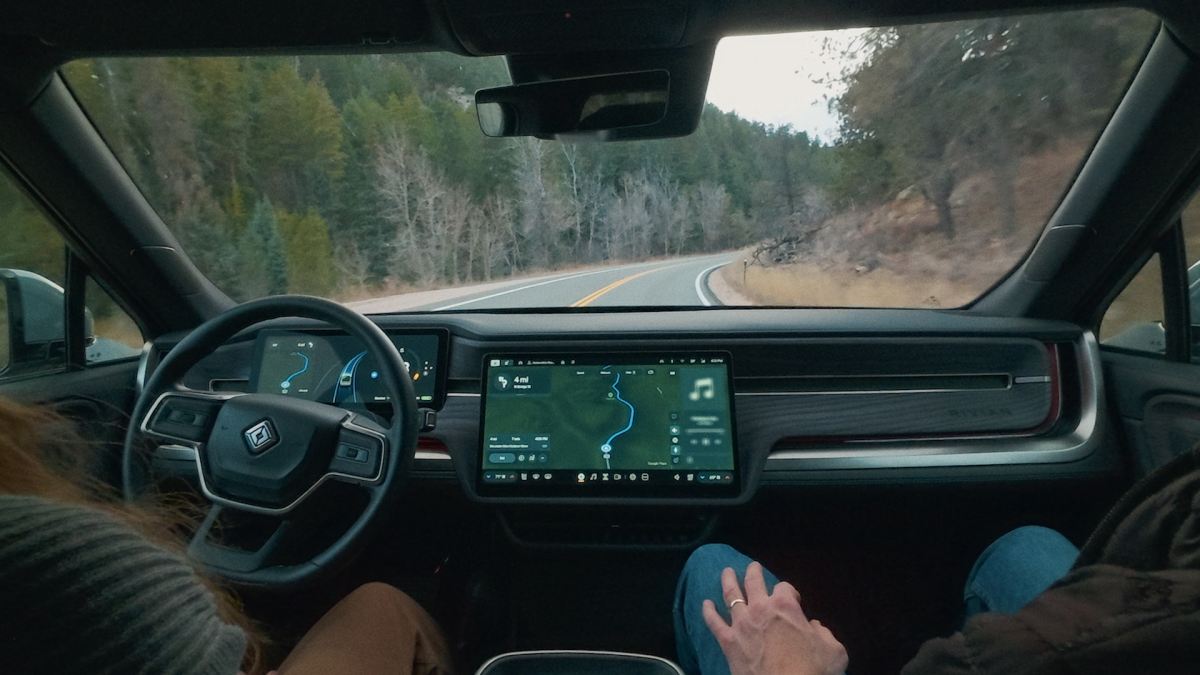

Electric vehicle manufacturer Rivian rolled out a significant software update Thursday, introducing its new “Universal Hands-Free” driving system to second-generation R1 owners. This update expands the company’s driver-assistance capabilities to over 3.5 million miles of mapped roads across the United States and Canada. The introduction of this system marks a key milestone in Rivian’s pursuit of autonomous driving technology, though it comes with considerable safety considerations.
The launch follows last week’s “Autonomy & AI Day” where Rivian unveiled the technology and its long-term vision for self-driving. While offering enhanced convenience, the current iteration of Universal Hands-Free is limited; it maintains vehicle positioning within visible lane markings but does not react to traffic controls or initiate navigation-based maneuvers. This expanded driver-assistance roll-out is currently available to owners of the new R1 vehicles.
Expanding Driver-Assistance: A Step Towards Full Autonomy
Prior to this update, Rivian’s hands-free driving feature was restricted to approximately 135,000 miles of pre-mapped highways. The jump to over 3.5 million miles, encompassing both highway and select surface streets, demonstrates a substantial improvement in the system’s operational domain. This expanded functionality depends on clearly visible lane lines for proper operation.
However, Rivian emphasizes that Universal Hands-Free is not a replacement for attentive driving. Drivers are required to supervise the system at all times. The vehicle will not automatically brake for stop signs, traffic lights, or other static obstacles. Additionally, the system will temporarily disengage if the driver activates the turn signal, requiring manual control for turns.
The Risks of Automation
The introduction of increasingly sophisticated driver-assist systems has sparked debate and concern within the automotive industry. Companies like Tesla and Ford have faced scrutiny following accidents, some fatal, where drivers were found to be inappropriately reliant on similar technologies. These incidents often involve lapses in driver attention, leading to delayed responses in critical situations.
According to reports from the National Highway Traffic Safety Administration (NHTSA), investigations into Tesla’s Autopilot and Ford’s BlueCruise features are ongoing. These probes seek to determine the effectiveness of the systems’ safeguards and whether they adequately prevent driver misuse. Rivian’s rollout takes place against this backdrop of increased regulatory and public awareness.
Rivian’s Long-Term Vision
Rivian’s ultimate goal is to achieve “point-to-point” autonomous driving, allowing vehicles to navigate entire journeys without driver intervention. The company has outlined a timeline for this capability, targeting a release by 2026. This ambitious plan hinges on the development of a new, purpose-built autonomy computer featuring custom silicon.
CEO RJ Scaringe revealed at the Autonomy & AI Day event that the new computer, destined for the R2 SUV, will work in conjunction with a roof-mounted lidar sensor. Lidar technology uses laser light to create a detailed three-dimensional map of the surrounding environment, providing a crucial layer of perception for autonomous systems. The integration of this hardware and software is central to Rivian’s long-term autonomous vehicle strategy.
Alongside the Universal Hands-Free update, Rivian is delivering several other features to its second-generation R1 owners. This includes an updated digital key compatible with Apple iPhones, Apple Watches, Google Pixels, and Samsung phones, offering enhanced convenience and security. Owners of quad-motor variants also gain access to the much-anticipated “Kick Turn” feature, allowing for tighter turns in confined spaces, plus the customizable “RAD Tuner” drive modes.
The rollout of Universal Hands-Free represents a significant advancement in Rivian’s progress towards Level 3 driver-assistance. The company’s rapid iterations and integration of advanced technologies position it competitively in the evolving electric and autonomous vehicle market.
Looking ahead, the successful development and deployment of the new autonomy computer and lidar system will be critical in determining whether Rivian can meet its 2026 deadline for point-to-point autonomous driving. Continued monitoring of real-world data and further refinement of safety protocols will be paramount as the company pushes the boundaries of vehicle automation—and as regulators assess the safety implications of these rapidly evolving technologies.