





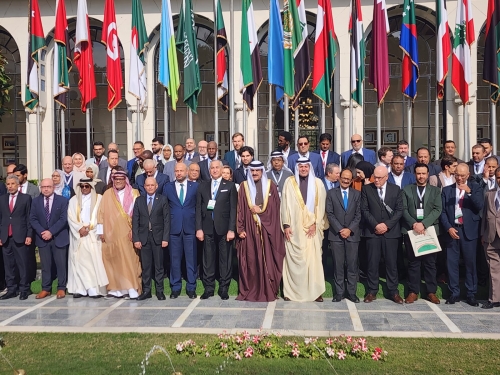

Bahrain is firmly committed to bolstering its civil protection infrastructure and proactively minimizing disaster risks, a dedication demonstrated through national initiatives and collaborative efforts within the Arab region. This commitment was recently highlighted at the First Regional Forum on Early Warning and Disaster Preparedness, hosted by the League of Arab States, where Bahrain’s leading role in disaster risk reduction was prominently featured. The Kingdom, under the guidance of His Majesty King Hamad bin Isa Al Khalifa and the direct support of His Royal Highness Prince Salman bin Hamad Al Khalifa, the Crown Prince and Prime Minister, understands the critical importance of preparedness in a volatile global landscape.
Bahrain’s Leadership in Regional Disaster Management
His Excellency Lieutenant General Adel bin Khalifa Al Fadhel, Deputy Minister of Interior, represented Bahrain at the significant Regional Forum. His participation underscored the nation’s dedication to collaborative security and resilience across the Arab world. The forum served as a platform to discuss advancements in early warning systems, share best practices in disaster preparedness, and forge stronger partnerships between member states and international organizations.
Bahrain’s position as chair of the Arab Coordination Mechanism for Disaster Risk Reduction is a testament to its progress in building a robust and effective system. This role highlights not only the Kingdom’s internal capabilities, including advanced institutional development and impactful programs, but also its ability to foster strong regional and international cooperation. This ongoing leadership allows Bahrain to shape the discussion and direction of disaster management strategies for the entire region.
The Importance of the Arab Coordination Mechanism
The Arab Coordination Mechanism is crucial for several reasons. It allows for a unified response to disasters that may transcend national borders, such as floods or widespread disease outbreaks. Furthermore, it facilitates the sharing of vital resources, expertise, and technology among Arab nations. This collaborative spirit is especially important given the unique environmental and geopolitical challenges facing the region.
Focus on Early Warning and Preparedness
The focus of the Regional Forum—early warning and disaster preparedness—aligns directly with Bahrain’s national strategy. Investing in sophisticated early warning systems, including advanced monitoring technologies and effective communication networks, is paramount. These systems allow for timely alerts, enabling communities to evacuate, secure assets, and minimize potential harm.
However, early warning systems are only effective when coupled with comprehensive emergency preparedness plans. These plans must address a range of potential threats, from natural disasters like earthquakes and tsunamis (though relatively low-risk in Bahrain, preparation is essential) to man-made emergencies like industrial accidents or civil unrest. Regular drills, public awareness campaigns, and the establishment of well-equipped emergency response teams are all vital components.
Integrating Technology for Enhanced Response
Bahrain exemplifies a forward-thinking approach by integrating innovative technologies into its disaster management framework. This includes utilizing Geographic Information Systems (GIS) for risk mapping, employing drones for damage assessment, and leveraging data analytics to identify vulnerabilities and optimize resource allocation. The use of social media and mobile applications for disseminating real-time information during emergencies is also a growing priority.
Building National Resilience to Disaster Risks
Beyond regional collaboration, Bahrain is actively strengthening its national capabilities to confront a variety of disaster scenarios. This involves a multi-faceted approach encompassing infrastructure improvements, legislative updates, and capacity building within government agencies and the civil sector. The country is also concentrating on enhancing its capacity for crisis management and ensuring a coordinated response across all relevant stakeholders.
Investment in resilient infrastructure, capable of withstanding extreme weather events and other shocks, is crucial. This includes reinforcing buildings, improving drainage systems, and protecting critical infrastructure such as power plants and water treatment facilities. Simultaneously, Bahrain is working to refine its legal frameworks to provide clear guidelines for disaster response and ensure accountability.
Crucially, enhancing public awareness is a key component. Educating citizens on how to prepare for, respond to, and recover from disasters is an essential investment in national resilience. This can be achieved through workshops, educational materials, and media campaigns, empowering communities to become active participants in their own safety. The country’s dedication to disaster risk reduction clearly extends to empowering its citizens.
Looking Ahead: Sustaining Momentum
Bahrain’s commitment to strengthening civil protection and reducing disaster risks is a continuous process, requiring sustained investment, ongoing collaboration, and a proactive approach to emerging challenges. The country’s chairmanship of the Arab Coordination Mechanism provides a valuable opportunity to drive regional progress and promote a culture of preparedness throughout the Arab world.
Moving forward, Bahrain will likely focus on further refining its early warning systems, expanding its capacity for emergency response, and strengthening its partnerships with international organizations. By embracing innovation, fostering collaboration, and prioritizing the safety and well-being of its citizens, Bahrain is positioning itself as a leader in disaster risk reduction and a model for resilience in the face of adversity. This coordinated efforts ensures a proactive stance towards future challenges and reinforces Bahrain’s dedication to a safe and secure future for all.