





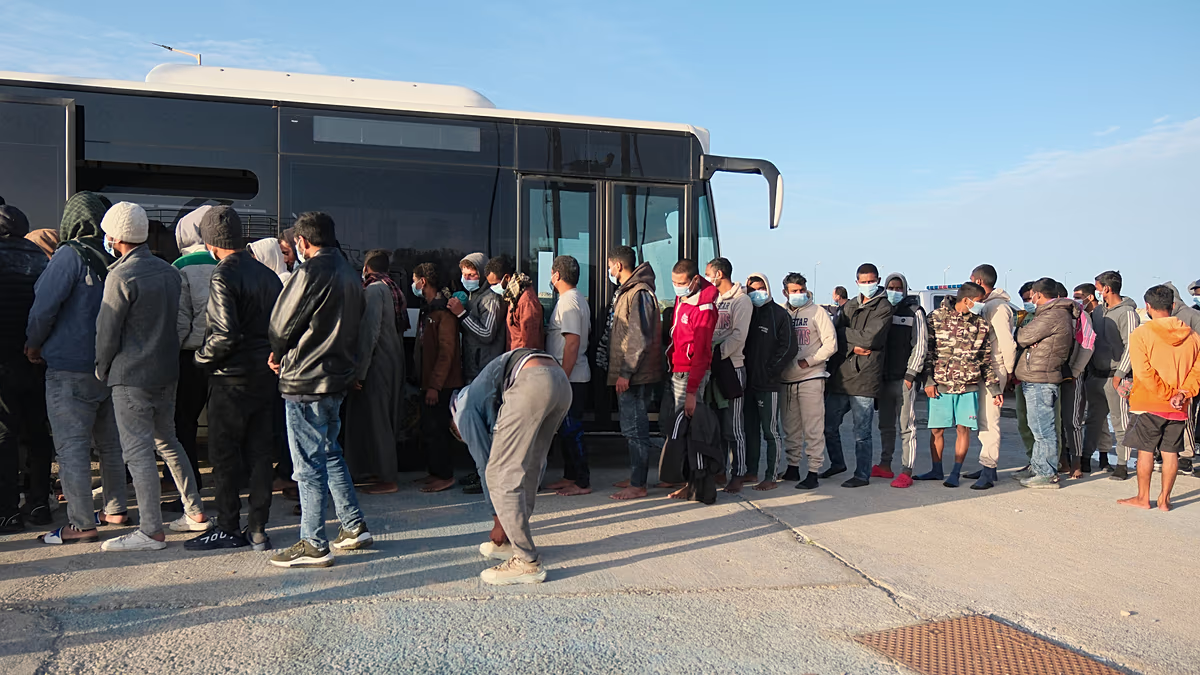

Crete is facing continued pressure from migration, with hundreds of individuals arriving on the Greek island in recent days. Greek authorities report a surge in arrivals, particularly in December, raising concerns about capacity and resources. This influx is occurring amidst shifting patterns of irregular migration across the Mediterranean region.
On Friday, 545 migrants were rescued off the coast of Gavdos, a nearby island, by the Greek Coast Guard and Frontex. Subsequently, two separate rescue operations overnight involved 27 people in a dinghy southeast of Kales Limeni and another 35 people near Psari Forada in Viannos. Estimates suggest over 1,000 migrants have reached Crete’s shores in December alone.
Crete as a New Hotspot for Migration
The increasing number of arrivals on Crete and Gavdos is notable, as these locations are becoming preferred destinations for smugglers, particularly those operating from Libya. Improved weather conditions and the islands’ relative proximity to North Africa are contributing factors, according to authorities. This shift in routes is prompting a reassessment of border control strategies.
Regional Trends in Mediterranean Migration
While Crete experiences a rise, broader trends in Mediterranean migration present a more complex picture. Greece has seen a decrease in overall irregular arrivals this year. By the end of October, 39,495 people had entered the country illegally, an 18% reduction compared to the 48,415 recorded during the same period in 2024, the ministry said.
Meanwhile, Italy is experiencing a stabilization of irregular immigration, with 65,642 arrivals recorded to date in 2025, compared to 65,471 in 2024. December figures indicate a slight decrease, from 3,080 in 2024 to 2,336 this year. This stabilization follows increased efforts to disrupt smuggling networks.
In contrast, Spain is witnessing a significant deceleration in irregular arrivals, with a 44.3% decrease. Official data shows 32,212 illegal arrivals between January 1st and December 15th, down from 57,833 in the same period last year. Increased surveillance and stricter migration policies are believed to be contributing to this decline.
However, the concentration of arrivals on Crete presents unique challenges. The island’s infrastructure and resources are being strained by the influx, requiring coordinated efforts between national and European agencies. Local communities are also grappling with the social and economic implications of the increased migrant population.
The European Union is providing support to Greece in managing the situation, including financial assistance and personnel. Frontex continues to play a crucial role in border surveillance and rescue operations. Further collaboration is expected to address the root causes of migration and combat human trafficking.
Looking ahead, monitoring the evolving migration routes and adapting border control strategies will be essential. The situation on Crete underscores the need for a comprehensive and coordinated approach to managing migration flows in the Mediterranean region. Continued vigilance and international cooperation are vital to addressing this ongoing challenge.