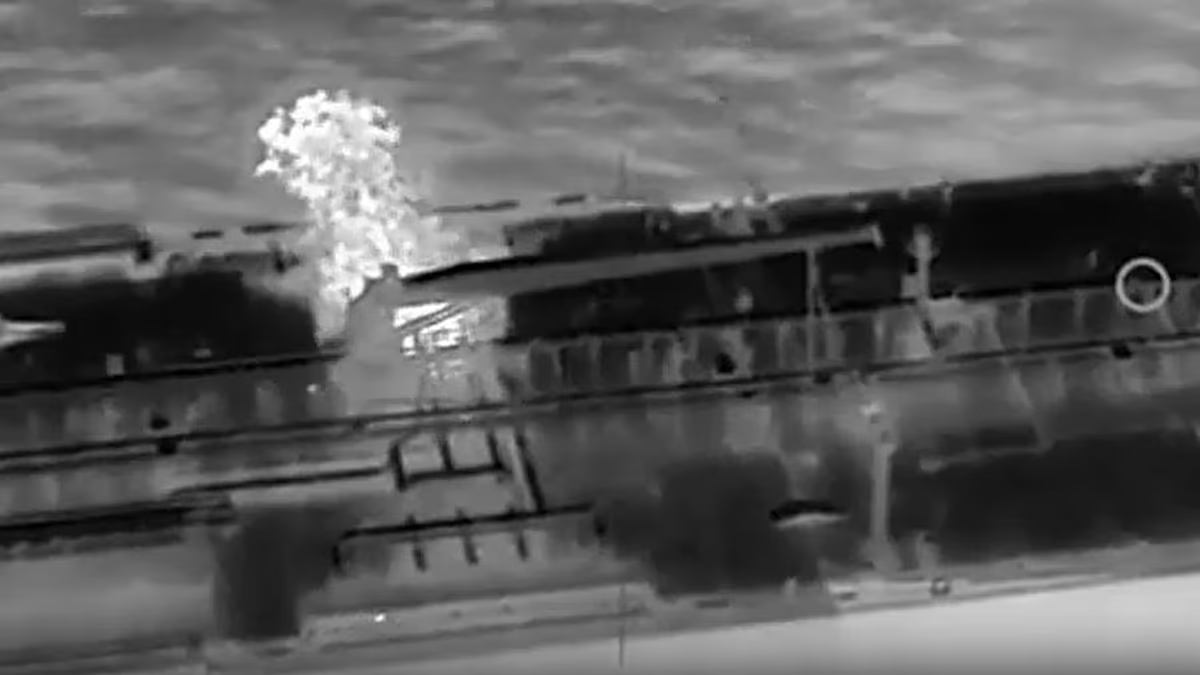

Ukraine has expanded its maritime campaign targeting Russia’s energy sector, striking the Oman-flagged oil tanker Qendil in the Mediterranean Sea on Friday. This marks the first confirmed attack by Ukraine against a vessel linked to the Russian shadow fleet outside the Black Sea, according to a Ukrainian security service official. The incident signals a potential escalation in Ukraine’s efforts to disrupt Russia’s ability to finance its war.
The Qendil sustained critical damage from aerial drone strikes approximately 2,000 kilometers from Ukrainian territory. Ukrainian sources indicate the tanker was empty at the time of the attack, minimizing the risk of environmental damage. The vessel was reportedly sailing off the coast of Crete, heading towards the Russian Baltic port of Ust-Luga.
Expanding the Target: Ukraine’s Shadow Fleet Strategy
Prior to this attack, Ukraine primarily focused its maritime disruptions on targets within the Black Sea. Recent weeks have seen increased activity, including strikes against two other tankers – the Kairos and Virat – in late November utilizing Sea Baby naval drones, as well as oil platforms in the Caspian Sea in December. This widening scope suggests a refined strategy to pressure Russia across multiple fronts.
The Qendil had departed from Sikka, India, and satellite data reveals a U-turn was made overnight on Friday. While not currently sanctioned by the United States Treasury, maritime intelligence firms have flagged the Qendil as a high-risk vessel associated with circumventing international sanctions.
According to the SBU source, Russia exploited this tanker to evade sanctions and generate revenue for the ongoing war. This justification frames the attack as a legitimate act under international law and the laws of war. However, the action is likely to raise further concerns about the safety of commercial shipping in the region.
The Role of Russia’s Shadow Fleet
The Russian shadow fleet is comprised of hundreds of tankers, often older and utilizing complex ownership structures and flags of convenience to obscure their operations. These vessels are crucial for Russia’s continued export of oil, a key revenue source for the Kremlin.
This fleet enables Russia to bypass price caps imposed by the G7 and other western nations, effectively maintaining its oil exports despite economic pressure. Disrupting this network is therefore a significant objective for Ukraine and its allies aiming to restrict Russia’s funding capabilities.
The attack on the Qendil, in conjunction with previous strikes, demonstrates Ukraine’s developing capacity for long-range maritime operations. These capabilities are likely being enhanced with assistance from Western partners, though specifics are rarely made public.
Moscow’s Response and International Reaction
Russian President Vladimir Putin addressed the incident during his annual press conference, stating that attacks on oil tankers would not succeed in disrupting supplies. He also pledged a “response” from Russia, though the nature of that response remains unclear. Reuters has more on Putin’s comments.
Turkey, a key player in regional security, has yet to issue an official statement. Earlier in December, however, Turkish President Recep Tayyip Erdoğan voiced concerns about the impact of the conflict on navigational safety in the Black Sea.
The broader implications of Ukraine targeting the shadow fleet in the Mediterranean are still unfolding. This action demonstrates Kyiv’s willingness to extend its reach and potentially apply economic pressure on Russia further afield. The incident also highlights the increasing risks faced by commercial vessels operating in contested waters.
Looking ahead, continued monitoring of the situation in the Red Sea and Mediterranean Sea will be crucial, as will scrutiny of how Russia adapts its oil transportation strategies in response to Ukraine’s evolving tactics. Further escalation is possible, and the international community will be watching closely for any moves that could destabilize the region or impact global energy markets. Stay tuned for updates as this situation develops.