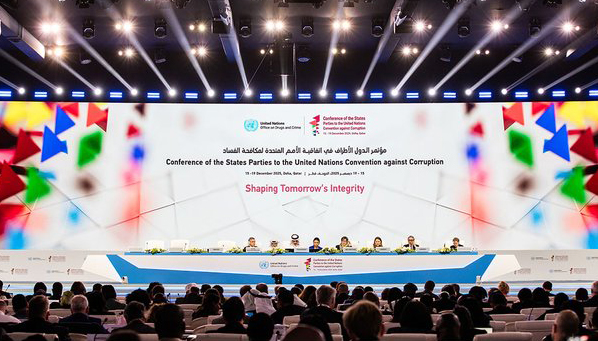

Doha, Qatar – The eleventh Conference of the States Parties to the United Nations Convention against Corruption (UNCAC) concluded in Doha on December 19, 2023, with the adoption of the Doha Declaration 2025. The Declaration focuses on leveraging technology and strengthening international cooperation to combat corruption and transnational financial crimes, recognizing the growing complexity of illicit financial flows worldwide. Over 2,500 participants from 192 countries attended the event, making it the largest international gathering dedicated to these issues.
Hosted by Qatar from December 15th to 19th, the conference drew representatives from governments, international organizations like the United Nations Office on Drugs and Crime (UNODC), the private sector, civil society, and youth groups. The gathering addressed a broad spectrum of challenges posed by corruption, emphasizing the need for proactive measures and collaborative efforts to protect global integrity.
The Doha Declaration: A New Era in Corruption Prevention
The Doha Declaration explicitly acknowledges that building future integrity requires the responsible use of technology. This includes recognizing the power of artificial intelligence (AI) to both exacerbate and prevent corruption. The declaration urges nations to harness digital tools to improve risk assessments, enhance the efficiency of investigations, and boost cooperation across borders.
Focus on Technology and Data Sharing
A key component of the Declaration involves promoting secure and rapid information exchange, particularly through networks like the UNODC’s Global Operational Network of Anti-Corruption Law Enforcement Authorities. Time is often critical in corruption cases, and timely access to information can significantly impact the success of investigations. The declaration also encourages utilizing AI for more accurate and objective corruption risk assessments.
The UNODC’s Acting Executive Director, John Brandolino, stated that the Declaration’s emphasis on AI is a vital recognition of the technology’s impact, and a critical step in leveraging its potential for preventative measures. This sentiment was echoed by youth representatives, who emphasized the importance of meaningfully including young people in both anti-corruption frameworks and in monitoring the implementation of the conference’s commitments.
Key Resolutions and Initiatives
Beyond the Doha Declaration, the Conference adopted eleven resolutions addressing specific aspects of combating corruption. These included efforts to increase transparency in political financing and election campaigns, which is seen as a crucial area for preventing undue influence.
Another resolution focused on promoting integrity among children and youth through educational programs. Recognizing the particularly damaging impact of corruption on vulnerable populations, the Conference also examined the connection between corruption and other transnational crimes, such as migrant smuggling and environmental offenses like illegal logging and wildlife trafficking. The resolutions also address improvements to the UNCAC peer review mechanism.
Further demonstrating commitment to collaborative action, 21 companies formally joined the newly established Private Sector Platform. Co-led by UNODC and the United Nations Global Compact, the platform aims to foster stronger public-private partnerships in the fight against corruption and to encourage adoption of robust anti-bribery programs within businesses. This initiative signifies a growing understanding of the private sector’s critical role in upholding ethical standards and preventing illicit financial activities; public-private partnerships are increasingly considered vital for effective anti-corruption efforts.
Additionally, the Conference affirmed the need for an efficient and effective peer review mechanism, building on the experience gained since its initial implementation. The review process helps countries assess their compliance with the UNCAC and identify areas for improvement.
Looking Ahead
The States Parties decided to hold the twelfth session of the Conference of the States Parties to the UN Convention against corruption in Uzbekistan. The specific dates for the next conference haven’t been announced, but stakeholders will be closely watching for progress in implementing the commitments made in Doha, particularly related to the integration of new technologies and the strengthening of international cooperation. The effectiveness of the Private Sector Platform and the continued engagement of youth will also be key indicators of success in the global fight against illicit financial flows.
The progress toward addressing concerns about the peer review mechanism’s efficiency will be another important development to track as nations strive for greater accountability and transparency in their anti-corruption efforts.