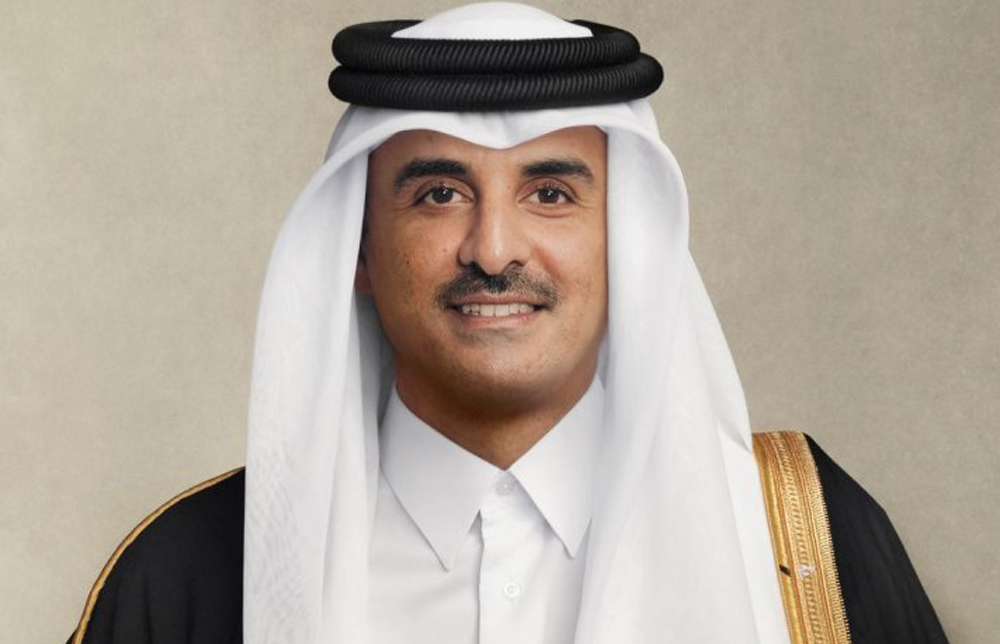

Doha, Qatar – His Highness Sheikh Tamim bin Hamad Al-Thani, the Amir of Qatar, has extended congratulations to His Highness Sheikh Meshal Al-Ahmad Al-Jaber Al-Sabah, the Amir of Kuwait, on the anniversary of his assumption of power. The message, sent on February 24, 2024, reaffirms the strong bilateral relationship between the two Gulf nations and highlights Qatar’s support for Kuwait’s continued stability and progress under Sheikh Meshal’s leadership. This display of solidarity is a common practice amongst Gulf Cooperation Council (GCC) member states, demonstrating regional cohesion.
Sheikh Meshal Al-Ahmad Al-Jaber Al-Sabah ascended to the role of Kuwait’s Amir in December 2023, following the passing of his predecessor, Sheikh Nawaf Al-Ahmad Al-Sabah. This transition of power occurred amidst domestic political tensions and regional geopolitical complexities. The Amir of Qatar’s congratulatory message underscores the importance Qatar places on a stable and prosperous Kuwait within the broader GCC framework.
Strengthening Qatar-Kuwait Relations
The congratulatory message from Sheikh Tamim is a significant gesture in maintaining positive relations with Kuwait. Qatar and Kuwait share historical ties and cooperate on a variety of fronts, including security, economic development, and energy policy. Both nations are key players in OPEC and actively participate in regional diplomatic efforts.
Recent Collaborative Efforts
Recent collaborations between Qatar and Kuwait have focused on enhancing trade and investment opportunities. According to the Kuwait Investment Authority, Qatar remains a substantial investor in Kuwaiti projects. Additionally, both countries have coordinated responses to regional challenges, promoting dialogue and peaceful resolutions to conflicts.
The relationship between Qatar and Kuwait hasn’t been without its challenges. Following the 2017 diplomatic crisis involving Qatar, Kuwait played a mediating role, attempting to foster reconciliation between the involved parties. This period highlighted Kuwait’s established reputation as a neutral and diplomatic force in the region.
However, the current message focuses solely on positive reinforcement and mutual respect. It signals Qatar’s desire for continued collaboration and a strong partnership with Kuwait under its new Amir. The move further consolidates the GCC’s position as a unified bloc despite differing national interests.
Sheikh Meshal’s Domestic Agenda
Since assuming power, Sheikh Meshal has signaled a commitment to addressing Kuwait’s domestic issues, particularly parliamentary gridlock. The report indicates that he has taken steps to reform the political landscape and promote greater government efficiency. These changes could have implications for regional cooperation, potentially streamlining Kuwait’s involvement in GCC initiatives.
Furthermore, Sheikh Meshal has emphasized the importance of economic diversification, seeking to reduce Kuwait’s reliance on oil revenues. This goal aligns with broader economic strategies across the GCC, including Qatar’s “National Vision 2030”, which prioritizes sustainable development and a knowledge-based economy.
The congratulatory cable highlights the significance of Sheikh Meshal’s leadership for Kuwait’s future stability. It emphasizes the historical relationship and commitment to mutual support—key elements in regional diplomacy.
In the broader context of regional security, particularly ongoing tensions in the Middle East, expressions of support like these are crucial. Maintaining strong ties between GCC member states is seen as vital for collective security and economic resilience. These nations often present a united front on issues concerning regional stability and international relations.
Looking ahead, it remains to be seen how Sheikh Meshal will navigate Kuwait’s internal political challenges and external regional pressures. Future bilateral meetings and joint projects between Qatar and Kuwait are expected in the coming months. Analysts will be watching to see how Kuwait’s evolving domestic policies impact its role within the GCC, and how Qatar will continue to support its neighbor’s development and stability in the long term.
The next significant event to monitor will be the outcome of ongoing parliamentary discussions in Kuwait, and any potential adjustments to national policy that may arise.