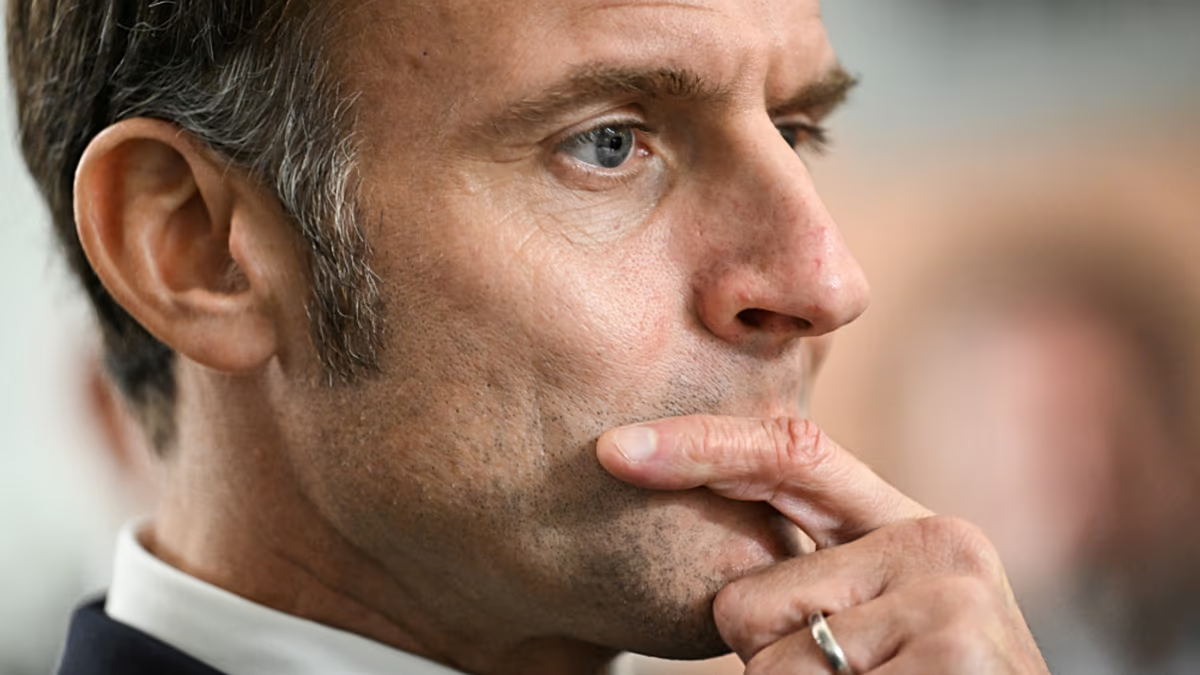

French President Emmanuel Macron was alerted to a fabricated news report claiming his overthrow through a message from an African counterpart and a link to a deepfake video circulating on Facebook. The incident highlights the growing threat of AI-generated misinformation and the challenges platforms face in regulating it. The video, which garnered over 12 million views, depicted a false news bulletin announcing a coup in France.
The alarming discovery occurred on December 14th, with Macron publicly discussing the event on December 16th in an interview with La Provence. He expressed concern over the ease with which such disinformation can spread and the potential damage to democratic processes.
The Rise of AI-Generated Deepfakes and Disinformation
This incident is not isolated. The proliferation of accessible AI tools, like OpenAI’s Sora, is enabling the rapid creation of increasingly realistic fake videos. Sora 2, in particular, allows users to generate ten-second hyper-realistic videos from simple text prompts, lowering the barrier to entry for malicious actors.
According to Macron, he personally intervened after Facebook’s parent company, Meta, initially refused to remove the video, deeming it did not violate their “rules of use.” He stated that while he believed he could exert influence, it ultimately proved difficult to secure the video’s removal.
The video itself featured a fabricated news anchor reporting on the alleged coup, with imagery of helicopters and military personnel. Some iterations of these AI videos even incorporated the logo of Radio France Internationale (RFI), a French public radio service, further enhancing their deceptive appearance.
Tracing the Source of the Disinformation
The original deepfake video was posted by a Facebook account named “Islam,” which surprisingly did not focus on religious content. Investigations revealed the account was operated by a teenager based in Burkina Faso who reportedly monetizes AI training courses.
The teenager removed the video after it gained significant traction and sparked political controversy. However, attempts by Euronews’ fact-checking team, The Cube, to contact him have been unsuccessful.
While the “Sora” watermark was present on some versions, indicating the technology used in their creation, it can be removed during post-production, making attribution more challenging. This makes identifying the origin and scope of these AI-fabricated narratives more complex for both platforms and fact-checkers.
Platform Responsibilities and Ongoing Concerns
Macron’s frustration with Meta’s initial response underscores the ongoing debate surrounding platform responsibility for content moderation. The speed at which deepfakes can spread presents a significant challenge, as traditional fact-checking methods often struggle to keep pace. The Brookings Institution has published extensive research on the challenges of countering AI-generated misinformation.
The French President warned that those creating and disseminating such content are “mocking” democratic institutions and demonstrate a disregard for public discourse. He emphasized the potential danger posed by this type of manipulation.
This incident is likely to intensify pressure on social media companies to develop more effective tools for detecting and removing deepfakes, and to clarify their policies regarding AI-generated content. The debate over balancing free speech with the need to protect against disinformation will continue to be a central issue.
As AI technology continues to evolve, the sophistication of deepfakes will likely increase, making them even harder to detect. It is crucial for individuals to remain critical of online content and for platforms to prioritize the development of robust safeguards against the spread of misinformation. Staying informed about the latest developments in AI and media literacy will be key to navigating this evolving landscape.