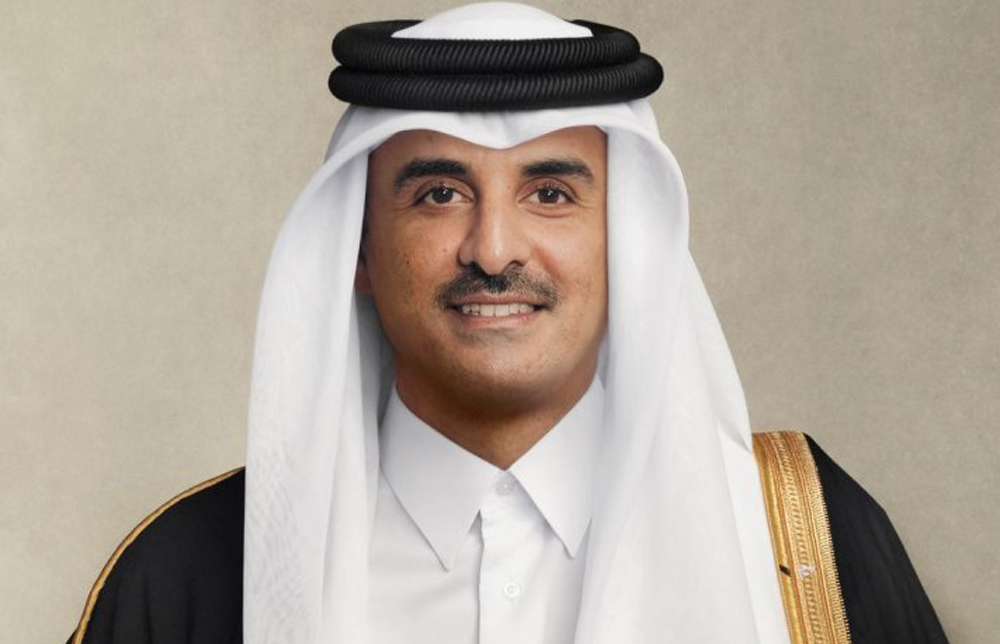

Doha, Qatar – Qatar’s leadership has extended congratulations to Niger on its Republic Day, signaling continued diplomatic engagement with the West African nation. Amir H H Sheikh Tamim bin Hamad Al-Thani and Deputy Amir H H Sheikh Abdullah bin Hamad Al-Thani sent messages to Niger’s President, Lieutenant General Abdourahmane Tchiani, while Prime Minister and Minister of Foreign Affairs H E Sheikh Mohammed bin Abdulrahman bin Jassim Al-Thani congratulated Niger’s Prime Minister, Ali Mahamane Lamine Zeine. This exchange highlights Qatar’s consistent practice of acknowledging national days of other countries, fostering international relations, and demonstrating respect for national sovereignty, even amidst regional complexities and ongoing conflicts.
The congratulatory cables were dispatched on the occasion of Niger’s Republic Day, observed annually on December 18th. This year’s observance occurs following a period of significant political upheaval in Niger, including a military coup in July 2023 that ousted President Mohamed Bazoum. Despite these changes, Qatar maintains communication channels with Niger, a key aspect of its broader foreign policy approach to international cooperation.
Qatar’s Diplomatic Stance on Niger’s Republic Day
Qatar’s decision to acknowledge Niger’s Republic Day, even under the current military government, reflects a commitment to non-interference in the internal affairs of other nations. This stance is a cornerstone of Qatari diplomacy, prioritizing dialogue and engagement over isolation. The messages of congratulations were delivered through official channels, demonstrating willingness to maintain formal relationships.
However, this does not necessarily equate to endorsement of the coup or the current regime. According to statements released after the coup by the Ministry of Foreign Affairs, Qatar called for the restoration of constitutional order and the release of President Bazoum. The continued diplomatic communication can be interpreted as an effort to encourage a return to civilian rule.
Regional Context and Qatari Interests
Niger is a strategically important nation in the Sahel region of Africa, facing significant security challenges from extremist groups. The country also possesses substantial natural resources, including uranium, which are of interest to various international actors. Qatar’s involvement in the region is primarily focused on humanitarian aid and mediation efforts, according to reports from Al Jazeera.
The Economic Community of West African States (ECOWAS) imposed sanctions on Niger following the coup and threatened military intervention. Qatar has consistently urged for a peaceful resolution to the crisis and supported regional initiatives aimed at restoring stability. While Qatar has not explicitly condemned the military government, it has emphasized the importance of upholding democratic principles and the rule of law.
The situation in Niger also has implications for broader security concerns in the region, potentially impacting migration flows and the spread of terrorism. Qatar, as a significant contributor to international counter-terrorism efforts, closely monitors developments in the Sahel. Maintaining a dialogue with Niger, even under the current circumstances, allows Qatar to gather information and assess the evolving security landscape.
The exchange of congratulations comes as Niger navigates a complex transition period. The military government has announced plans to hold elections, but the timeline remains uncertain. Additionally, the country continues to grapple with economic challenges exacerbated by the sanctions imposed by ECOWAS and international partners. Qatar’s continued engagement could potentially facilitate humanitarian assistance and support for economic recovery, contingent on progress towards a democratic resolution.
Looking ahead, the international community will be closely watching Niger’s progress towards restoring constitutional order. Qatar is expected to continue its policy of constructive engagement, advocating for a peaceful and democratic solution to the crisis. The timing and nature of any potential increase in Qatari aid or investment will likely depend on the steps taken by the Nigerien government to address the concerns of ECOWAS and the broader international community regarding human rights and governance.