





Brussels is bracing for a pivotal European Union summit on Thursday, where leaders will grapple with crucial decisions concerning the economic future of Ukraine and a potential free trade agreement with the Mercosur bloc. European Commission President Ursula von der Leyen has stressed the urgency of these matters, framing them as central to Europe’s security and its independence on the global stage. The outcome of these discussions will significantly impact the EU’s international standing, particularly in the face of shifting geopolitical dynamics.
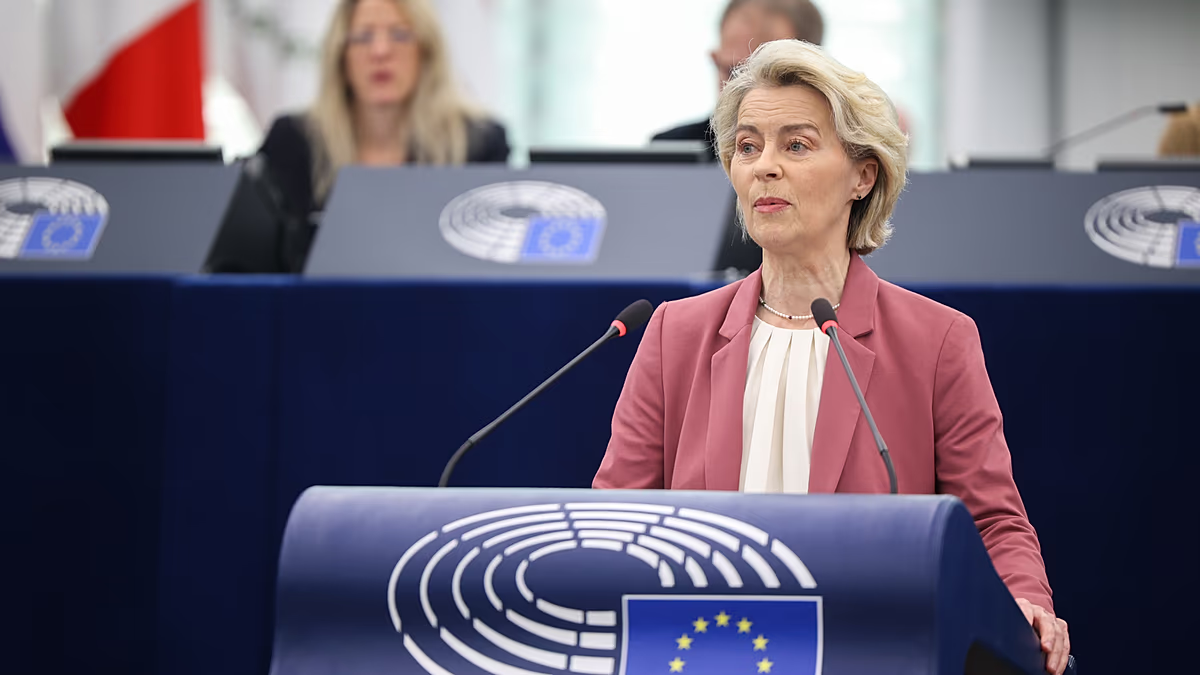
Von der Leyen addressed the EU parliament on Wednesday, stating the “yesterday’s peace is gone” and emphasizing the need for decisive action rather than dwelling on past assumptions. She acknowledged growing concerns about the EU’s role in a changing world order, spurred by increasingly critical rhetoric from the United States.
The Future of Ukraine: Frozen Assets and Economic Support
A primary focus of the summit will be securing continued financial aid for Ukraine as the country continues to defend itself against Russian aggression. Von der Leyen is championing a controversial plan to utilize frozen Russian state assets – estimated to be worth billions of euros – to provide Ukraine with a substantial reparations loan. Reuters reports that this proposal has triggered deep divisions among member states.
Belgium, where the bulk of the frozen Russian assets are held, has expressed reservations, arguing for a fairer distribution of potential financial risks involved in seizing and repurposing these funds. Other nations share similar concerns, wanting assurances that they won’t shoulder a disproportionate share of any legal challenges or counter-claims arising from the asset utilization. Achieving consensus on this complex issue will be a key test for the EU’s unity.
Navigating Legal and Political Hurdles
Utilizing frozen assets represents a significant departure from traditional legal norms. While proponents argue it’s a justifiable step given Russia’s actions, critics warn it could set a dangerous precedent and deter foreign investment. Furthermore, the logistical and legal processes of accessing and distributing these funds are considerable, adding another layer of complexity to the debate.
Mercosur Trade Deal: A Test of Europe’s Trade Policy
Alongside the Ukraine crisis, EU leaders will contend with whether to finalize a comprehensive free trade agreement with the Mercosur bloc – Argentina, Brazil, Paraguay, and Uruguay – after 25 years of negotiations. The deal aims to eliminate tariffs on a wide range of goods, boosting trade and economic ties between the two regions. The agreement requires a qualified majority, a complex voting procedure demanding support from 15 member states representing at least 65% of the EU population.
However, the Mercosur agreement faces strong opposition, most notably from France. French agricultural industries have raised concerns about increased competition from South American producers, fearing the deal will undermine their domestic market. Italy has emerged as a potential “kingmaker”, with its support crucial for France to potentially block the agreement. Prime Minister Giorgia Meloni has yet to signal her intentions clearly, adding to the uncertainty.
France is reportedly seeking to postpone the vote until next year, a move widely seen as an attempt to effectively kill the deal. Postponement would cast doubt on the EU’s commitment to strengthening trade relations with South America and erode its credibility as a reliable negotiating partner. This discussion also comes amid growing questions surrounding the EU’s broader trade strategy, particularly in the wake of increased protectionist measures from the US.
The US has recently levelled criticism against the EU’s regulatory approach, specifically its digital rules. Trump’s Trade Representative Jamieson Greer accused the EU of imposing “discriminatory” regulations against US companies, a challenge to the established rules-based trade system. The EU has maintained that its rules apply equally to all firms operating within its borders.
The decisions made at this week’s summit will undoubtedly signal the future direction of the EU on trade and its geopolitical strategy. Observers should particularly watch Italy’s stance on the Mercosur deal and the extent to which the EU can forge a unified approach to navigating its relationship with the increasingly assertive United States. For updated analysis on the summit’s outcome, consult leading news outlets like Reuters and Politico.
The summit represents a crucial crossroads for the EU. Continued monitoring of developments surrounding Ukraine’s financial stability and the fate of the Mercosur agreement will be vital to understanding the evolving dynamics of global power.