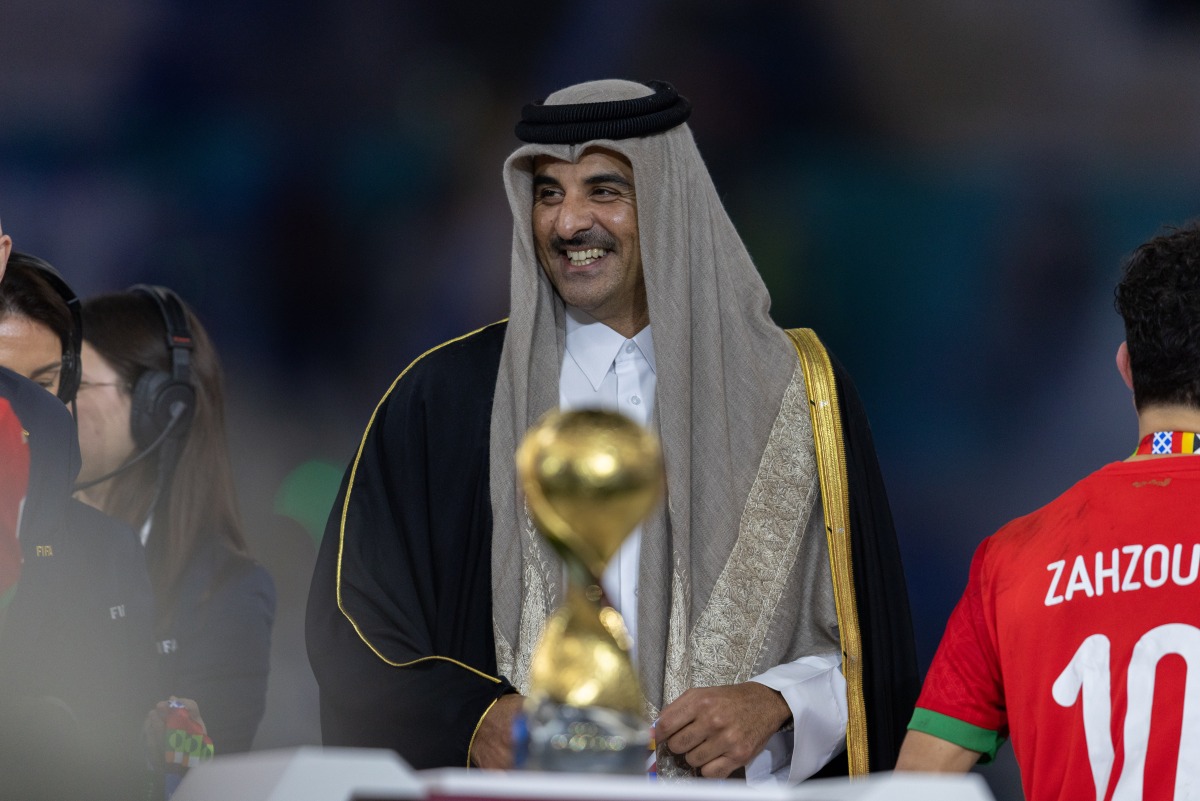

Doha, Qatar – HH Sheikh Tamim bin Hamad Al-Thani, the Amir of Qatar, presided over the closing ceremony of the FIFA Arab Cup Qatar 2025 at Lusail Stadium on Thursday evening. Morocco claimed the championship title, defeating Jordan 3-2 in a thrilling final match. The event marked the culmination of a tournament designed to serve as a vital dress rehearsal for the 2027 AFC Asian Cup, which Qatar will also host.
The ceremony was a high-profile affair, drawing dignitaries from across the Arab world and the international football community. Attendees included HH Personal Representative of HH the Amir, Sheikh Jassim bin Hamad Al-Thani, FIFA President Gianni Infantino, and the President of the Asian Football Confederation, Sheikh Salman bin Ebrahim Al Khalifa. The presence of such prominent figures underscores Qatar’s growing role as a major sporting hub.
Morocco Crowned Champions of the FIFA Arab Cup Qatar 2025
Morocco’s victory in the FIFA Arab Cup Qatar 2025 was a testament to their strong performance throughout the tournament. They navigated a competitive field, showcasing tactical prowess and skillful play. The final against Jordan was a closely contested affair, with both teams demonstrating attacking intent and defensive resilience.
Key Moments of the Final
The match saw several pivotal moments, including a stunning goal from Morocco’s captain in the first half. Jordan responded with two goals of their own, putting pressure on the Moroccan side. However, Morocco ultimately secured the win with two late goals, cementing their status as champions.
The tournament provided a valuable opportunity for Arab nations to compete at a high level and develop their footballing talent. According to reports from the Union of Arab Football Associations (UAFA), the competition saw record attendance figures and significant media coverage. This increased visibility is expected to boost investment in football infrastructure and youth development programs across the region.
Qatar’s hosting of the FIFA Arab Cup also served as a crucial operational test ahead of the 2027 AFC Asian Cup. Organizers utilized the event to refine logistical arrangements, security protocols, and fan experience initiatives. The successful execution of the Arab Cup demonstrates Qatar’s preparedness for hosting larger-scale international sporting events.
The Lusail Stadium, a venue originally built for the 2022 FIFA World Cup, once again played host to a major final. The stadium’s state-of-the-art facilities and impressive capacity were on full display. The use of existing infrastructure highlights Qatar’s commitment to sustainable event management and maximizing the legacy of the World Cup.
Meanwhile, the tournament also provided a platform for showcasing Qatar’s cultural heritage and hospitality. Cultural performances and interactive fan zones were integrated into the event, offering visitors a unique and immersive experience. This focus on cultural exchange aims to strengthen regional ties and promote tourism.
In contrast to some previous concerns regarding fan travel and accommodation, the FIFA Arab Cup saw a smooth flow of visitors, with efficient transportation systems and ample lodging options. The Ministry of Tourism reported a significant increase in tourist arrivals during the tournament period, indicating a positive economic impact.
Looking ahead, Qatar will now focus on preparations for the 2027 AFC Asian Cup. Organizers are expected to build upon the lessons learned from the Arab Cup to deliver an even more successful and impactful tournament. Further details regarding the Asian Cup schedule, ticketing, and volunteer opportunities are anticipated to be released in the coming months. The success of these events will be closely watched by the Asian Football Confederation as they evaluate future hosting bids.
FIFA officials have indicated that the 2027 Asian Cup will feature an expanded format, with more participating teams and matches. This expansion presents both opportunities and challenges for Qatar, requiring further investment in infrastructure and personnel. The final details of the tournament format are still under discussion and are expected to be finalized by the end of 2026.