







Published on
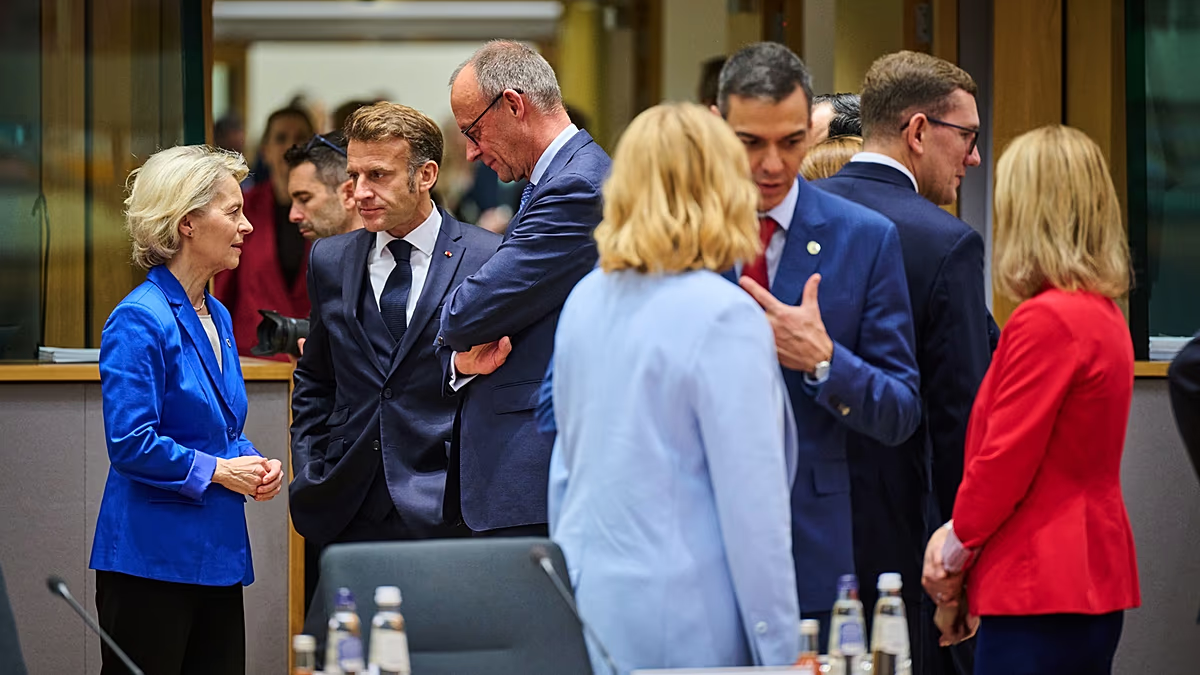
Brussels is hosting a critical summit of European Union leaders today as they grapple with securing at least €90 billion in financial and military aid for Ukraine throughout 2026 and 2027. The meeting comes amidst increasing pressure from the United States for a resolution to the conflict, and is being framed by diplomats as a pivotal opportunity for the EU to demonstrate its commitment to supporting Ukraine. A core focus of the discussion revolves around the mechanics of providing this Ukraine financial aid, with significant debate centered on leveraging frozen Russian assets.
European Commission President Ursula von der Leyen emphasized the high stakes ahead of the summit, stating the aid is vital not only for Ukraine’s security but also for bolstering peace and stability across Europe. The leaders are weighing two primary options for funding the substantial package. These options represent differing levels of risk and potential political hurdles for the 27 member states.
The Debate Over Ukraine Financial Aid: Two Main Paths
The first, and arguably more controversial, proposal involves utilizing the immobilized assets of the Russian Central Bank to establish a zero-interest reparations loan to Ukraine. Repayment would only be required if and when Russia provides compensation for the damage caused by its invasion – a scenario widely considered improbable. This approach aims to directly hold Russia accountable for the costs of the war.
The alternative, more conventional method, is to pursue common borrowing on financial markets, similar to the EU’s response during the COVID-19 pandemic. This would involve issuing joint debt instruments backed by all member states. However, this option is complicated by the need for unanimous agreement to alter EU budget rules, a significant obstacle given Hungary’s known opposition to increased financial commitments to Ukraine.
The crucial distinction lies in the approval process; the reparations loan could potentially bypass Hungary’s veto through a qualified majority vote, while common borrowing necessitates full consensus. This procedural difference has significantly elevated Belgium’s role in the negotiations.
Belgium currently holds approximately €185 billion in Russian assets and has voiced strong concerns about potential retaliatory measures from Moscow if the reparations loan is implemented. Belgian Prime Minister Bart De Wever has labelled the plan as “fundamentally wrong”, citing numerous potential drawbacks. The depository holding a significant portion of these assets, Euroclear, has also expressed criticism.
Reservations and Required Assurances
Beyond Belgium, Italy, Bulgaria, Malta, and the Czech Republic have all expressed reservations regarding the reparations loan structure. These concerns encompass a range of issues, including potential legal challenges and the complexities of managing the frozen assets. Negotiations will centre on navigating these competing anxieties.
The primary demand from Belgium is comprehensive and unlimited guarantees against any potential fallout from utilizing the Russian assets. This contrasts sharply with the desire of other member states to establish a fixed and capped level of risk coverage. A senior diplomat, speaking anonymously, revealed the tension: “We want all risks covered and mutualised without limitation, in full and from day one. The risks we face have no cap, so we cannot agree to a guarantee that does have a cap.”
European Council President António Costa has publicly committed to addressing Belgium’s concerns and ensuring they are not overridden. Meanwhile, leaders are attempting to find common ground and secure Belgium’s participation in the ambitious scheme. The situation remains delicate, requiring careful diplomacy.
If a consensus on the reparations loan is reached, it could pave the way for its rapid implementation. However, failure to secure an agreement will likely lead to discussions regarding joint debt, facing the looming threat of a Hungarian veto. A third, interim solution may be required if both primary options falter, ensuring continued support for Ukraine while a longer-term strategy is developed. You can find more information on the EU’s support for Ukraine on the European Commission’s website.
Kyiv urgently needs a fresh wave of financial assistance by April, adding to the pressure on EU leaders. Following a previous inconclusive summit, there is a widespread acknowledgement that failure to deliver this aid package is not an option, especially with both Washington and Moscow closely monitoring the proceedings. The next few days will be crucial in determining the future of European security and its support for Ukraine.
Follow our live blog for updates.
Reparations loan for Ukraine: Who’s in favour and who’s against?
As we wait for EU leaders to make their way into the summit, we want to get you up to speed on the main issue: the reparations loan.
Under the scheme, the financial institutions that hold the immobilised assets of the Russian Central Bank would transfer their cash balances to the Commission, which would then issue a zero-interest loan to Ukraine. Kyiv would be asked to repay only after Moscow ends its war and compensates for the damage its invasion has wrought. Moscow would then be able to recover its money, completing the cycle.
While the proposal has been met with public enthusiasm by some leaders, like Germany’s Friedrich Merz and Denmark’s Mette Frederiksen, it faces staunch opposition from others, such as Belgium’s Bart De Wever and Hungary’s Viktor Orbán.
Reparations loan for Ukraine: Who’s in favour and who’s against?
The European Union’s bold attempt to issue a reparations loan to Ukraine using immobilised Russian assets has sharply divided the bloc’s key leaders. Ahead of…