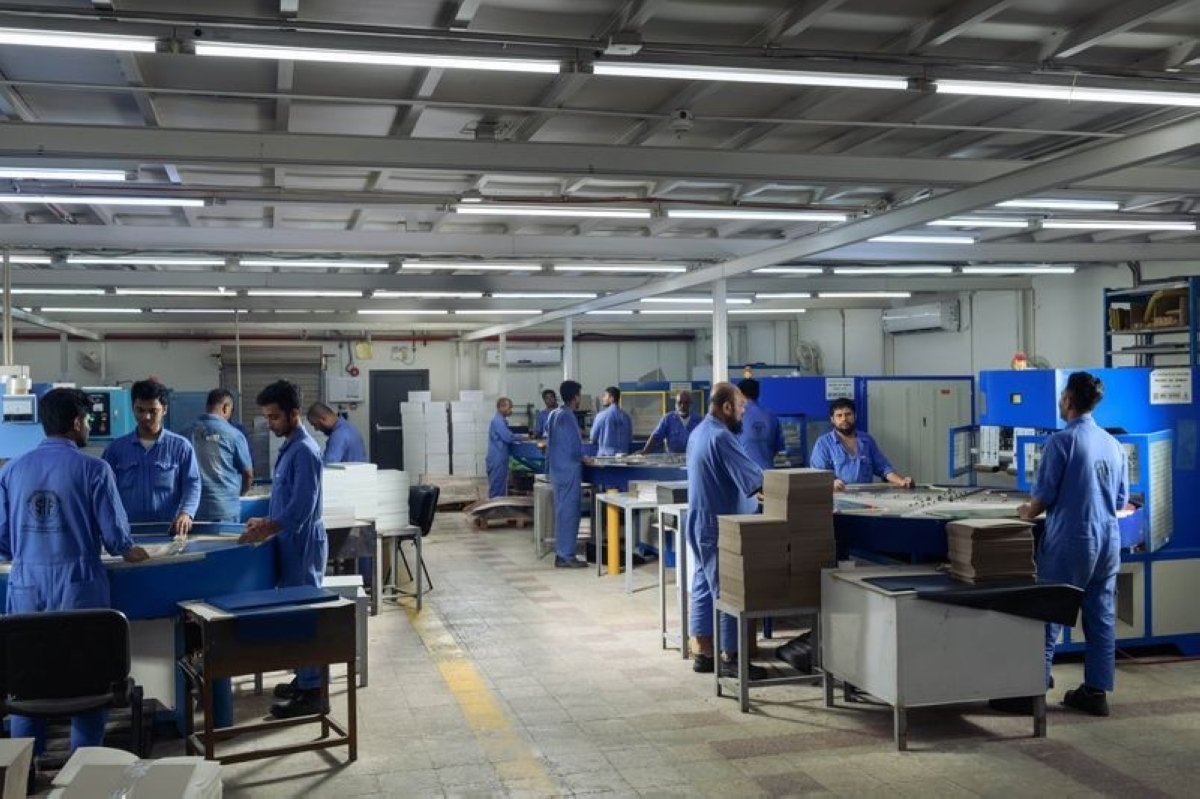

Saudi Arabia has eliminated fees levied on foreign workers employed in industrial facilities holding valid industrial licenses, a move expected to bolster the Kingdom’s manufacturing sector. The decision, approved by the Council of Ministers chaired by Crown Prince Mohammed bin Salman, aims to enhance the sustainability and global competitiveness of Saudi industry. This follows a recommendation from the Council of Economic and Development Affairs (CEDA) and builds on previous exemptions designed to support industrial growth.
The announcement, made by the Saudi Ministry of Industry and Mineral Resources, impacts a significant portion of the workforce and is intended to accelerate the nation’s diversification efforts away from oil. The fee removal is effective immediately and applies to establishments already licensed for industrial activity. This policy change is part of the broader Saudi Vision 2030 initiative.
Boosting Saudi Industry: A Strategic Economic Move
The decision to waive expatriate worker fees is a continuation of government support for the industrial sector, which is considered a cornerstone of Saudi Arabia’s economic transformation. According to the Ministry, the move will reduce operational costs for factories, enabling expansion and increased production. This is particularly important as the Kingdom seeks to attract foreign investment and develop advanced manufacturing capabilities.
Impact of Previous Exemptions
The government previously exempted industrial companies from these fees from October 1, 2019, to December 31, 2025. Minister of Industry and Mineral Resources, Bandar Alkhorayef, stated that this extended period of relief played a crucial role in the sector’s recent growth. The Ministry reports significant gains during this time, including a substantial increase in the number of industrial establishments and overall investment.
Data released by the Ministry indicates that the number of factories rose from 8,822 in 2019 to over 12,000 by the end of 2024. Total industrial investments increased by 35 percent, reaching SR1.22 trillion (approximately $325 billion). Non-oil exports also saw a 16 percent rise, climbing from SR187 billion to SR217 billion.
Employment within the sector experienced a notable surge, growing by 74 percent from 488,000 to 847,000 employees. The Saudization rate, representing the proportion of Saudi nationals in the workforce, increased modestly from 29 percent to 31 percent. Furthermore, the contribution of manufacturing to the Kingdom’s GDP increased by 56 percent, reaching over SR501 billion.
The Ministry believes that removing the fees will further incentivize the adoption of modern technologies, such as automation and artificial intelligence, within the industrial sector. This modernization is seen as essential for enhancing efficiency and maintaining a competitive edge in global markets. The focus on advanced technologies aligns with the Kingdom’s broader strategy to become a leader in innovation and economic diversification.
Alkhorayef affirmed the ministry’s commitment to supporting the industrial sector through collaboration with relevant entities and by fostering a business-friendly environment. This includes efforts to empower the private sector and provide incentives for investment, innovation, and technological advancement.
The Kingdom has identified approximately 800 investment opportunities across various industrial activities, representing a potential SR1 trillion in investment. Saudi Arabia aims to triple its industrial GDP to SR895 billion by 2035, solidifying industry’s role in diversifying the national economy. This ambitious goal underscores the importance of the current policy changes.
The decision is expected to particularly benefit small and medium-sized enterprises (SMEs) within the industrial sector, which often face greater financial constraints. By reducing labor costs, these businesses will be better positioned to compete with larger companies and expand their operations.
Looking ahead, the Ministry will continue to monitor the impact of the fee removal on the industrial sector. Further policy adjustments and support measures may be implemented based on ongoing assessments and feedback from stakeholders. The success of this initiative will depend on the effective implementation of supporting programs and the continued commitment to creating a favorable investment climate. The next key indicator to watch will be the Q1 2025 industrial production figures, expected to be released in April, to gauge the initial effects of the policy change.