





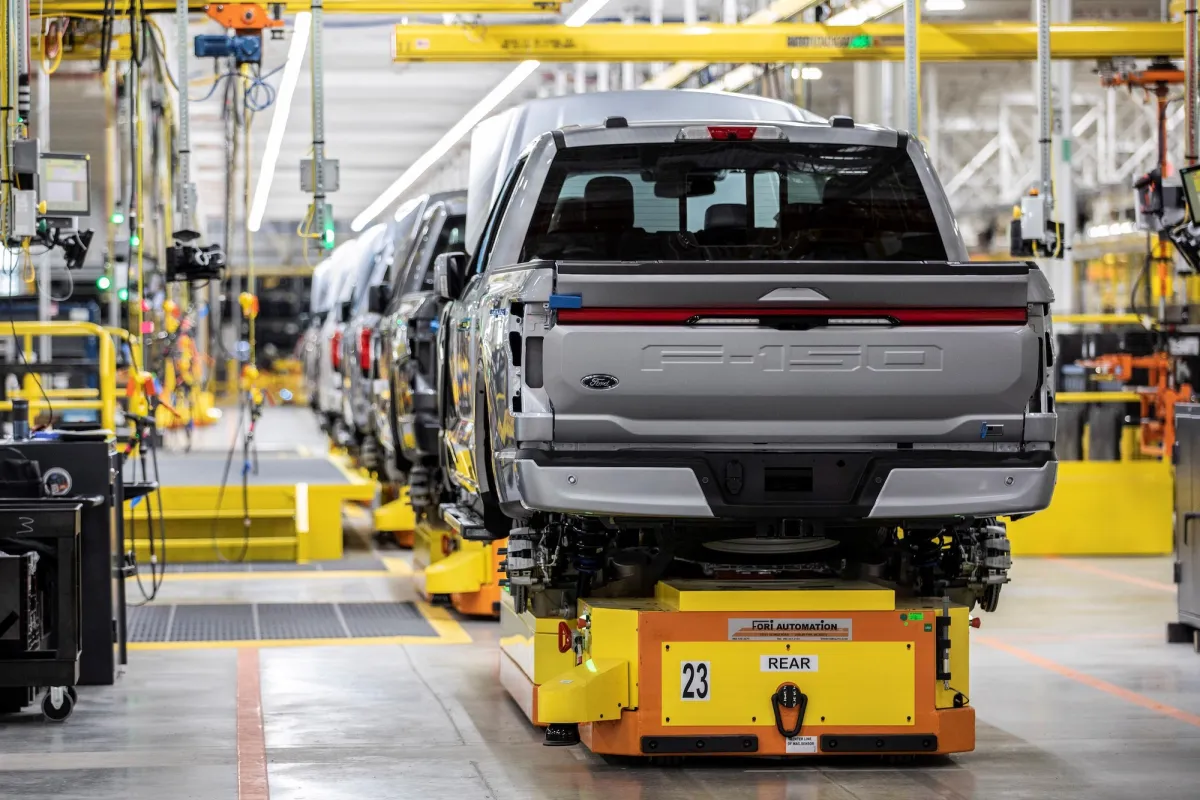

Ford Motor Company announced Monday it is halting production of the all-electric F-150 Lightning pickup truck, citing financial pressures and shifting market demands. The automaker will instead focus on a version of the truck with a gas generator to extend its range beyond 700 miles. This decision is part of a larger restructuring of Ford’s electric vehicle strategy, which will result in a $19.5 billion financial hit.
The move comes as the electric vehicle market faces increased headwinds, including price wars initiated by Tesla and potential policy changes following the recent U.S. election. Ford did not specify a timeline for the end of Lightning production or pricing for the extended-range model.
Ford Reassesses its Electric Truck Strategy, Pauses F-150 Lightning
The decision to discontinue the all-electric F-150 Lightning represents a significant pivot for Ford, which initially touted the truck as a key component of its $22 billion investment in electric vehicles. The company revealed the Lightning in 2021, aiming for a starting price around $40,000, but that figure largely remained unattainable for individual consumers, being targeted towards fleet sales.
According to Ford, the business case for continuing production of larger electric vehicles like the Lightning has weakened due to lower-than-anticipated demand, rising production costs, and evolving regulatory conditions. The company plans to record the majority of the $19.5 billion in charges during the fourth quarter, with an additional $5.5 billion expected through 2027.
Impact on Production and Future Models
The restructuring will impact several Ford facilities and employees. Notably, the company confirmed the cancellation of its “T3” project, a next-generation, clean-sheet electric truck design. This contrasts with the Lightning, which was built upon the existing gasoline-powered F-150 platform.
Ford is also abandoning plans for a future electric commercial van, though the current E-Transit model will continue to be produced. These changes reflect a broader reassessment of Ford’s EV portfolio, prioritizing profitability and adapting to market realities.
Shifting Focus to Hybrid and Extended-Range Vehicles
Despite the pullback on some all-electric models, Ford remains committed to electrification, albeit with a revised strategy. The company announced it will allocate resources towards more profitable areas, including hybrid vehicles, extended-range electric vehicles like the modified F-150, and more affordable EV options.
Ford President Andrew Frick stated the company is redirecting funds “rather than spending billions more on large EVs that now have no path to profitability.” This includes investment in energy storage solutions, suggesting a potential expansion beyond vehicle manufacturing.
The company is still planning to launch a mid-sized all-electric pickup truck in 2027. This vehicle will utilize a new platform developed through a dedicated “skunkworks” program led by former Tesla executives Doug Field and Alan Clarke. Ford also remains on track to begin producing lower-cost lithium iron phosphate (LFP) batteries at its BlueOval Battery Park Michigan facility in Marshall, using technology licensed from CATL, with these batteries intended for the mid-sized truck.
The electric vehicle market has experienced significant volatility since the F-150 Lightning’s introduction. Tesla’s aggressive price reductions have put pressure on competitors’ margins, while the political landscape in the U.S. is shifting, potentially impacting government incentives for electric trucks and other EVs. The changing regulatory environment is a key factor in Ford’s decision-making process.
Sales of the F-150 Lightning, while initially strong, plateaued around 7,000 units per quarter, peaking at nearly 11,000 in late 2024. This level of demand, combined with high production costs, proved insufficient to justify continued investment in the all-electric version, according to the company. The broader automotive industry is grappling with similar challenges as it transitions to electric power.
Looking ahead, Ford will be closely watched to see how it executes its revised EV strategy. The success of the mid-sized electric pickup and the adoption of LFP battery technology will be crucial indicators. The company’s ability to navigate the evolving market dynamics and deliver profitable electric vehicles will determine its long-term competitiveness in the EV space. Further details regarding the extended-range F-150, including pricing and availability, are expected to be released in the coming months.