






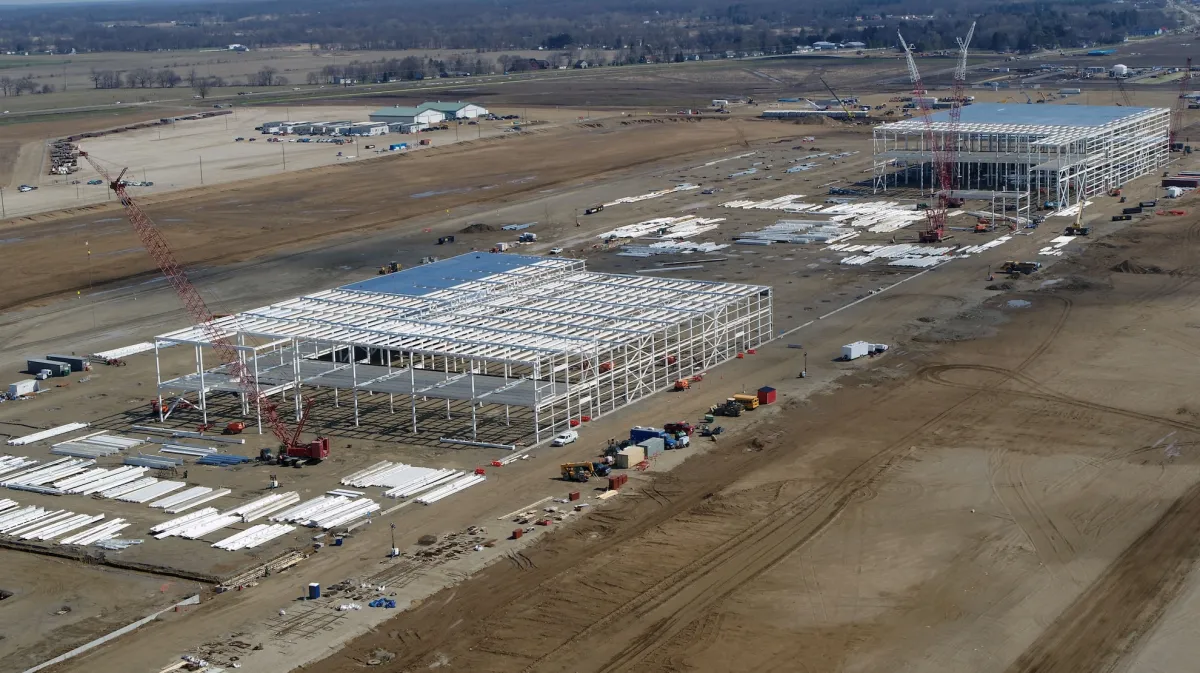

Ford Motor Company is strategically shifting its battery production plans, announcing a new business focused on large-scale battery storage systems. This move comes as the automaker adjusts its electric vehicle strategy, scaling back ambitions for large EV production and instead repurposing planned battery capacity. Ford anticipates the new venture will address growing demand for energy storage solutions, particularly for commercial and grid-scale applications, with shipments expected to begin in 2027.
The company will invest approximately $2 billion over the next two years to establish this new operation. This includes utilizing existing manufacturing infrastructure at its Kentucky facility to produce lithium iron phosphate (LFP) batteries, battery energy storage system modules, and 20-foot DC container systems. The decision reflects a broader industry trend toward diversifying battery applications beyond the automotive sector.
Ford’s Pivot to Battery Storage: A Growing Market
Ford’s decision to enter the battery storage market is driven by evolving demand and technological considerations. While initially planning to manufacture batteries primarily for its own electric vehicles, the company identified a significant opportunity in supplying energy storage solutions to other sectors. According to Lisa Drake, Ford’s VP of technology platform programs and EV systems, commercial grid customers represent the primary target, with data centers as a secondary focus and potential expansion into residential markets.
Leveraging Existing Investments and Technology
The automaker will leverage technology licensed from Chinese battery giant CATL to produce LFP batteries. LFP batteries are known for their lower cost and increased safety compared to nickel-based alternatives, making them well-suited for stationary storage applications. Ford already has a license to build this technology in the U.S., streamlining the transition into the new business.
Additionally, Ford’s BlueOval Battery Park Michigan in Marshall remains on track to begin LFP battery production in 2026. This facility will initially supply batteries for Ford’s upcoming mid-sized electric truck. However, the Michigan plant will also manufacture smaller Amp-hour cells intended for residential energy storage, indicating a wider scope than originally envisioned.
A History of Adjustments
The BlueOval Battery Park Michigan project has undergone several revisions. Announced in February 2023 with a $3.5 billion investment and a planned capacity of 35 GWh, construction was halted in September 2023. Ford subsequently announced a scaled-back plan with a production capacity of 20 GWh, a reduction of roughly 43%.
This adjustment highlights the dynamic nature of the electric vehicle and energy storage industries. Factors such as fluctuating demand, supply chain challenges, and evolving battery technology necessitate flexibility in manufacturing strategies. The shift towards energy storage systems allows Ford to utilize its investments even with a recalibrated EV production outlook.
Competition in the Battery Storage Space
Ford is not alone in recognizing the potential of the battery storage market. Tesla has been a dominant player in this space for nearly a decade, deploying approximately 10 GWh of storage capacity each quarter. General Motors is also actively developing and offering both home and commercial battery backup solutions.
The increasing competition underscores the growing importance of energy storage in modernizing the electric grid and supporting the integration of renewable energy sources. Demand for grid-scale storage is expected to rise significantly as utilities seek to enhance reliability and reduce reliance on fossil fuels. Data centers, with their substantial and consistent energy needs, also represent a key market segment.
The rise of electric vehicles has created a surplus in battery manufacturing capacity, prompting automakers to explore alternative applications for their production facilities. This trend is expected to continue as the EV market matures and the demand for stationary energy storage increases. The development of advanced battery technologies, like solid-state batteries, could further accelerate this shift.
Looking ahead, Ford will continue to build out its 20 GWh annual capacity for battery storage systems, with the first shipments anticipated in 2027. The success of this venture will depend on factors such as securing reliable supply chains for LFP materials, effectively competing with established players like Tesla, and navigating evolving regulatory landscapes surrounding energy storage. Further details regarding specific customer agreements and project timelines are expected in the coming months.