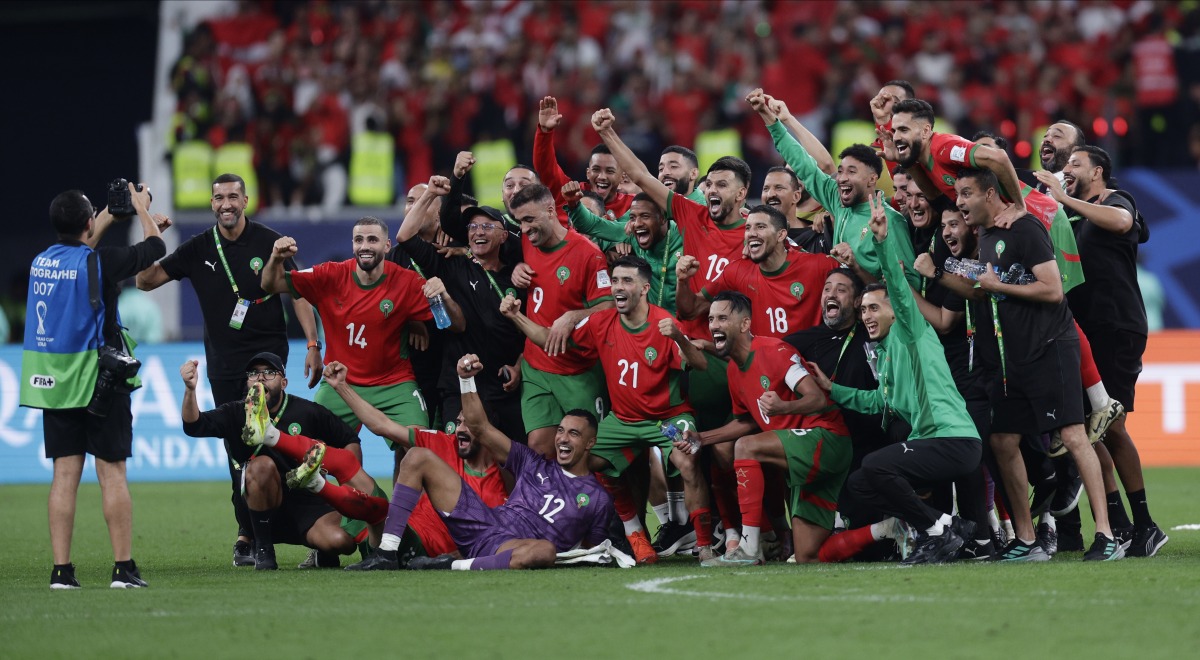

Morocco advanced to the final of the FIFA Arab Cup with a commanding 3-0 victory over the United Arab Emirates at Khalifa International Stadium in Doha, Qatar on December 15, 2023. The dominant performance secured Morocco’s second appearance in the tournament final, reigniting hopes for a repeat of their 2012 championship win. This FIFA Arab Cup result puts them one game away from lifting the trophy.
Karim El Berkaoui opened the scoring in the 28th minute, followed by goals from Ashraf El Mahdioui in the 83rd minute and Abderrazak Hamdallah in stoppage time. The win demonstrated Morocco’s strength in both attack and defense throughout the match, overcoming a UAE side considered a strong competitor. The attendance at the stadium was 33,898.
Morocco’s Path to the FIFA Arab Cup Final
Morocco’s journey through the Arab Cup has been marked by consistent performance and tactical discipline. They topped their group, showcasing a well-rounded squad capable of adapting to different opponents. This semifinal victory underscores their position as a leading contender for the overall title.
Head coach Tariq Sektioui expressed satisfaction with the team’s control of the first half, noting their ability to capitalize on key opportunities. He also highlighted the effectiveness of his substitutions, which injected fresh energy and ultimately extended Morocco’s lead. The coach’s strategic decisions were clearly pivotal to the outcome.
Key Moments in the Match
El Berkaoui’s headed goal shortly before halftime provided a crucial psychological boost for Morocco. The UAE attempted to mount a comeback in the second half, but Morocco’s defense, led by Soufiane Bouftini and Marwane Saadane, successfully contained their attacks.
El Mahdioui’s late goal, assisted by Hamdallah, effectively sealed the UAE’s fate. Hamdallah then completed the scoring with a goal in added time, converting a cross from Mohamed Boulacsout. These late goals demonstrated Morocco’s fitness and determination to secure a decisive win, adding to the football tournament‘s prestige.
The match also saw a strong showing of support from Moroccan fans in the stadium. Coach Sektioui acknowledged their enthusiastic backing, expressing his desire to dedicate the championship to them if they emerge victorious in the final. Fan support has been a noticeable factor throughout the Qatar-hosted competition.
UAE Struggles to Break Down Moroccan Defense
Despite their efforts, the United Arab Emirates were unable to find a way past the resolute Moroccan defense. Their attacking plays were consistently disrupted, and they rarely threatened the Moroccan goalkeeper, El Mehdi Benabid. This defensive solidity has been a hallmark of Morocco’s campaign.
According to post-match analysis, the UAE struggled to convert possession into meaningful scoring chances. Their crosses were often well-defended, and their attempts to play through the middle were effectively blocked. The inability to penetrate the Moroccan defense proved costly.
Sektioui stated that while expecting a stronger response from the UAE in the second half, his team remained calm and managed the game effectively. This composure under pressure was a key factor in their ability to withstand the UAE’s attempts to regain control.
Looking ahead, Morocco will now face the winner of the other semifinal match in the Arab Cup final. The final is expected to be a challenging encounter, with both teams vying for the prestigious title. Sektioui is confident his team can build on this performance and compete fiercely for the championship.
The date and time of the final have yet to be officially announced by FIFA. Observers will be watching closely to see how Morocco adapts its strategy against its final opponent and whether its strong team spirit can carry it to victory. The tournament’s closing stages promise exciting conclusions for participating nations.