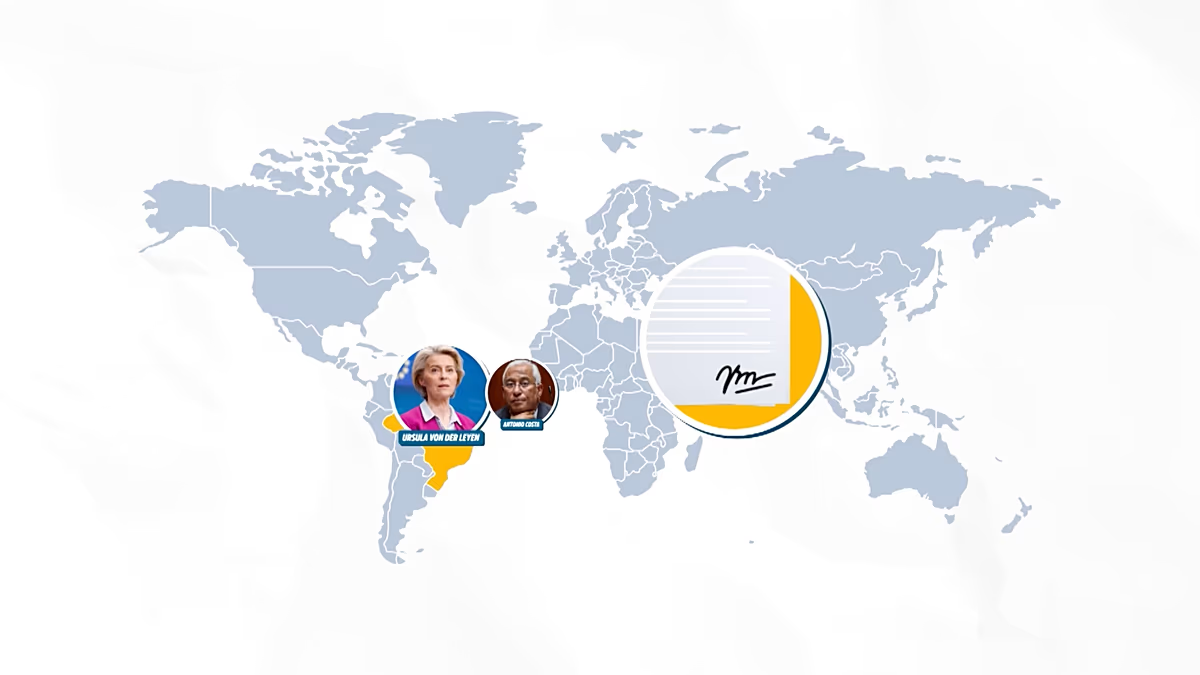

The European Union is on the cusp of finalizing a pivotal trade agreement with Mercosur, a South American trade bloc. A crucial vote in the European Parliament is scheduled for next Tuesday, concerning “safeguards” designed to protect the EU market and address unfair competition. If approved, the deal would then be signed by European Commission President Ursula von der Leyen and European Council President Charles Michel during a visit to Brazil on Saturday, marking a potential turning point in EU-Mercosur trade.
This agreement, over 25 years in the making, has faced repeated delays due to concerns over deforestation, labor standards, and the impact on European farmers. While the executive branches appear ready to move forward, the ratification process within the European Parliament remains uncertain, with opposition expected from both the hard right and far-left political groups.
Why the EU-Mercosur Trade Deal Matters
The proposed trade deal between the EU and Mercosur – comprising Argentina, Brazil, Paraguay, and Uruguay – aims to create one of the world’s largest free trade areas. According to the European Commission, the agreement would eliminate or reduce tariffs on a wide range of goods, boosting economic growth for both regions. It is predicted to generate significant export opportunities for European businesses, particularly in manufactured goods and services.
However, the agreement is not without its critics. Concerns persist regarding the enforcement of environmental commitments within Mercosur, specifically related to deforestation in the Amazon rainforest. Farmers in several EU member states also fear increased competition from South American agricultural products. These anxieties have fueled opposition within the Parliament and among some national governments.
A Strategic Partnership at Stake
Diplomatic sources have indicated that the failure of this deal could have broader geopolitical consequences. With relations between the EU and the United States experiencing tensions, securing a strong trade partnership with Mercosur is seen as increasingly important for the EU’s strategic interests. The Council on Foreign Relations provides analysis on current US-Europe trade dynamics.
The loss of such a partnership could hinder the EU’s ability to diversify its trade relationships and influence global trade standards. Furthermore, a collapsed deal might open the door for increased economic influence from other global powers, such as China, within the Mercosur region.
Responding to Criticism
Recent commentary from the United States has questioned the influence and efficacy of EU institutions, sometimes erroneously labeling them as “unelected bureaucracies.” This characterization overlooks the significant role of the European Parliament, directly elected by EU citizens.
The upcoming vote serves as a direct rebuttal to such claims. Should the deal be blocked after executive approval, it will be due to the democratic process within the Parliament, demonstrating its power to hold the Commission accountable. This dynamic highlights the inherent checks and balances within the EU’s governing system and the importance of trade negotiations.
Challenges to Ratification & Future Outlook
Even with the European Commission’s push and a potential signing ceremony in Brazil, the journey to full ratification is far from over. Following the Parliament’s initial vote, each EU member state will need to approve the agreement, potentially requiring parliamentary votes or other national procedures.
The ratification process is expected to be protracted and contentious. Opposition groups are likely to mobilize public and political pressure against the deal, focusing on environmental and social concerns. Furthermore, upcoming European Parliament elections could shift the political landscape, potentially altering the balance of power and impacting the trade agreement‘s prospects. The impact of this deal on agricultural imports is a major point of contention.
Looking ahead, all eyes will be on the European Parliament vote next Tuesday. A positive outcome would signal a significant step towards strengthening economic ties between the EU and South America. However, the path to full implementation remains fraught with challenges. Businesses and policymakers alike should monitor developments closely as this complex international trade process unfolds.
Stay informed as the vote approaches – and consider how this deal might affect your industry within the wider European market.