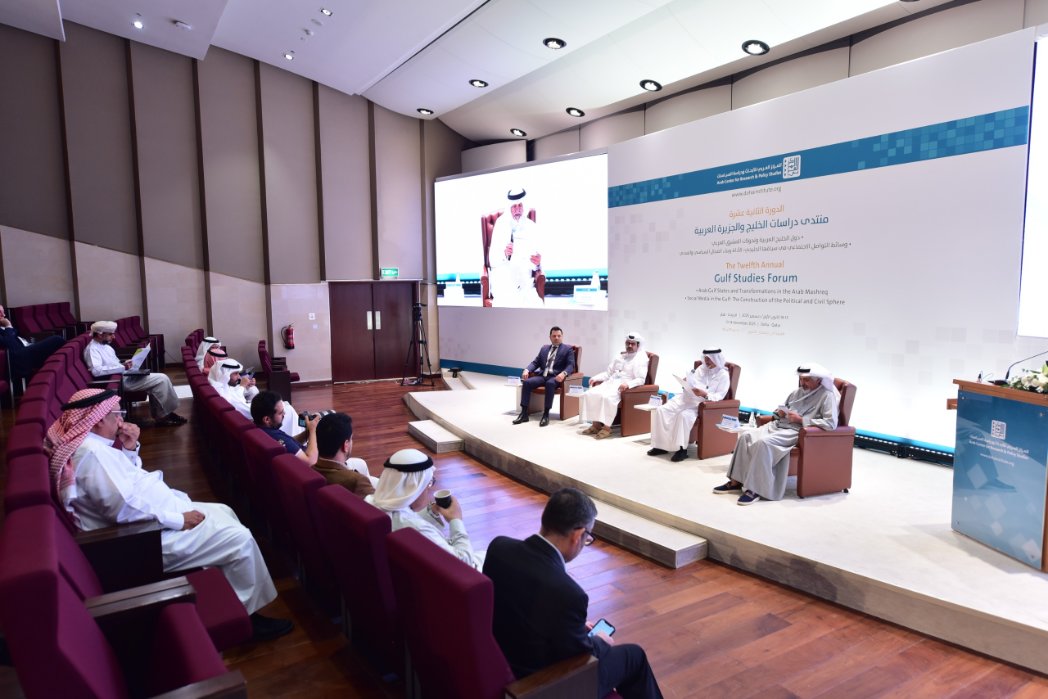

The twelfth annual Gulf Studies Forum concluded in Doha, Qatar, yesterday, bringing together researchers to analyze evolving dynamics in the region. Organized by the Arab Center for Research and Policy Studies over two days, the forum focused on the Arab Gulf’s relationship with the wider Arab world and the growing significance of digital spaces. Forty researchers presented their findings across 16 sessions, exploring critical issues impacting the political and economic landscape of the Gulf.
This year’s event featured two parallel tracks. One examined the interplay between Gulf nations and transformations occurring in the Arab Mashreq – encompassing Iraq, Jordan, Lebanon, Palestine, and Syria – while the other explored the impact of social media on political and civil society within the Gulf Cooperation Council (GCC) states. The discussions highlight a growing urgency to understand the complex shifts shaping the region’s future.
Understanding the Gulf’s Role Amidst Regional Change
A key theme throughout the forum was the evolving role of Gulf states in the broader Arab Mashreq. Traditionally focused on internal security and economic development, Gulf nations are increasingly involved in regional diplomacy and crisis management, according to presentations. However, this increased engagement is occurring against a backdrop of significant political and economic instability in the Mashreq nations.
Energy and Economic Impacts
The forum addressed how these transformations impact energy markets and economic cooperation. Abdullah Baaboud explored disruptions to regional energy maps and logistical routes caused by political instability. Naji Abi-Aad assessed current energy interconnections, identifying successes and failures, and pointing to opportunities for strengthened collaboration.
Bader Alibrahim’s research delved into the challenges of maintaining Gulf influence in the Mashreq, proposing a framework of “asymmetric interdependence” as a means to create more sustainable leverage. The concept suggests focusing on areas where Gulf states have a clear advantage and tailoring approaches to each nation’s specific needs and vulnerabilities.
Reconfiguring Political and Security Approaches
The discussions also centered on the changing security landscape. Dhafer Al-Ajmi argued that Gulf states have actively shifted from a focus on internal security to playing a larger role in regional and international affairs, particularly as mediators. This evolution, the forum participants noted, reflects a reassessment of priorities in response to the shifting geopolitical realities.
Cybersecurity emerged as a critical concern. Khalifa Alkuwari highlighted the rise of “grey cyber domain” activities – cyberattacks used as tools of regional conflict – and advocated for a regional defense system and enhanced cyber diplomacy. The increasing sophistication and frequency of these attacks pose a significant threat to GCC infrastructure and stability.
Meanwhile, Muhanad Seloom analyzed the impact of US foreign policy on Gulf alliances. His research suggests a move away from traditional collective security guarantees towards more conditional agreements based on individual states’ positions within the regional system. This shift reflects a broader trend of increasing uncertainty in the region’s security architecture.
Social Media and the Public Sphere in the Gulf
The second track of the Gulf Studies Forum focused on the growing influence of social media. Researchers examined how platforms like Twitter, Instagram, and TikTok are shaping political discourse and civil society engagement in the Gulf. This is a relatively new area of study, as social media penetration has increased dramatically in recent years.
The forum acknowledged the dual nature of social media in the region. While offering new avenues for political expression and citizen participation, it also presents challenges related to misinformation, polarization, and government surveillance. Understanding these dynamics is crucial for navigating the evolving media landscape.
The forum’s discussions on digital media and its impact on political and civil spheres are particularly relevant given the increasing role of online platforms in shaping public opinion and mobilizing social movements across the Arab world. The rise of regional security concerns also extends to the digital realm, as evidenced by the focus on cyber threats.
Looking ahead, the Arab Center for Research and Policy Studies is expected to publish a comprehensive report summarizing the key findings and recommendations from the forum in the coming months. Further research will be needed to assess the long-term implications of the transformations discussed, particularly in light of ongoing conflicts and geopolitical shifts in the Arab Mashreq and the evolving relationship between Gulf states and international powers. The future trajectory of the region remains uncertain, making continued analysis and dialogue essential.