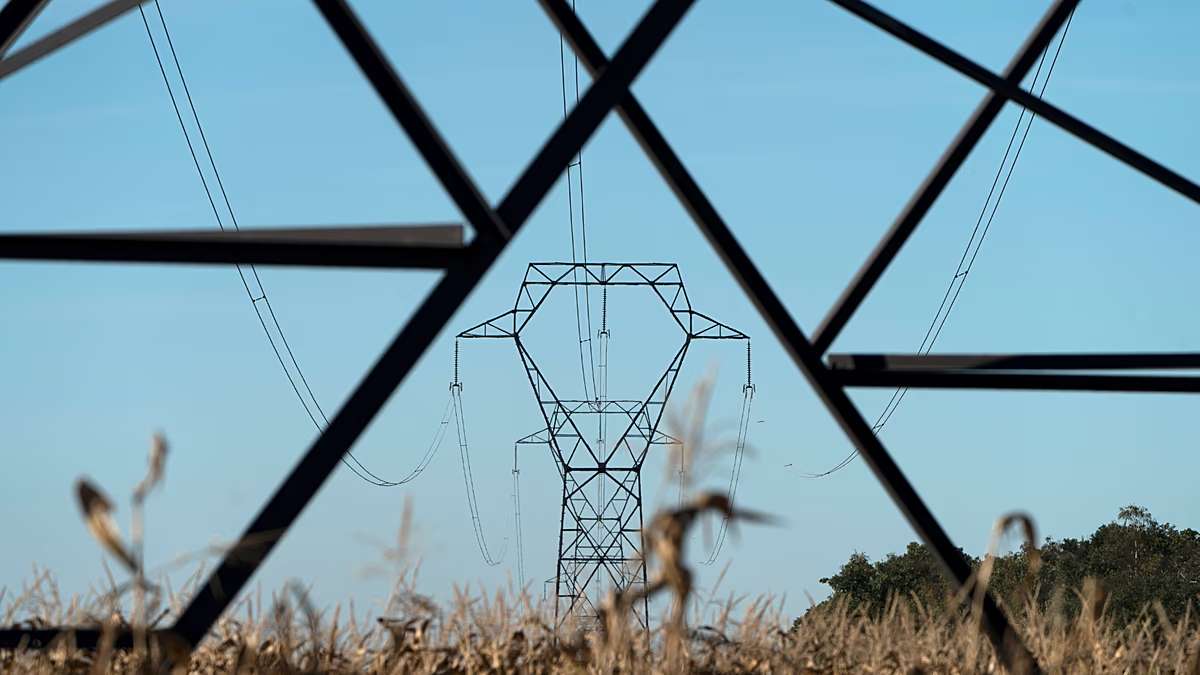

European Union countries have overwhelmingly approved the framework for a multi-annual energy budget of nearly €30 billion for 2028-2034, paving the way for expanded cross-border energy infrastructure and renewable energy projects. The agreement, reached on Monday by energy ministers, aims to bolster energy security and lower prices across the bloc. Funds will be allocated through the Connecting Europe Facility (CEF), targeting grid improvements and the expansion of solar and wind power, as well as potentially including hydrogen and natural gas projects.
The decision comes as the EU seeks to modernize its energy networks and accelerate the transition to a cleaner energy system. According to Denmark’s Minister for Energy, Climate and Utilities, Lars Aagaard, the agreement is a “significant step towards lowering energy prices, strengthening competitiveness, and improving energy security” by ensuring no member state is left isolated. All member states supported the CEF’s energy architecture, with Hungary abstaining from the vote.
Boosting European Energy Infrastructure
The approved budget allocates €29.9 billion to energy projects, a substantial increase from the €5.8 billion provided during the 2021-2027 period. This surge in funding reflects the EU’s commitment to increasing energy resilience and achieving climate neutrality by 2050. Portugal, for example, sees the CEF as crucial for achieving a 15% electricity interconnection rate by 2030 and integrating the Iberian peninsula more fully into the European energy market.
France also welcomed the agreement, particularly the Commission’s commitment to “technological neutrality,” allowing member states flexibility in choosing the most appropriate technologies and power sources for their infrastructure development. However, French officials stressed the importance of a holistic approach, considering all system costs when strengthening internal networks, a long-standing issue regarding cross-border projects with Spain and Portugal.
Concerns Over Transparency and Fossil Fuel Investment
Despite the broad support, the new funding rules have drawn criticism from EU lawmakers and auditors who fear reduced transparency. The European Commission intends to model the CEF after the Recovery and Resilience Facility (RRF), used during the COVID-19 pandemic, introducing greater flexibility in the budget process.
However, the European Parliament’s transport committee rejected this proposal, arguing it would grant the Commission excessive discretion without sufficient oversight. Specifically, lawmakers are concerned about the removal of eligibility and award criteria in national plans, which they believe will hinder parliamentary scrutiny. Similar concerns were voiced by the European Court of Auditors (ECA), which worries that the increased flexibility could impede its ability to audit the funds effectively. One ECA spokesperson stated that tracking the money would be “harder” if the CEF operates under the same model as the RRF.
Furthermore, some critics argue that the inclusion of hydrogen and natural gas infrastructure within the CEF could inadvertently support continued investment in fossil fuels. Gligor Radečić, gas campaign leader at NGO CEE Bankwatch Network, pointed out the potential conflict of interest in allowing gas operators to assess projects eligible for funding. He questioned the logic of having ENTSOG, the association of gas transmission operators, responsible for project evaluation.
The EU is actively working to diversify its energy sources and reduce reliance on Russian gas, as highlighted by Reuters. This initiative is a key component of the broader REPowerEU plan, designed to accelerate the green transition and enhance energy independence.
To address these concerns, Transport Commissioner Apostolos Tzitzikostas assured stakeholders that more detailed funding criteria would be outlined in work programmes and project call texts. However, the final details of the program and its implementation remain subject to negotiation with the European Parliament.
Energy ministers have now authorized the Council to begin negotiations with the Parliament. The ultimate fate of the 2028-2034 energy infrastructure budget will depend on reaching a final agreement on the next multi-annual financial framework, a process not expected to conclude before 2027. Stakeholders should continue to monitor developments as the EU navigates the complexities of funding its energy transition and ensuring transparency in the allocation of these significant resources.
Keep up to date with the latest developments in EU energy policy and the implementation of the Connecting Europe Facility to understand how these changes will impact future energy projects and investments.