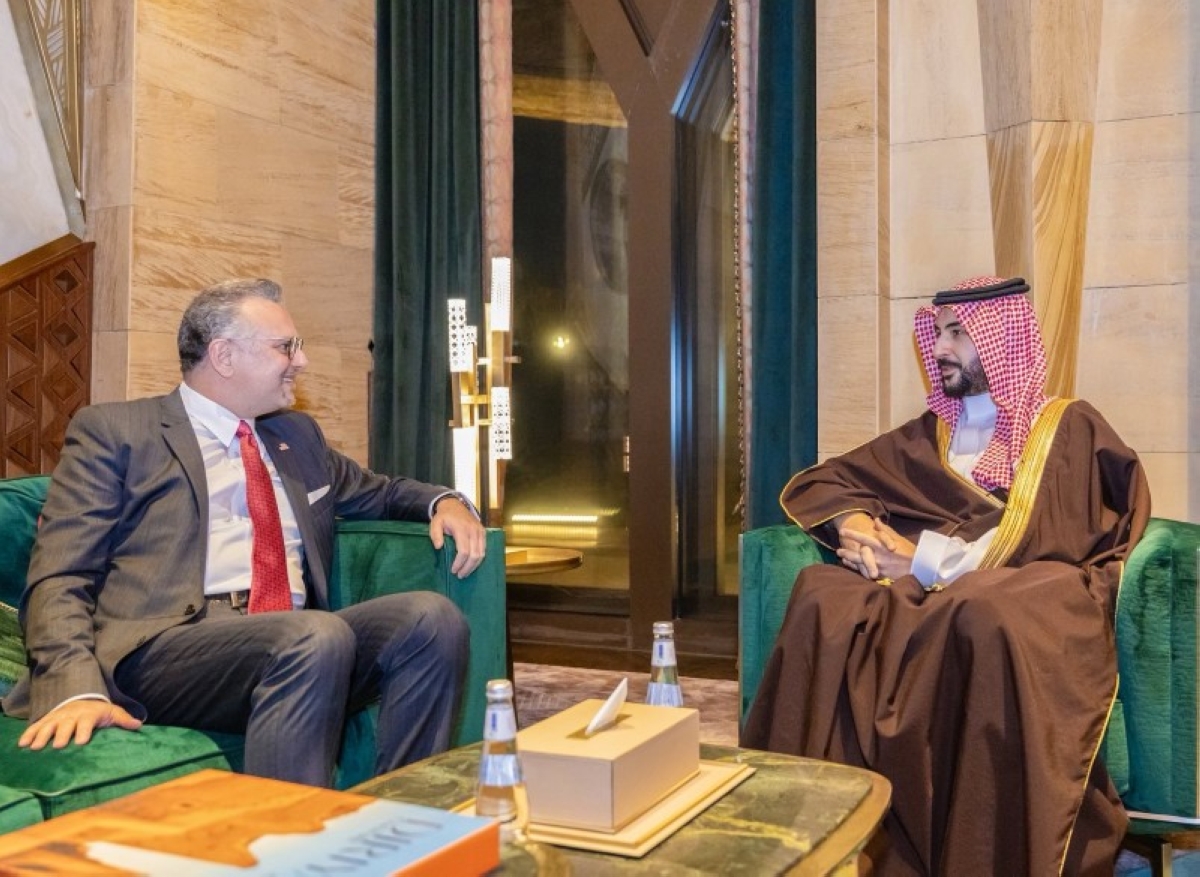

Saudi Minister of Defense Prince Khalid bin Salman met with Massad Boulos, a senior advisor to the U.S. president, in Riyadh on Thursday, signaling continued high-level dialogue between the two nations. The meeting focused on strengthening Saudi-U.S. relations and addressing pressing regional concerns, including efforts to foster peace and stability. Discussions also encompassed a range of issues of mutual strategic interest, according to the Saudi Ministry of Defense.
The meeting took place at the Ministry of Defense headquarters in Riyadh, with key Saudi officials in attendance, including Foreign Minister Prince Faisal bin Farhan and National Security Advisor Musaed bin Mohammed Al-Aiban. Boulos’s visit underscores the importance the U.S. administration places on maintaining close ties with Saudi Arabia, a key partner in the Middle East. The timing of the meeting is particularly noteworthy given ongoing geopolitical tensions and diplomatic initiatives in the region.
Strengthening Saudi-U.S. Relations Amidst Regional Shifts
The discussions between Prince Khalid and Boulos centered on bolstering the long-standing Saudi-U.S. relations, which have historically been rooted in security cooperation and economic partnership. However, the relationship has faced periods of strain in recent years, stemming from differing approaches to issues such as oil production and human rights. This meeting appears to be a concerted effort to reaffirm commitment and navigate these complexities.
Focus on Regional Security
A significant portion of the conversation revolved around regional security challenges. According to a statement released by the Saudi Ministry of Defense, the officials reviewed recent developments in the Middle East, including the ongoing conflict in Yemen and the broader implications of Iran’s regional activities. Both sides reportedly expressed a shared interest in de-escalation and promoting stability throughout the region.
Additionally, the meeting addressed ongoing diplomatic efforts to achieve a lasting peace in Yemen. Saudi Arabia has been a key player in mediating a ceasefire and facilitating talks between the warring parties. The U.S. has provided diplomatic support for these efforts, and the two sides likely discussed strategies for sustaining the fragile truce and reaching a comprehensive political settlement. The situation in Yemen remains a critical concern for both countries, given its humanitarian consequences and potential for regional spillover.
Economic and Political Alignment
Beyond security concerns, the meeting also touched upon economic cooperation and political alignment. Saudi Arabia is a major investor in the U.S. economy, and the two countries have a strong trade relationship. Discussions likely included exploring opportunities to further enhance economic ties, particularly in areas such as energy and technology. The U.S. is also seeking Saudi Arabia’s support in addressing global challenges such as climate change and counterterrorism.
Meanwhile, the presence of senior Saudi officials, including the Foreign Minister and National Security Advisor, suggests a comprehensive approach to the discussions. This indicates that the meeting wasn’t solely focused on defense matters but encompassed a broader range of strategic issues. The inclusion of advisors specializing in political affairs and intelligence further underscores the depth of the engagement.
The U.S. has been actively seeking to recalibrate its foreign policy in the Middle East, shifting its focus from direct military intervention to a more diplomatic and partnership-based approach. This strategy requires strong relationships with key regional players like Saudi Arabia. The Biden administration has emphasized the importance of human rights and democratic values in its foreign policy, which has sometimes created friction with Saudi Arabia. However, the administration has also recognized the need to cooperate with Saudi Arabia on issues of mutual interest, such as energy security and counterterrorism. This balancing act is a key feature of current U.S. policy towards the Kingdom.
In contrast to some previous periods, the current dialogue appears to prioritize a pragmatic approach, acknowledging areas of disagreement while focusing on shared objectives. This is particularly evident in the emphasis on regional stability and the pursuit of peaceful resolutions to conflicts. The ongoing normalization efforts between Saudi Arabia and Iran, facilitated by China, were likely also a topic of discussion, given the potential implications for regional dynamics. The U.S. has expressed support for de-escalation between the two regional rivals, but has also maintained its own security commitments to its allies in the Gulf.
The Saudi-U.S. partnership extends to intelligence sharing and counterterrorism efforts, areas where both countries have a long history of cooperation. The meeting likely included discussions on addressing emerging threats from extremist groups and ensuring the security of critical infrastructure. The two countries also collaborate on cybersecurity initiatives and efforts to combat transnational crime. These areas of cooperation are expected to continue to be prioritized in the future.
Looking ahead, further consultations between Saudi and U.S. officials are anticipated in the coming weeks and months. The next major diplomatic event will be the upcoming United Nations General Assembly in September, where both Prince Faisal and Secretary of State Antony Blinken are expected to attend. The outcome of these continued discussions will be crucial in shaping the future trajectory of bilateral ties and regional stability. The effectiveness of these efforts will depend on both sides’ willingness to address sensitive issues constructively and maintain a commitment to shared goals. The evolving geopolitical landscape and the ongoing conflicts in the region will continue to present challenges and opportunities for both Saudi Arabia and the United States.