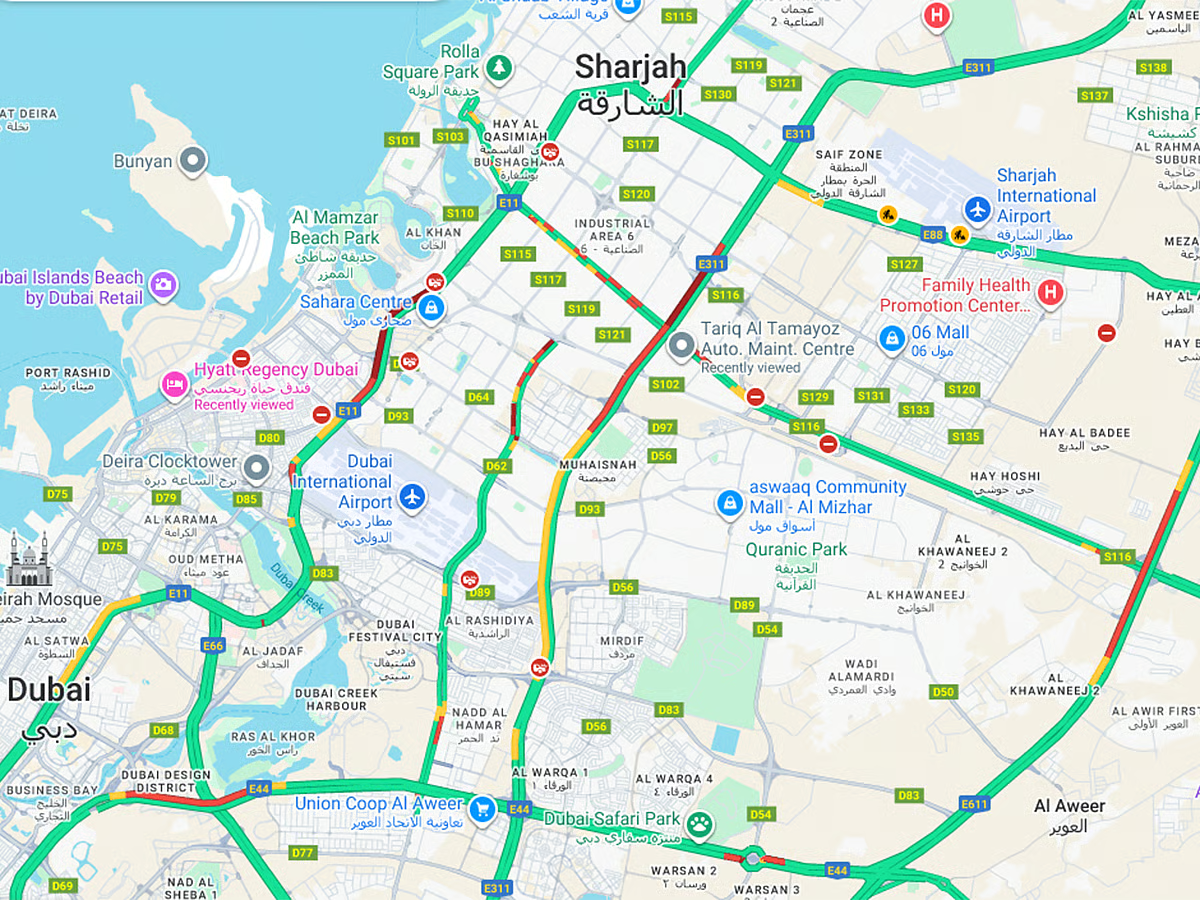

Commuters faced significant delays during peak hours on Tuesday as severe traffic gridlock impacted major roadways connecting Sharjah and Dubai. The congestion, reported across several key arteries including Sheikh Zayed Road and the Emirates Road, began around 7:00 AM and persisted well into the morning rush, causing travel times to more than double in some areas. Authorities are investigating the causes and working to mitigate the impact on drivers.
The affected routes primarily included E11 (Sheikh Zayed Road), E611 (Emirates Road), and sections of the Dubai-Sharjah Road. Reports from traffic monitoring services and social media indicated particularly heavy slowdowns near key interchanges and construction zones. The disruption prompted calls for improved traffic management and consideration of alternative transportation options.
Understanding the Sharjah-Dubai Traffic Gridlock
The recurring issue of traffic congestion between Sharjah and Dubai is a complex one, stemming from a combination of factors. Rapid population growth in both emirates, coupled with a high reliance on private vehicles, consistently strains the existing road infrastructure. Additionally, the concentration of workplaces in Dubai and residential areas in Sharjah creates a predictable, heavy flow of commuters during peak hours.
Contributing Factors to Tuesday’s Delays
While the general pattern of congestion is well-established, Tuesday’s traffic gridlock appeared particularly acute. Initial reports suggest a series of minor accidents contributed to the slowdown, though none were reported as major incidents requiring extensive emergency response. These incidents, even if quickly cleared, can create ripple effects that significantly impact traffic flow.
Ongoing road maintenance and construction projects also played a role. Several long-term projects are underway to improve road capacity and connectivity, but these inevitably lead to lane closures and reduced speed limits during the construction phase. The Roads and Transport Authority (RTA) in Dubai and the Sharjah Roads and Transport Authority (SRTA) regularly publish updates on these projects, but drivers may not always be aware of the potential impact.
Weather conditions were generally clear, ruling out rain or fog as a primary cause. However, the high temperatures can affect road surfaces and potentially contribute to minor vehicle issues, indirectly impacting traffic. The increased number of vehicles on the road following the summer holidays may also be a contributing factor, according to transport analysts.
Impact on Commuters and Businesses
The extended commute times caused by the traffic gridlock had a noticeable impact on both individuals and businesses. Employees reported being late for work, and appointments were rescheduled as a result of the delays. This can lead to decreased productivity and increased stress levels for commuters.
Businesses that rely on timely deliveries also experienced disruptions. Logistics companies reported delays in transporting goods between Sharjah and Dubai, potentially affecting supply chains and customer service. The economic cost of such congestion, while difficult to quantify precisely, is substantial.
Public transportation, including buses and the Sharjah-Dubai railway, saw increased demand. However, even these services were affected by the overall congestion, experiencing some delays themselves. The need for expanded and more efficient public transport options remains a key priority for both emirates.
Long-Term Solutions and Infrastructure Development
Authorities in both Sharjah and Dubai are actively pursuing long-term solutions to address the persistent issue of congestion. These include significant investments in road infrastructure, such as the expansion of existing highways and the construction of new bypasses. The planned Route E10, for example, aims to provide an alternative route between the two emirates.
Smart traffic management systems are also being implemented to optimize traffic flow. These systems utilize real-time data from sensors and cameras to adjust traffic signal timings and provide drivers with up-to-date information on road conditions. The RTA has been piloting several such technologies in Dubai, with promising results.
Encouraging the use of public transportation and promoting alternative modes of transport, such as cycling and walking, are also crucial components of the strategy. This requires not only expanding the public transport network but also making it more attractive and convenient for commuters. Investment in last-mile connectivity solutions is also vital. The development of integrated transportation systems is a key focus.
Furthermore, discussions are ongoing regarding potential measures to manage demand, such as congestion pricing or staggered work hours. These options are often controversial, but they may be necessary to address the underlying causes of congestion. The SRTA is currently studying the feasibility of various demand management strategies.
Future Outlook and Ongoing Monitoring
The Sharjah and Dubai authorities are continuing to monitor traffic conditions closely and will likely implement further measures to mitigate congestion in the coming weeks. The RTA has stated its commitment to reducing commute times and improving the overall transportation experience for residents and visitors.
A comprehensive review of traffic patterns and incident response procedures is expected to be completed by the end of November, according to a statement released by the joint traffic committee. This review will inform future infrastructure planning and traffic management strategies. The effectiveness of current mitigation efforts and the potential for further disruptions will remain key areas of focus. The long-term success of these initiatives will depend on continued investment, innovation, and collaboration between the two emirates.
The impact of Expo 2020 Dubai, which concluded in 2022, continues to be assessed in terms of its long-term effects on traffic patterns. While the event itself generated significant traffic, the associated infrastructure improvements may provide some relief in the future. However, sustained population growth and economic development will continue to pose challenges to maintaining smooth traffic flow between Sharjah and Dubai.