






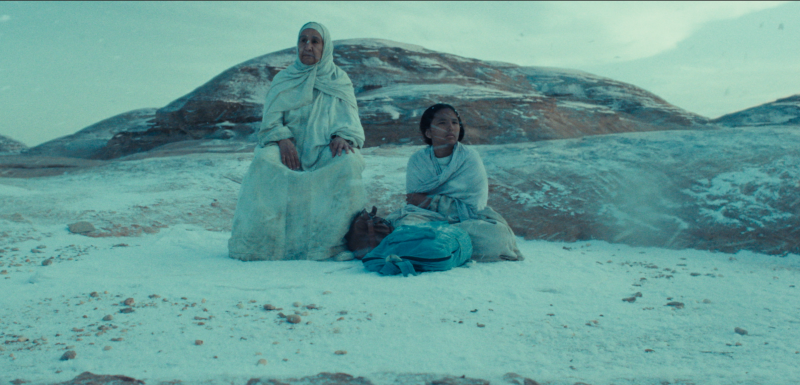

Saudi Arabia’s cinematic offering, Hijra, directed by Shahad Ameen, is gaining international recognition for its poignant story and authentic portrayal of the Kingdom. The film, meaning “pilgrimage,” follows a grandmother and her granddaughters on a journey that explores themes of family, faith, and self-discovery against the backdrop of Saudi Arabia’s diverse landscapes. Hijra premiered at the Venice Film Festival and has been selected as Saudi Arabia’s submission for the Academy Awards.
Exploring Saudi Arabia Through the Lens of Hijra
The film centers on Sitty and her two granddaughters as they travel to perform the pilgrimage. When one granddaughter goes missing, the journey transforms into a search that reveals the complexities of their relationships and the beauty of their surroundings. Producer Mohammed Al-Daradji suggested shifting the narrative to a road movie format to better showcase Saudi Arabia’s geography and the spiritual undercurrents of the story.
Universal Themes in a Local Context
While the title and setting may initially suggest a niche audience, the filmmakers intentionally crafted Hijra to resonate with viewers globally. Director Shahad Ameen emphasized her desire to create films that transcend cultural boundaries, noting that the concept of pilgrimage – a journey seeking meaning – is universally understood. The film’s exploration of redemption and personal transformation further contributes to its broad appeal.
The characters themselves embody these universal themes. Ahmed, played by Nawaf Al-Dhufairi, begins as a seemingly self-serving driver but undergoes a significant emotional shift as he connects with Janna, the younger granddaughter. Al-Dhufairi described Ahmed’s journey as a reconnection with his own humanity, spurred by the vulnerability of the child.
Similarly, Lamar Faden, who portrays Janna, highlights the character’s growth throughout the film. Janna evolves from a hesitant child into a more confident and self-aware young woman, ultimately discovering her own identity during the challenging journey. This coming-of-age story is a central element of the film’s emotional core.
A New Perspective on Saudi Arabian Cinema
Hijra is notable for offering a fresh and authentic portrayal of Saudi Arabia, moving beyond stereotypical representations often seen in international films. Ameen stressed the importance of telling local stories from a Saudi perspective, advocating for greater representation of both male and female filmmakers from the Kingdom. This focus on authenticity extends to the film’s production.
The cast and crew physically traveled across vast stretches of Saudi Arabia, experiencing the country’s diverse environments firsthand. This immersive approach allowed them to capture the true essence of the landscape, from foggy mountains to expansive deserts. Ameen intentionally included scenes showcasing the unexpected, such as snowfall in Tabuk, to challenge preconceived notions about the region.
The production also provided opportunities to experience Saudi hospitality. An incident recounted by Al-Dhufairi, where local youths initially appeared threatening but were actually inviting the crew to a feast, exemplifies the warmth and generosity of the Saudi people. This experience underscored the filmmakers’ commitment to portraying the country in a nuanced and positive light.
The Significance of the 2001 Setting
The film is set in 2001, a year with significant global historical weight. However, Ameen clarified that the political context of the year was not a primary focus of the narrative. The setting was chosen to accommodate the backstory of the grandmother character, whose journey began decades earlier with travel by foot, a mode of transportation more common in that era. The year served the story, rather than the other way around.
The selection of Hijra as Saudi Arabia’s Academy Awards submission marks a significant moment for the Kingdom’s film industry. It demonstrates a growing commitment to supporting local filmmakers and sharing Saudi stories with a global audience. The film’s success at the Venice Film Festival further validates this approach.
The Academy will announce the shortlist for the International Feature Film category in December 2023, with the final nominations revealed in January 2024. Whether Hijra secures a nomination remains to be seen, but its impact on showcasing Saudi Arabian culture and storytelling is already being felt. The film’s reception will likely influence future funding and distribution opportunities for Saudi cinema on the international stage, and continued attention will be paid to the Kingdom’s evolving role in global filmmaking.