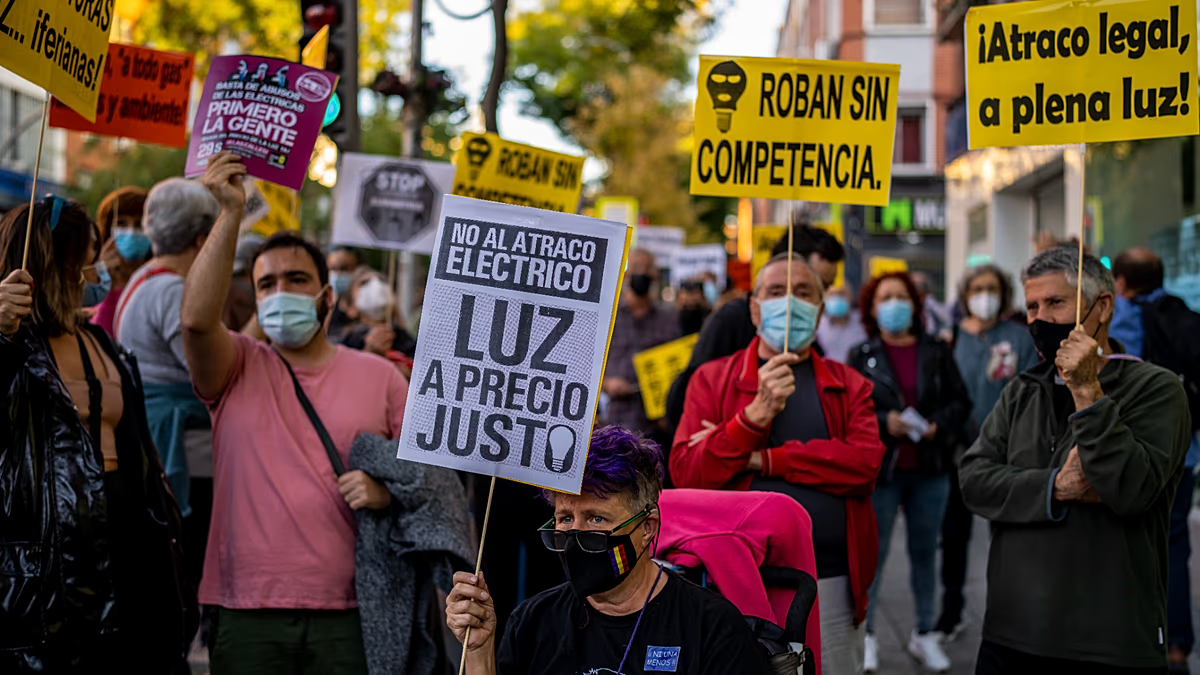

European Union energy ministers are working to address significant price discrepancies across member states, aiming to level energy prices and ensure a more equitable system for consumers. Some countries are paying up to seven times more for energy than others, a situation exacerbated by Russia’s invasion of Ukraine and the subsequent disruption of energy supplies. This push for price harmonization comes as the EU seeks to bolster its energy security and competitiveness.
Since the war in Ukraine began, energy costs have risen sharply throughout the EU, despite efforts to reduce reliance on Russian sources. The Czech Republic, Denmark, Lithuania, and Romania have experienced average price surges of 87%, while Belgium has seen gas bills increase by nearly 100%, according to recent data. However, the impact hasn’t been uniform, with nations heavily invested in renewable energy or nuclear power proving more resilient to the wholesale price spikes.
Addressing Disparities in EU Energy Prices
A key driver of the price differences is the varying energy mix across member states. Germany, Belgium, and Denmark currently face the highest electricity costs within the EU, while Hungary, Bulgaria, and Malta enjoy the lowest, data from the European Commission reveals. This disparity is stark, with German households paying four times more for electricity than their counterparts in Hungary.
The situation is even more pronounced in the natural gas market. Sweden, the Netherlands, and Denmark are among the highest payers, while Hungary, Croatia, and Romania benefit from significantly lower prices. The gap between Sweden and Hungary can reach a factor of seven, highlighting the urgent need for a coordinated approach.
Energy Commissioner Dan Jørgensen emphasized the dual goal of decarbonizing the energy sector while simultaneously reducing prices. “We need to decarbonise our energy while getting the energy prices down at the same time,” Jørgensen stated to reporters at the Energy Council meeting. This reflects the EU’s commitment to the European Green Deal and its long-term climate objectives.
Cypriot Minister for Energy, Commerce and Industry, Michael Damianos, underscored the importance of the EU grids package recently proposed by the European Commission. “It is vital to lower energy prices for our people and we do believe that this is central to competitiveness,” Damianos said, adding that collective action is essential. Cyprus is preparing to assume the EU Presidency in the coming weeks.
The Role of Electrification and Local Generation
Analysts suggest that increasing electrification and promoting local energy generation are crucial steps towards mitigating the impact of external energy shocks. A recent report from the Institute of Security Studies (ISS) argues that these measures are “the most effective antidote to Russian interference in the energy system.” This approach would reduce the EU’s dependence on imported fossil fuels and enhance its energy independence.
The European Commission has identified several barriers contributing to high energy prices and uneven distribution, including inefficient grid interconnections, lengthy permitting processes for renewable projects, fragmented national planning, and insufficient investment in infrastructure. Ministers are now tasked with implementing strategies to overcome these challenges.
However, achieving price stability across the EU is a complex undertaking. Energy policy remains largely a national competence, and differing tax regimes further complicate the picture. EU lawmakers are preparing to revisit the electricity market design law, following a recent Commission proposal aimed at streamlining environmental legislation.
One potential solution gaining traction is the implementation of two-way contracts for difference. This financial mechanism, already being used for renewable and nuclear energy investments, aims to provide stable revenue streams for producers while protecting consumers from excessive price fluctuations. The Commission recently approved the construction of Poland’s first nuclear power plant, which will operate under such a contract.
Under this system, the Polish state will compensate the energy producer if market prices fall below a pre-determined “strike price,” and the producer will reimburse the state if prices exceed it. This mechanism is designed to share both the risks and rewards of energy production, fostering investment in clean energy sources.
Looking ahead, the EU will continue to focus on strengthening its energy infrastructure, accelerating the transition to renewable energy, and fostering greater cooperation among member states. The success of these efforts will be critical in ensuring affordable and secure energy prices for all European citizens. Monitoring the implementation of the grids package and the uptake of contracts for difference will be key indicators of progress in the coming months.