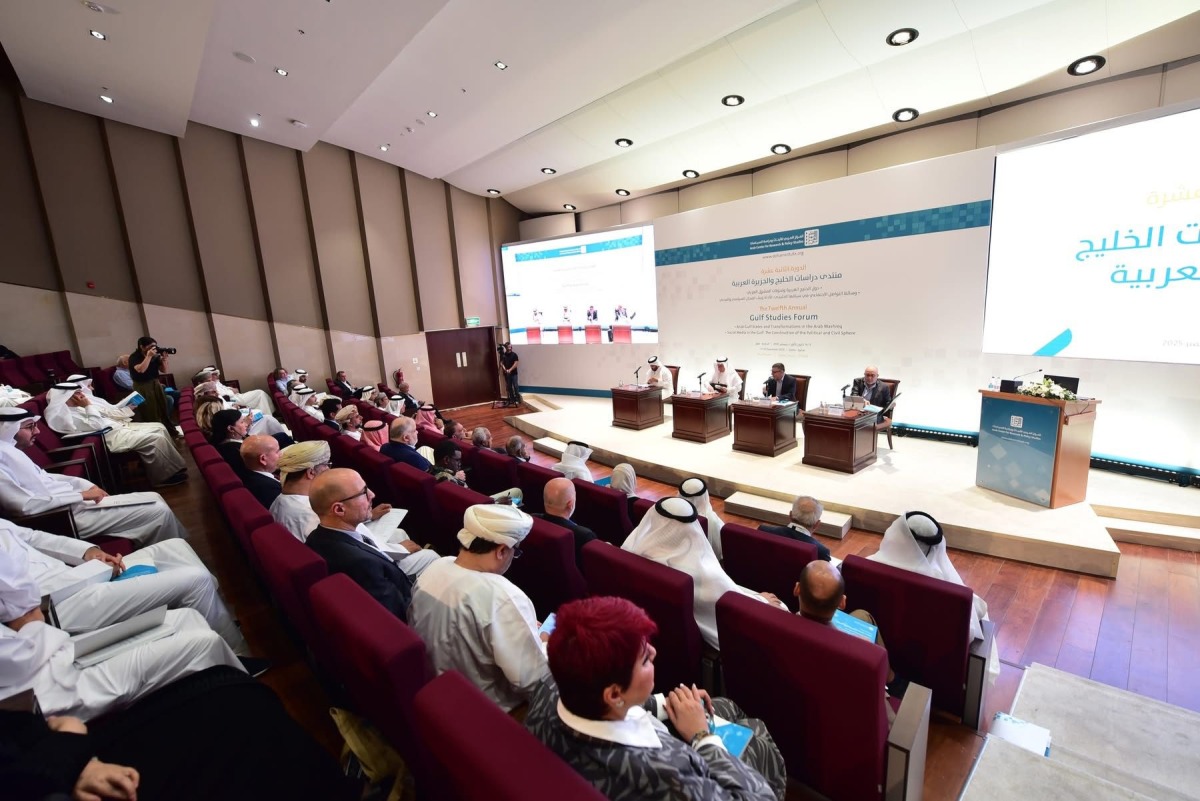

The twelfth annual Gulf Studies Forum convened in Doha, Qatar, on December 13, 2025, bringing together researchers and policymakers to analyze critical developments impacting the region. Organized by the Arab Center for Research and Policy Studies (ACRPS), the two-day forum is examining the evolving relationship between the Arab Gulf states and the wider Arab Mashreq, alongside the increasing influence of social media on political and social landscapes. This year’s event features 40 researchers presenting their findings across 16 sessions.
The forum’s opening comes at a particularly sensitive time, marked by significant regional shifts and ongoing conflicts. Discussions are expected to inform understanding of the Gulf’s role in navigating these complex challenges and shaping its future trajectory. The event is taking place as the Gulf region experiences high rates of digital adoption and the subsequent impact on various facets of life.
Understanding the Gulf’s Role in Regional Transformations
A central theme of the forum is the impact of recent events in the Arab Mashreq – including the conflict in Gaza, the situation in Syria, and ongoing instability in Lebanon, Yemen, and Iraq – on the Gulf Cooperation Council (GCC) states. Researchers are exploring how these developments are reshaping alliances and influencing the strategic priorities of Gulf nations. Abdullah Al-Shaiji, in his presentation, argued that Operation Al-Aqsa Flood represents a strategic turning point with far-reaching consequences for regional power dynamics.
GCC Engagement and Response
Several presentations focused on the determinants of GCC engagement with the Mashreq. Asaad Saleh Al-Shamlan advocated for a regional order based on deeper integration to bolster developmental goals and enhance resilience against external pressures. This approach, he suggested, would allow the GCC to more effectively address shared challenges and promote stability.
However, achieving such integration requires navigating complex political landscapes and overcoming existing divisions. The forum is also addressing the emergence of “minilateralism” – a shift towards smaller, more focused cooperative arrangements – as a pragmatic alternative to traditional, broader alliances, as presented by Khalid Al-Khulaifi. This trend suggests a growing preference for flexibility and targeted collaboration in response to rapidly changing circumstances.
Security Concerns and Strategic Vision
The security implications of transformations in the Arab Mashreq for the Gulf states are also under scrutiny. Abdullah Al-Ghailani called for a new strategic vision that prioritizes Gulf autonomy and strengthens internal consensus. A key element of this vision, he emphasized, is a reassessment of positions on critical issues, particularly the Palestinian cause, to enhance Gulf agency and geostrategic positioning. The Council on Foreign Relations provides further background on the complexities of the Middle East region.
The Impact of Social Media in the Gulf
Alongside geopolitical analysis, the Gulf Studies Forum is dedicating significant attention to the role of social media in the region. With some of the highest rates of digital usage globally, Gulf states are witnessing a profound transformation of their political and civil spheres through platforms like X (formerly Twitter), Instagram, and TikTok. This digitization raises new questions about state control, identity formation, privacy, and the legal framework governing online activity.
The forum is exploring how social media is being used to construct narratives, mobilize public opinion, and challenge traditional power structures. Researchers are also examining the potential for these platforms to foster greater civic engagement and promote democratic values, as well as the risks of misinformation and manipulation. The increasing importance of Middle East digital policy is a related area of growing interest.
The forum’s discussions on the Gulf region and social media are particularly relevant given the recent rise in online activism and the increasing use of digital tools by both state and non-state actors. Understanding these dynamics is crucial for policymakers and researchers alike.
The Gulf Studies Forum will conclude on December 14, 2025, with a final set of presentations and a closing discussion. A comprehensive report summarizing the key findings and recommendations is expected to be published by the ACRPS in the coming months. The ongoing conflicts and evolving political landscape suggest that the issues addressed at this forum will remain central to the future of the Gulf and the wider Arab world, and further research and analysis will be necessary to fully understand their implications.
The Arab Center for Research and Policy Studies is a leading institution for social science research in the Arab world.