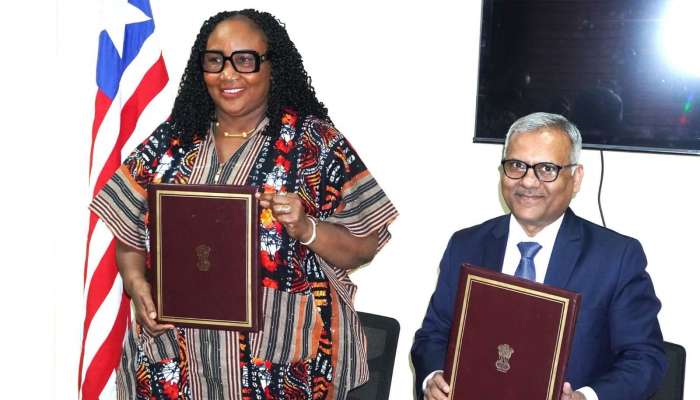

India and Liberia have forged a significant new partnership aimed at bolstering healthcare access and quality within Liberia. On Thursday, the two nations signed a Memorandum of Understanding (MoU) focused on strengthening cooperation in the field of pharmacopoeia, a crucial step towards aligning regulatory standards and ensuring the availability of safe, affordable medicines for the Liberian population. This agreement represents a deepening of the India-Liberia relationship and a commitment to global health security.
Strengthening Healthcare Through Pharmacopoeial Cooperation
The MoU, signed by India’s Ambassador to Liberia, Manoj Bihari Verma, and Liberia’s Health Minister, Louise M. Kpoto, outlines a framework for Liberia to adopt the Indian Pharmacopoeia as a reference standard for assessing the quality of medicines. This is a pivotal move, as it provides Liberia with a recognized and robust system for ensuring drug efficacy and safety. The Ministry of Health of Liberia announced the agreement on X (formerly Twitter), highlighting its importance in improving access to essential medications.
What is a Pharmacopoeia and Why Does it Matter?
A pharmacopoeia is essentially an official compendium detailing the quality standards for drugs. It’s a vital tool for regulatory bodies, manufacturers, and healthcare professionals. According to the Ministry of AYUSH, these standards cover everything from the identification and purity of a drug to its strength and composition.
This isn’t simply about checking for the presence of the active ingredient. The Indian Pharmacopoeia, which Liberia will now utilize, employs a comprehensive suite of analytical techniques. These include High Performance Thin-Layer Chromatography (HPTLC), High Performance Liquid Chromatography (HPLC), and Gas Chromatography (GC), alongside spectroscopic methods, to create a detailed profile of each drug.
Enhancing Medicine Quality and Regulatory Alignment
The adoption of the Indian Pharmacopoeia will significantly enhance Liberia’s ability to regulate the pharmaceutical market. Currently, maintaining stringent quality control can be a challenge for many developing nations. By leveraging India’s established standards, Liberia can streamline its processes and build confidence in the medicines available to its citizens.
This collaboration also extends to addressing potential contaminants. The pharmacopoeial monographs prescribe strict limits for heavy metals, pesticide residues, aflatoxins, and microbial contamination, ensuring that medicines are free from harmful substances. This focus on quality control is paramount in preventing adverse drug reactions and building public trust in the healthcare system. Medicine regulation is a complex process, and this MoU provides a valuable shortcut to improved standards.
A Boost to India-Liberia Relations
The agreement isn’t just about pharmaceuticals; it’s a testament to the growing partnership between India and Liberia. The Embassy of India in Monrovia described the development as a “significant step forward” in their health partnership. This collaboration builds upon existing initiatives and demonstrates India’s commitment to supporting healthcare development in Africa.
Additionally, this partnership aligns with broader global health cooperation efforts. Ensuring access to safe and affordable medicines is a universal goal, and initiatives like this contribute to a more equitable and secure global health landscape. The focus on global health security is increasingly important in a world facing emerging health threats.
Implications for Access to Affordable Medicines
One of the key benefits of this MoU is the potential to improve access to affordable medicines in Liberia. By streamlining regulatory processes and adopting internationally recognized standards, the agreement can facilitate the import and distribution of high-quality, cost-effective drugs. This is particularly important for a nation like Liberia, where access to healthcare resources can be limited.
Furthermore, the enhanced regulatory collaboration fostered by the MoU can attract investment in the pharmaceutical sector. This could lead to the establishment of local manufacturing facilities, further reducing the cost of medicines and creating employment opportunities. The long-term impact of this agreement could be transformative for Liberia’s healthcare system. Healthcare access remains a critical challenge in many parts of the world, and this MoU represents a positive step towards addressing it.
In conclusion, the signing of the MoU on pharmacopoeia between India and Liberia marks a significant milestone in their health partnership. By adopting the Indian Pharmacopoeia as a reference standard, Liberia is taking a proactive step towards strengthening its regulatory framework, improving medicine quality, and enhancing access to safe and affordable healthcare for its citizens. This collaboration not only benefits Liberia but also contributes to broader global health security efforts and reinforces the growing India-Liberia relationship. It’s a development worth watching as it unfolds and potentially serves as a model for other nations seeking to improve their pharmaceutical regulatory systems.