






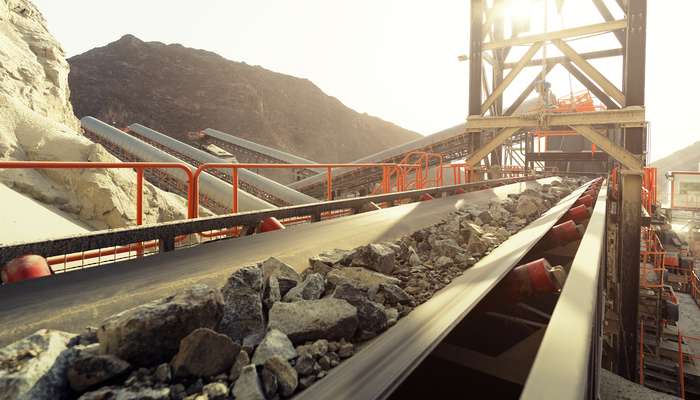

The mining sector in Oman is rapidly emerging as a key pillar of the Sultanate’s economic diversification strategy, moving beyond its traditional reliance on oil and gas. Recent comprehensive surveys and a modernized regulatory framework are revealing significant potential for mineral wealth, attracting both domestic and international investment. Oman Mining Development Company (OMDC) is at the forefront of these efforts, conducting extensive exploration to unlock the country’s geological resources and establish a sustainable, value-added mining industry.
Unlocking Oman’s Mineral Potential: Exploration Results
OMDC’s airborne and geochemical surveys have yielded promising results across various governorates, indicating the presence of several strategically important ores. These include gold, copper, zinc, lead, and chromium, suggesting a fertile geological landscape ripe for further development. However, Engineer Matar bin Salim Al Badi, CEO of OMDC, emphasizes that while the indicators are positive, confirming commercially viable quantities requires rigorous, internationally-recognized exploration processes.
Detailed Exploration is Key
The current phase focuses on detailed technical studies to accurately assess the size and quality of these identified resources. Al Badi stressed that announcing reserve sizes prematurely, before meeting standards like those set by Australia or Canada, would be irresponsible and could deter potential investors. These standards are crucial for establishing project viability and securing financing.
A New Regulatory Framework for Sustainable Growth
A significant catalyst for the growth of the mining industry in Oman has been the regulatory overhaul between 2017 and 2023. The introduction of a new investment model, mirroring the structure of the oil sector, allows for the allocation of large mining concession areas. This approach facilitates economically viable large-scale aerial geophysical surveys, a marked improvement over previous limitations of smaller survey areas.
OMDC currently holds 14 concession areas spanning approximately 24,000 square kilometers. Since 2022, the company has undertaken intensive exploration work, including over 16,000 square kilometers of aerial surveys, more than 100,000 meters of exploratory drilling, and the analysis of over 80,000 geological samples. This substantial investment in data acquisition is designed to minimize investment risks and attract partners.
Value Addition and Local Economic Development
OMDC’s strategy extends beyond simply extracting raw materials. A core objective is to maximize added value within Oman, fostering a diversified and resilient economy. This includes developing downstream industries and building a robust supporting services sector. The company is actively issuing tenders to localize specialized mining laboratories and develop local expertise in exploration drilling and surveying.
The focus on industrial minerals is a prime example of this value-added approach. The Shuwaimiyah district project, featuring a specialized marine berth for export, aims to produce 23 million tonnes of limestone and gypsum in its first phase, scaling up to 40 million tonnes. This project will serve as a cornerstone for establishing industrial complexes like the Duqm Industrial Center (focused on salt and silica) and the Shalim Industrial Center (specializing in limestone and gypsum).
Community Engagement and Environmental Responsibility
Recognizing the importance of social license to operate, OMDC prioritizes community acceptance in all its projects. Learning from past experiences, the company is investing heavily in environmental best practices, such as dry treatment technology for mining waste, to protect groundwater and surrounding ecosystems. This commitment to responsible mining is essential for long-term sustainability.
Strategic Focus Areas: Chromium, Copper, and Rare Earth Minerals
OMDC’s exploration efforts are strategically focused on metallic and precious metals, including gold, copper, zinc, lead, and chromium. The company is particularly keen on revitalizing Oman’s position as a global chromium exporter, with plans to establish an industrial center for purifying and upgrading the ore. Furthermore, they are exploring the potential for ferrochrome production in Sohar, a higher-value product than raw chromium.
Regarding rare earth minerals, Al Badi acknowledged that exploration is still in its early stages, and quantifying reserves remains uncertain. However, initial findings suggest a promising probability of their presence. The company has already invested over OMR20 million in exploration and prospecting over the past two years.
The Future of Mining in Oman: A Three-Tiered Approach
OMDC envisions a fully integrated mining sector in Oman, structured around three levels. The upper level encompasses exploration and mine development, primarily undertaken by OMDC to mitigate risks and attract investment. The middle level involves basic industries like purification plants and smelters, where the company seeks strategic partnerships. The lower level, representing downstream industries, is intended for private sector investment.
To further enhance value capture, the company is establishing the “Omani Metals Trading Company,” authorized to trade gypsum and chromium ores starting in June 2026. This initiative aims to maximize economic returns, develop new markets, and increase Oman’s global market share.
The company’s long-term goal is to increase the contribution of the mining sector to the national GDP to approximately 10% by 2040. Key projects like the copper mine in Yanqul, expected to begin trial operations by the end of 2026, are central to achieving this ambitious target. The Yanqul project boasts estimated reserves of 22.9 million tonnes of copper ore, and development is also underway at Sohar mines.
The Oman mining sector is poised for significant growth, driven by strategic investment, a modernized regulatory framework, and a commitment to sustainable and value-added development. Continued exploration and the establishment of robust local industries will be crucial for realizing the Sultanate’s mineral wealth and diversifying its economy for future generations.