







European Commission transparency is under scrutiny following an ongoing investigation by the European Ombudsman into the handling of a journalist’s request for a Signal message sent to President Ursula von der Leyen by French President Emmanuel Macron. Ombudsman Teresa Anjinho acknowledged “challenges” in ensuring access to documents across EU institutions, but defended the Commission’s overall commitment to transparency. The probe centers on whether the Commission adequately searched for and retained the message, raising broader questions about EU transparency and record-keeping practices.
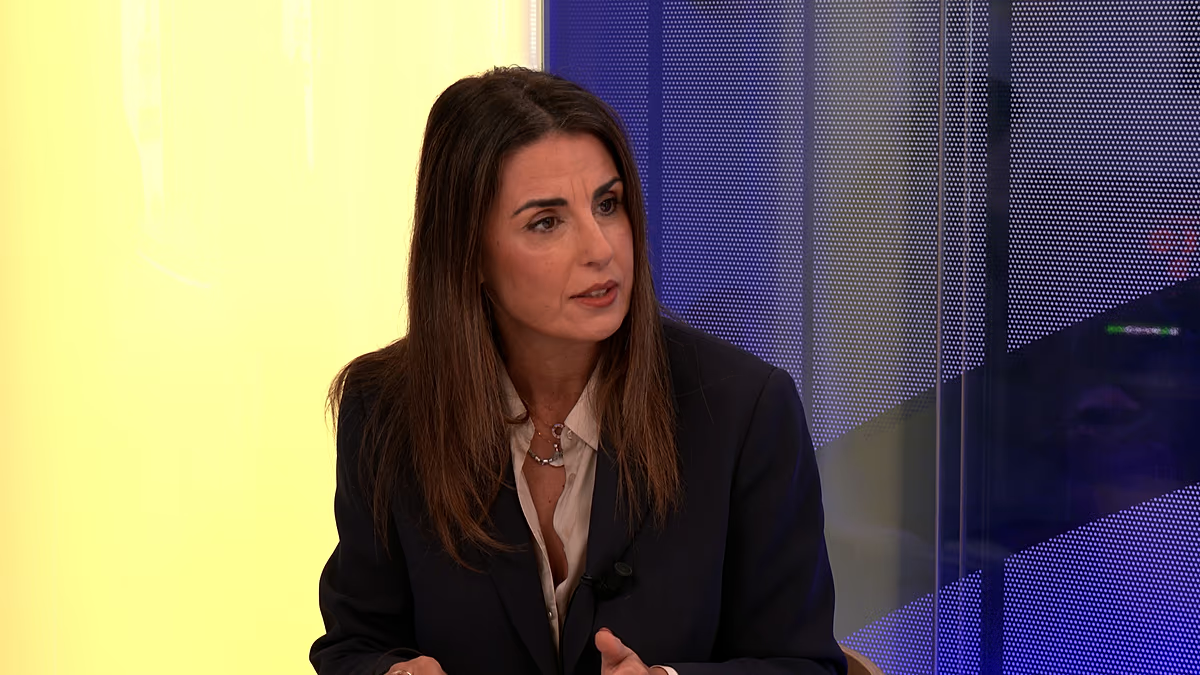
Anjinho’s comments, made in an interview with Euronews on December 12, 2025, come as her office continues to examine the Commission’s response to a request from investigative outlet Follow The Money. The journalist sought access to the Signal message, but the Commission initially claimed it couldn’t be located because von der Leyen had activated the app’s “disappearing messages” feature. This explanation has fueled concerns about deliberate attempts to circumvent public access to information.
Concerns Mount Over EU Transparency and Digital Records
The core issue revolves around the EU’s rules requiring institutions to provide access to documents related to their policies, regardless of the medium. According to Anjinho, simply having a message “disappear” is not a sufficient justification for withholding information. She emphasized that documents should be retained for proper analysis to determine if they are subject to disclosure.
This case echoes previous controversies, most notably the “Pfizergate” scandal. In that instance, the European Court of Justice ruled that the Commission had violated its own transparency rules by refusing to disclose WhatsApp messages exchanged between von der Leyen and the CEO of Pfizer during the COVID-19 vaccine procurement process. The Commission subsequently argued those messages were also “short-lived” and not worth preserving.
The repeated instances of potentially relevant communications being deleted or deemed non-essential have prompted calls for clearer guidelines on digital record-keeping within the EU administration. Critics argue that the current approach creates loopholes that allow officials to shield their communications from public scrutiny. The debate also touches on the balance between transparency, security, and the practicalities of managing digital information.
Ombudsman’s Investigation and Potential Outcomes
The European Ombudsman’s investigation is currently ongoing, with a final report and any recommendations expected in the coming months. However, it’s important to note that the Ombudsman’s recommendations are not legally binding on the Commission. While the Commission has expressed a commitment to transparency, it ultimately has the discretion to implement or reject the Ombudsman’s suggestions.
Anjinho stressed the importance of preventing similar situations in the future, stating that documents should be systematically retained and assessed for potential disclosure. She acknowledged the challenges of managing a large volume of communications but maintained that these challenges should not come at the expense of public access to information. The Commission has defended the use of automatic deletion, citing security concerns and the need to manage storage space.
Additionally, the controversy highlights the growing importance of digital communication in policymaking and the need for robust systems to ensure accountability. The use of encrypted messaging apps, while offering security benefits, also presents challenges for transparency and record-keeping. This case may spur further discussion on the appropriate use of such tools within the EU institutions.
The outcome of this investigation will be closely watched by transparency advocates and journalists across Europe. It could set a precedent for how the EU handles requests for access to digital communications in the future. Citizens interested in learning more about the European Ombudsman and its work can visit their official website: https://www.ombudsman.europa.eu/.