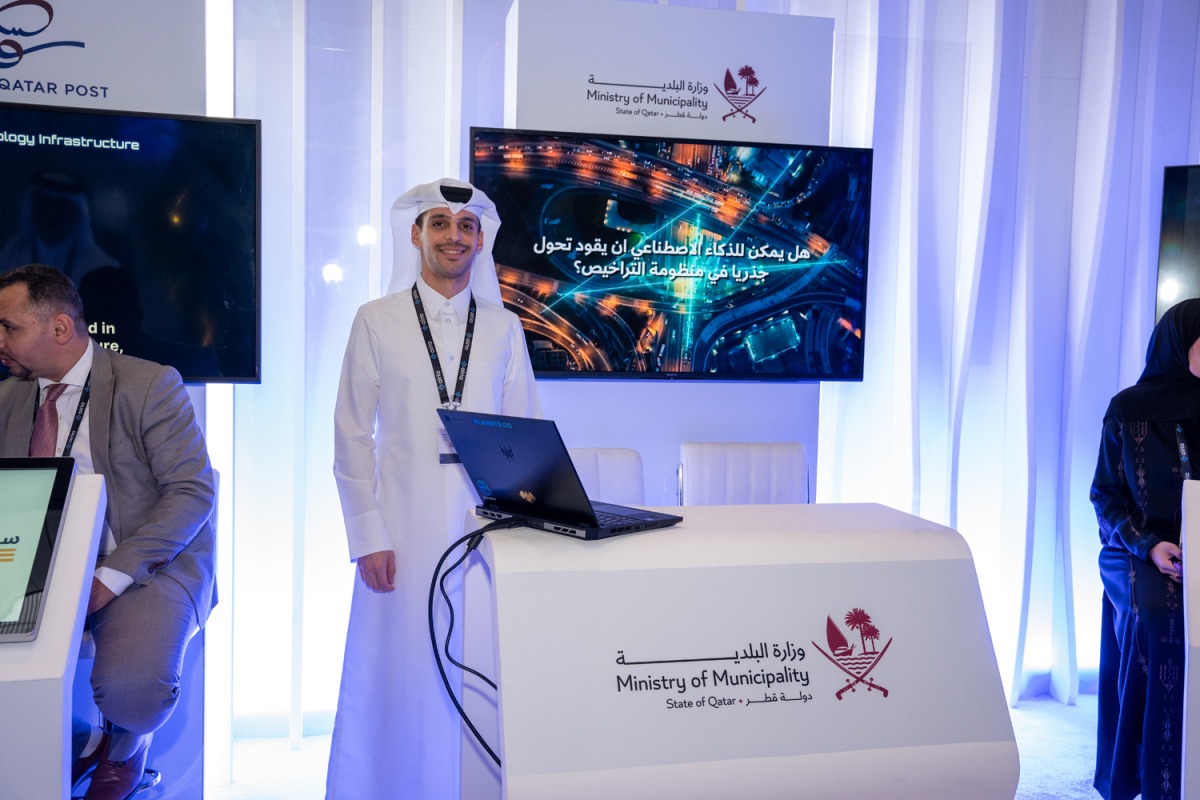

Doha, Qatar – Qatar showcased significant advancements in its artificial intelligence capabilities at the World Summit AI – Qatar 2025, unveiling over 20 national projects designed to enhance public services and accelerate digital transformation. A central demonstration was the Ministry of Municipality’s new AI-powered building permit system, which promises to drastically reduce processing times. The event highlighted Qatar’s commitment to becoming a leader in AI innovation, aligning with its Digital Agenda 2030 and Qatar National Vision 2030.
The “Qatar AI Pavilion” featured contributions from more than 14 government and private institutions, demonstrating a broad national effort. The projects span multiple sectors, including human resources, tendering, legislation, religious guidance, and cultural experiences, all leveraging the power of artificial intelligence and machine learning. This initiative is being spearheaded by the Government AI Program, a partnership between the Ministry of Communications and Information Technology (MCIT) and various technology firms.
Streamlining Government Services with AI
The core objective of these AI implementations is to improve efficiency and accuracy across government operations. The Ministry of Municipality’s AI-powered building permit system, for example, analyzes engineering drawings digitally to extract key data, reducing the average permit issuance time to approximately two hours. This represents a substantial improvement over previous, more manual processes, according to the ministry.
Additionally, MCIT presented an AI-enhanced Human Resources System automating the entire recruitment process. This includes filtering applications, conducting intelligent interviews with candidate evaluation support, and providing final assessments. The Smart Tendering System, also from MCIT, autonomously generates tender documents, conducts technical evaluations, and assesses submissions using specialized AI models.
Enhancing Legislative Processes
The Council of Ministers Secretariat General is also utilizing AI to modernize its legislative procedures. Their AI-Powered Legislation System supports drafting laws through automated benchmarking, compliance checks, and analytical reporting. This technology is expected to significantly speed up and improve the quality of legislative work, the ministry said.
Accessibility and Cultural Enrichment
Beyond core government functions, AI is being deployed to enhance accessibility and cultural experiences. The Ministry of Awqaf and Islamic Affairs showcased AI agents for the Islam Web platform, providing reliable religious guidance based on verified sources. They also developed AI solutions to translate Friday sermons for non-Arabic speakers, utilizing advanced language processing technologies.
Qatar Museums presented the “AI Museum Tour,” an AI-powered experience allowing visitors to explore museums, heritage sites, and public artworks in a personalized manner. The platform offers instant artwork recognition, contextual explanations, and customized routes based on user interests, alongside creative tools like the Arts Lab. This initiative aims to broaden access to Qatar’s rich cultural heritage.
Advancements in Arabic Language AI
Hamad Bin Khalifa University, through the Qatar Computing Research Institute, showcased the updated release of Fanar 2.0, an Arabic generative AI model. This new version demonstrates improved capabilities in understanding and generating Arabic text with greater linguistic and cultural accuracy. The development of Fanar 2.0 supports future applications in media, education, and government digital services, furthering the goal of digital transformation.
The projects presented at the summit also included AI tools for labor market governance and policy development, as well as intelligent assistants for customer service and internal support within government ministries. These assistants provide real-time guidance to improve service efficiency and address user inquiries.
The success of these initiatives hinges on continued investment in AI infrastructure and talent development. While the showcased projects represent a significant step forward, the long-term impact will depend on the ability to scale these solutions and integrate them seamlessly into existing systems. Further announcements regarding the rollout of these technologies and potential future developments are expected in the coming months, and the government’s commitment to the Digital Agenda 2030 will be a key factor to watch.
Source: The Peninsula Qatar
World Summit AI – Qatar 2025
Ministry of Communications and Information Technology (MCIT)
Ministry of Municipality
Islam Web
Qatar Museums
Hamad Bin Khalifa University