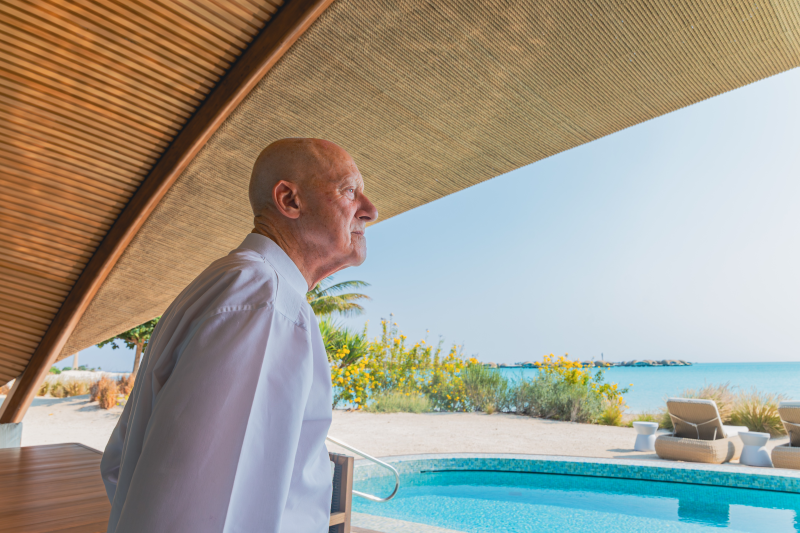

RIYADH — World-renowned architect Norman Foster recently visited Saudi Arabia’s Red Sea destination to assess the progress of several luxury tourism projects based on his designs. The visit highlighted the Kingdom’s commitment to developing a high-end tourism sector with a focus on innovative architecture and environmental sustainability. Foster’s designs, brought to life by Saudi engineers, are becoming a defining feature of the region’s emerging architectural landscape.
Foster toured key developments, including Nujuma, a Ritz-Carlton Reserve, and the Red Sea International Airport, observing the execution of plans initially conceived years ago. The trip underscores the ambitious scale of Saudi Arabia’s Vision 2030 plan, which aims to diversify the nation’s economy and reduce its reliance on oil. This includes significant investment in tourism infrastructure and a desire to establish a globally recognized destination.
Norman Foster’s Vision Takes Shape in the Red Sea
Foster, whose firm Foster + Partners has been instrumental in designing several key assets within the Red Sea project, expressed his admiration for the precision and quality of the construction. He specifically noted the seamless integration of the architecture with the surrounding natural environment, a critical component of the Red Sea’s development philosophy. The destination aims to minimize its environmental impact and preserve the pristine beauty of the coastline.
The Red Sea Project, a flagship initiative of Red Sea Global, is designed to be a regenerative tourism destination. This means it aims to not only minimize environmental damage but actively improve the environment. The project incorporates sustainable practices throughout its development, including the use of renewable energy and water conservation technologies.
Royal Endorsement and a National Architectural Shift
The visit follows previous praise from Crown Prince Mohammed bin Salman, who lauded Foster’s design for the new Abha airport as “worthy of Abha.” This statement, reported by Saudi state media, is widely interpreted as indicative of a broader national vision prioritizing high-quality, innovative architecture in the Kingdom’s development projects.
According to reports, the Crown Prince’s endorsement signals a shift away from purely functional designs towards structures that are aesthetically pleasing and reflect a sense of national pride. This emphasis on design quality is evident in projects beyond the Red Sea, including those within the NEOM development, another ambitious undertaking central to Vision 2030.
Foster is globally recognized for his pioneering designs, which often incorporate cutting-edge technology and sustainable materials. His portfolio includes iconic structures like the Millennium Bridge in London, the Reichstag Building in Berlin, and Apple Park in California. His involvement in Saudi Arabian projects brings a wealth of experience and a commitment to design excellence.
The Red Sea International Airport, designed by Foster + Partners, is a key component of the destination’s accessibility. The airport is intended to cater to a high volume of international tourists while minimizing its environmental footprint. It features a modular design that allows for future expansion and incorporates sustainable building materials and energy-efficient technologies.
Nujuma, a Ritz-Carlton Reserve, exemplifies the luxury and sustainability that the Red Sea Project aims to deliver. The resort is designed to blend seamlessly with the surrounding landscape, offering guests an immersive experience in a pristine natural environment. The project utilizes overwater villas and other innovative architectural solutions to minimize its impact on the marine ecosystem. This focus on sustainable tourism is a core tenet of the Red Sea development.
Beyond the Red Sea, Foster + Partners is also involved in designing elements of NEOM, a futuristic city being built in northwestern Saudi Arabia. This includes transportation infrastructure and urban planning components, further solidifying the firm’s role in shaping the Kingdom’s future landscape. The NEOM project represents a bold experiment in urban design and technology, aiming to create a truly sustainable and innovative city.
The successful implementation of these designs relies heavily on the capabilities of Saudi engineers and construction teams. The Red Sea Global has emphasized its commitment to developing local talent and fostering a knowledge-based economy. This includes providing training and opportunities for Saudi professionals to work alongside international experts on these groundbreaking projects. The development of local expertise in construction management and sustainable building practices is a key long-term goal.
Looking ahead, the Red Sea Project is scheduled to welcome its first guests in 2024, with a phased opening of resorts and facilities planned over the coming years. The completion of the airport and other infrastructure projects will be crucial to the destination’s success. While the timeline remains ambitious, ongoing progress suggests the vision of a sustainable and luxurious tourism destination is steadily becoming a reality. Further developments and the long-term environmental impact of the project will continue to be closely monitored.