





European security concerns are escalating as NATO Secretary General Mark Rutte warned that Russia could launch an attack against Europe within the next five years. The announcement, made in Berlin, reflects growing anxieties among Western intelligence agencies, though Moscow dismisses these claims as hysteria. Euronews’ “Europe Today” is covering these developments alongside key EU economic and political shifts.
The warning comes amid ongoing conflict in Ukraine, where the United States has suggested Kyiv consider withdrawing troops from the Donbas region to facilitate the establishment of a free economic zone. This proposal, and the broader geopolitical landscape, are central to the discussions unfolding in Brussels and across the continent, as reported on Euronews’ new daily show, “Europe Today”.
Russia’s Potential Attack and European Response
Rutte’s statement, delivered during a press conference, underscores a significant shift in the perceived threat level from Russia. While NATO has consistently supported Ukraine, the explicit warning of a potential direct attack on European nations signals a heightened state of alert. Intelligence assessments reportedly point to Russia actively rebuilding and modernizing its military capabilities, raising concerns about future aggression.
However, the Kremlin has consistently denied any intentions of attacking NATO members, characterizing the warnings as part of a deliberate campaign to justify increased military spending and support for Ukraine. This divergence in narratives highlights the deep distrust and escalating tensions between Russia and the West. The situation demands careful monitoring and a unified response from European allies.
Ukraine and the Donbas Proposal
The US suggestion regarding a potential Ukrainian withdrawal from Donbas is a controversial one. The proposal aims to create a demilitarized zone that could foster economic development and potentially de-escalate the conflict. However, critics argue that such a move could embolden Russia and further undermine Ukraine’s territorial integrity.
The feasibility of a free economic zone in Donbas also remains uncertain, given the ongoing security challenges and the complex political dynamics in the region. Ukraine has not officially responded to the proposal, and internal debate is likely ongoing regarding the potential risks and benefits.
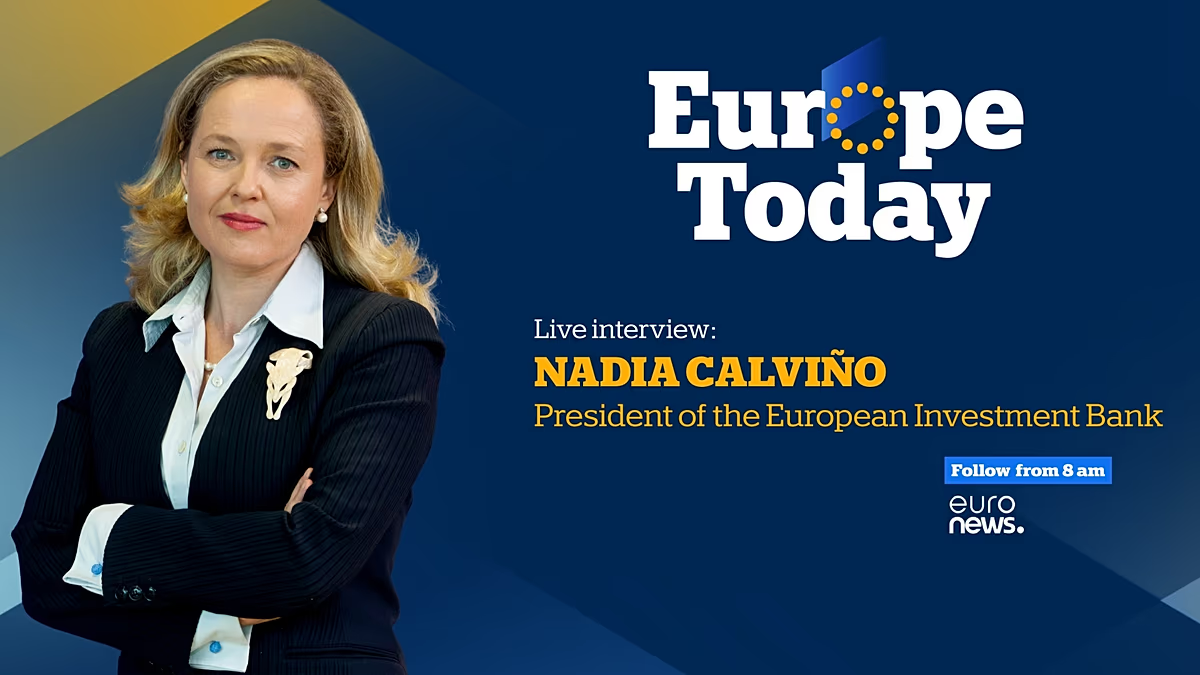
Meanwhile, the European Investment Bank (EIB) is playing a crucial role in supporting Ukraine’s economic resilience. President Nadia Calviño, speaking from the European Council, emphasized the EIB’s commitment to providing financial assistance to help Ukraine rebuild and recover.
EU Economic Challenges and Trade Deals
Beyond the security concerns, “Europe Today” also addressed the EU’s economic outlook. President Calviño discussed the challenges facing the Eurozone, including inflation and slowing growth, as well as the impact of former US President Donald Trump’s recent comments questioning Europe’s commitment to defense spending. Trump’s remarks have sparked renewed debate about the future of transatlantic relations and the need for greater European strategic autonomy.
The show also highlighted the ongoing negotiations surrounding the Mercosur trade deal. After 25 years of talks, a deadline is approaching, and Brussels is facing pressure to finalize the agreement with Argentina, Brazil, Paraguay, and Uruguay. The deal, if ratified, could create one of the world’s largest free trade areas, but concerns remain about its potential impact on European farmers and environmental standards.
In Bulgaria, a government resignation triggered by mass anti-corruption protests adds another layer of complexity to the EU landscape. This political instability comes just weeks before Bulgaria is scheduled to join the eurozone on January 1st, raising questions about the country’s preparedness and the potential for further disruptions. The protests reflect a growing public demand for greater transparency and accountability in government.
The developments in Bulgaria, Ukraine, and the broader geopolitical context underscore the multifaceted challenges facing Europe today. Continued monitoring of these situations, and the responses from European leaders, will be crucial in the coming weeks and months. Stay informed with “Europe Today,” broadcasting live from Brussels every morning at 8:00 CET.