






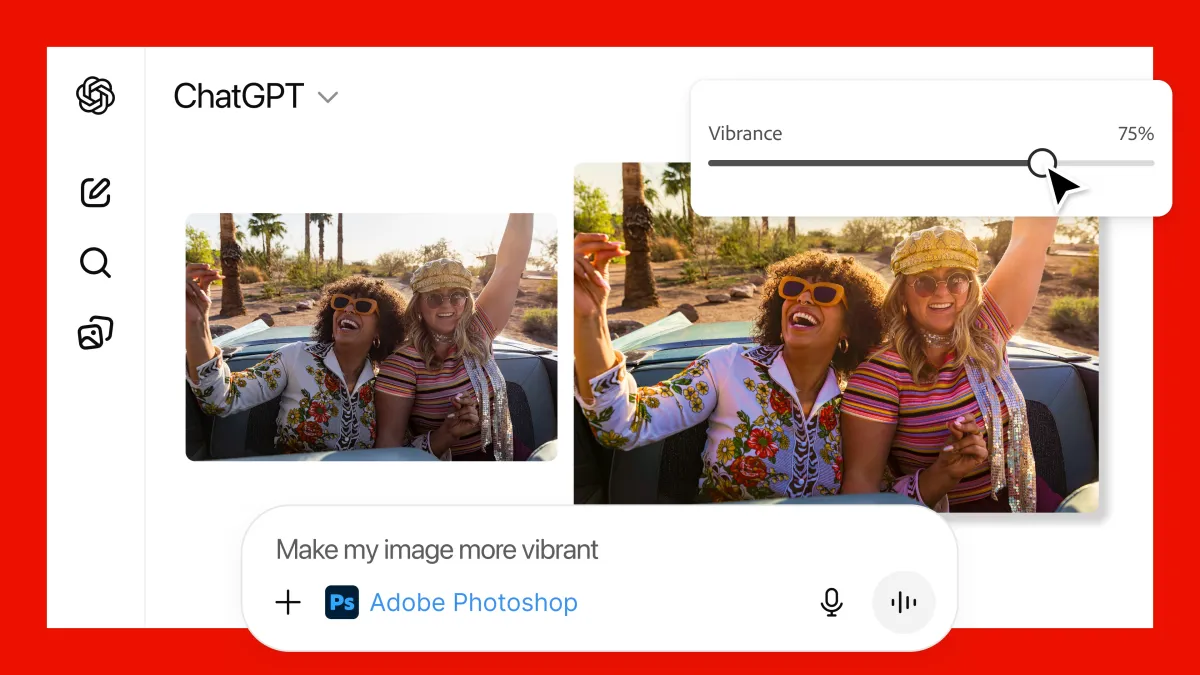

Adobe is significantly expanding the integration of its creative software suite with ChatGPT, bringing features from Photoshop, Express, and Acrobat directly into the popular chatbot interface. This move, announced Wednesday, allows users to leverage Adobe’s powerful tools for image editing, PDF manipulation, and design tasks through simple conversational prompts within ChatGPT. The integration aims to streamline workflows and attract new users to the Adobe ecosystem.
The rollout is happening globally, with features available on ChatGPT’s desktop, web, and iOS apps. Android support for Photoshop and Acrobat is coming soon, following the current availability of Adobe Express on the platform. This expansion builds on Adobe’s broader strategy of embedding artificial intelligence throughout its product line this year.
Adobe and ChatGPT: A New Era of AI-Powered Creativity
The integration with ChatGPT offers a new way for users to interact with Adobe’s software. Within ChatGPT, users can now instruct the chatbot to perform specific edits in Photoshop, such as removing backgrounds, adjusting brightness and contrast, or applying various effects. A key feature is the ability to control the intensity of these effects using sliders directly within the ChatGPT interface.
Additionally, ChatGPT users can now utilize Adobe Express to create and modify designs. This includes fetching pre-made templates, assembling themed visuals, and adding animations to elements. The integration with Acrobat enables tasks like merging PDF files, extracting text or tables, and making other common PDF edits, all through conversational commands.
Seamless Transition to Dedicated Apps
Adobe is providing a safety net for users who prefer more control. If a task becomes too complex or requires functionality not available within ChatGPT, users are offered the option to seamlessly transition to the full Adobe application to complete the work. This ensures a smooth experience and avoids forcing users into limitations.
This approach is similar to OpenAI’s initial rollout of third-party app support in October, which included integrations with companies like Canva, Spotify, Expedia, and Figma. However, the landscape is becoming increasingly competitive.
The Challenge of App Preference
As more companies integrate their applications with ChatGPT, a key challenge emerges: securing user preference. For example, both Canva and Photoshop can be used for image editing within ChatGPT. However, users who don’t already subscribe to either service may not have a strong reason to choose one over the other. This puts pressure on companies to demonstrate the unique value of their offerings within the ChatGPT environment.
The integration also highlights the growing trend of generative AI and its impact on creative workflows. Tools like Photoshop are evolving to incorporate AI-powered features, and partnerships like this one with OpenAI are accelerating that process. The broader market for AI tools is expected to continue its rapid expansion.
Adobe has been actively releasing AI-powered features throughout 2024, including AI assistants for Express and Photoshop, and previewing Project Moonlight, a cross-application AI assistant. This latest move with ChatGPT is a logical extension of these efforts, aiming to make Adobe’s tools more accessible and integrated into users’ daily routines.
The success of these integrations will likely be measured by user engagement and adoption rates within ChatGPT. It remains to be seen how significantly this will impact Adobe’s subscriber base and overall revenue. The company will be closely monitoring how users leverage these features and gathering feedback to refine the experience.
Looking ahead, Adobe will focus on expanding the functionality available within ChatGPT and improving the seamlessness of the transition between the chatbot interface and its dedicated applications. The company has not provided a specific timeline for full feature parity across all ChatGPT platforms, but continued development and integration are expected throughout 2025. The evolving relationship between Adobe and OpenAI, and the broader competition in the AI-powered creative space, will be a key area to watch in the coming months. TechCrunch provides further coverage of this development.