






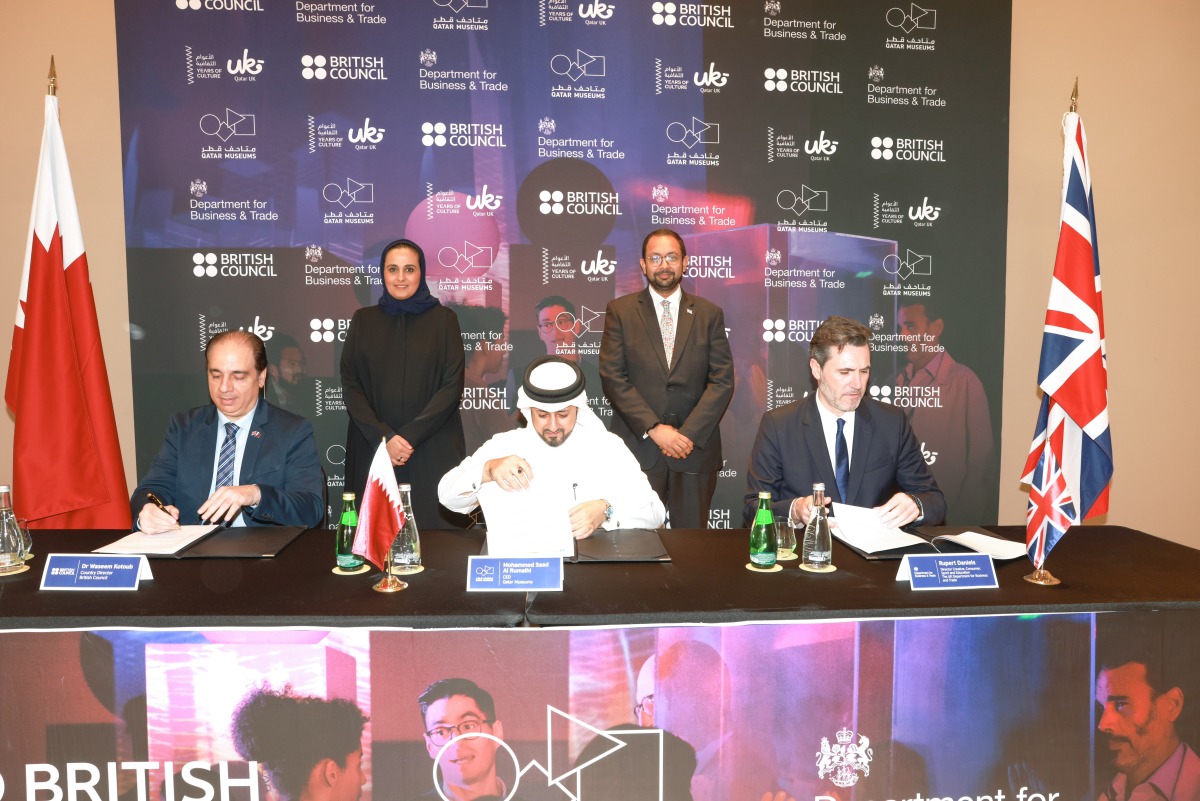

Doha, Qatar – Qatar Museums (QM) has formalized a new partnership with the United Kingdom’s Department for Business and Trade and the British Council through a signed memorandum of understanding (MoU). This agreement aims to bolster creative industries in both nations, building on the successful foundation laid by the Qatar-UK 2013 Year of Culture and subsequent collaborative efforts. The MoU signifies a renewed commitment to cultural exchange and economic growth driven by artistic innovation.
The signing ceremony, held in Doha, was attended by Chairperson of Qatar Museums, Her Excellency Sheikha Al Mayassa bint Hamad bin Khalifa Al Thani, and British Ambassador to Qatar, His Excellency Neerav Patel. This collaboration will focus on supporting creative professionals and fostering a more robust cultural exchange between Qatar and the UK.
Strengthening Qatar-UK Collaboration in Creative Industries
The partnership stems from a shared recognition of the economic and social impact of thriving creative sectors. According to Qatar Museums, the MoU will facilitate opportunities for artists, designers, filmmakers, musicians, and other creatives through residencies, training programs, and mentorship initiatives. These programs are designed to enhance skills and broaden the reach of talent from both countries.
Mohammed Saad Al Rumaihi, CEO of Qatar Museums, emphasized the long-term vision of the agreement. He stated that the MoU is a “natural extension” of the Years of Culture initiative, which has already yielded significant and lasting creative partnerships. The focus will be on expanding these opportunities and building a sustainable infrastructure for the creative economy.
Focus Areas of the MoU
The agreement outlines several key areas of cooperation. These include joint exhibitions and research exchanges to strengthen museum and heritage institutions, as well as initiatives to support innovation and entrepreneurship within the creative industries.
Specifically, the MoU will address the needs of startups and small creative businesses in sectors like fashion, media, design, photography, and music. The aim is to empower independent creatives and cultivate a thriving ecosystem for artistic and commercial ventures. Rupert Daniels, Director of Services at the UK’s Department for Business and Trade, highlighted the potential for “inclusive and sustainable growth” through this collaboration.
The British Council’s involvement will leverage the legacy of the Years of Culture program. Dr. Waseem Kotoub, Director of the British Council in Qatar, noted the proven power of sustained cultural engagement in building trust and driving innovation. The Council will contribute expertise in knowledge exchange and institutional collaboration to ensure the MoU’s success.
This partnership isn’t occurring in a vacuum; both Qatar and the UK have been actively investing in their respective creative sectors. Qatar’s National Vision 2030 prioritizes the development of a knowledge-based economy, with culture and the arts playing a central role. The UK, meanwhile, has a well-established creative industries sector that contributes significantly to its GDP and global influence.
However, challenges remain in fully realizing the potential of these industries. These include securing funding for creative projects, navigating intellectual property rights, and fostering a supportive regulatory environment. The MoU aims to address some of these challenges through shared best practices and collaborative initiatives.
The agreement also comes at a time of increasing global emphasis on cultural diplomacy and soft power. By fostering stronger ties through arts and culture, Qatar and the UK are seeking to enhance their mutual understanding and strengthen their bilateral relationship. This is particularly relevant given the current geopolitical landscape and the need for increased international cooperation.
Looking ahead, the next step involves establishing joint working groups to develop specific programs and initiatives under the framework of the MoU. While a concrete timeline for implementation has not been announced, officials from both sides have expressed a commitment to swift action. The success of this partnership will depend on continued collaboration, effective resource allocation, and a shared dedication to nurturing the creative talents of both Qatar and the United Kingdom.
It remains to be seen how the initiatives will specifically address the needs of emerging Qatari creatives and whether the partnership will lead to increased investment in the sector. Monitoring the development of joint projects and the impact on local talent will be crucial in assessing the long-term effectiveness of this agreement.