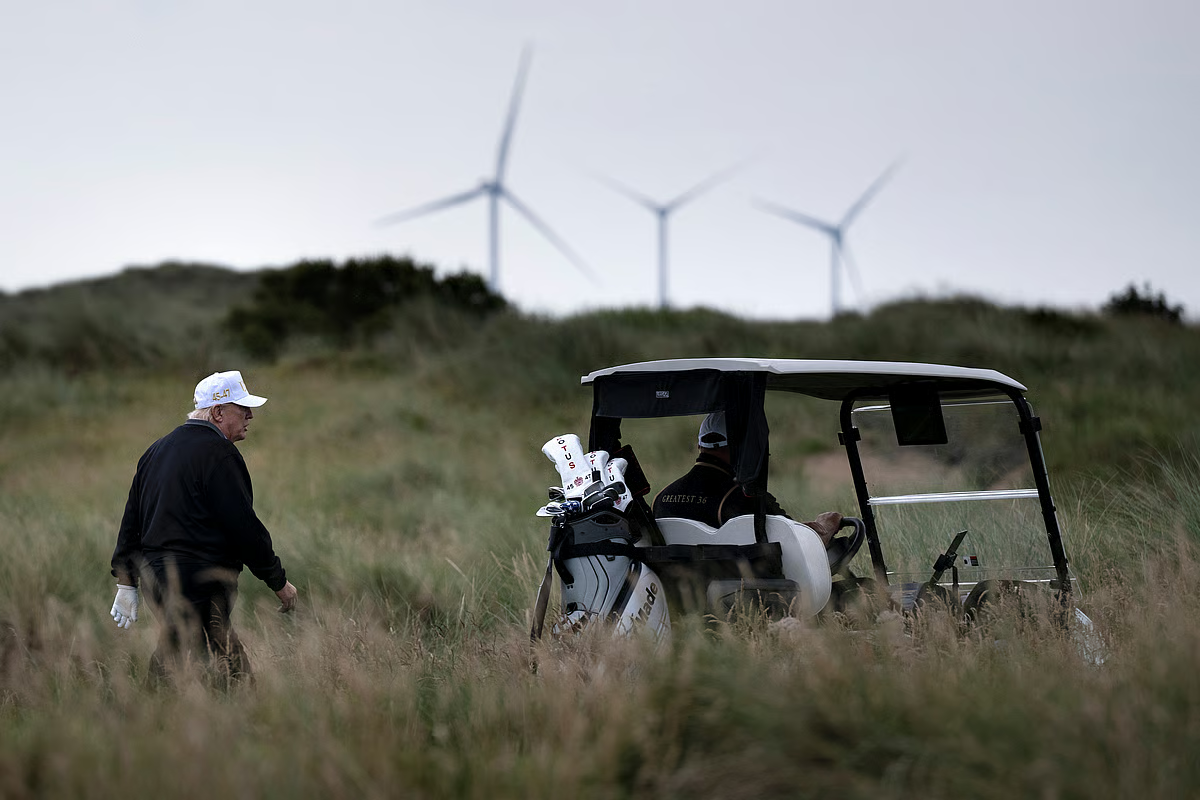

Aberdeen, Scotland – In a surprising turn of events, former US President Donald Trump officially opened the Trump International Golf Links course in Balmedie, Aberdeenshire, on Tuesday, July 29, 2025. The opening ceremony, notably taking place against the backdrop of the European Offshore Wind Deployment Centre, sparked renewed discussion about the former president’s evolving stance on renewable energy and its potential impact on his business ventures. The event drew a small crowd of invited guests and local media.
The opening of the golf course, a project years in the making and often mired in controversy, marks a significant moment for the Aberdeenshire region. Trump’s presence, however, was overshadowed by the visual juxtaposition of the golf course with the nearby wind farm, prompting questions about his previously expressed skepticism towards wind power. The ceremony itself was brief, consisting of a ceremonial first tee shot and a short address from Trump.
Trump’s Shifting Relationship with Renewable Energy
Throughout his political career, Donald Trump frequently voiced criticism of wind energy, often citing aesthetic concerns and questioning its reliability. He repeatedly attacked wind turbines, claiming they were “bird killing machines” and negatively impacted property values. However, the choice to open the golf course with a prominent wind farm in the background suggests a potential softening of this position, or at least a pragmatic acknowledgement of the energy landscape.
Economic Considerations
The Trump International Golf Links has been touted as a major economic driver for the Aberdeenshire area, promising job creation and increased tourism. According to local council reports, the course is expected to generate approximately £15 million annually for the local economy. However, critics argue that the economic benefits have been overstated and that the environmental impact of the development has been underestimated.
Additionally, the presence of the wind farm could be seen as a strategic move to appeal to a broader range of investors and customers. The global shift towards sustainable practices is undeniable, and aligning with green energy initiatives could enhance the course’s long-term viability. This is particularly relevant given increasing scrutiny of environmentally damaging projects.
Environmental Impact and Local Opposition
The construction of the golf course faced significant opposition from environmental groups who raised concerns about the destruction of sensitive dune ecosystems and the impact on local wildlife. The Menie Estate, where the course is located, is a designated Site of Special Scientific Interest. These concerns continue to be voiced by local activists, who staged a small protest near the opening ceremony.
Meanwhile, the European Offshore Wind Deployment Centre, visible from much of the golf course, represents a substantial investment in sustainable development in the region. The wind farm, operational since 2018, provides enough electricity to power over 70,000 homes, according to the project developers. Its presence serves as a constant reminder of the growing importance of renewable energy sources.
The Business of Golf and Energy
Trump’s business empire has historically been heavily reliant on fossil fuels and real estate development. However, the golf industry itself is increasingly focused on sustainability, with many courses adopting environmentally friendly practices such as water conservation and reduced pesticide use. The juxtaposition of the golf course and the wind farm could be interpreted as an attempt to navigate this evolving landscape.
In contrast to his previous rhetoric, Trump has recently acknowledged the need for energy independence, though he has largely favored traditional energy sources. The opening of the golf course, with its visual connection to renewable energy, may signal a willingness to explore a more nuanced approach. However, it remains unclear whether this represents a genuine shift in his beliefs or simply a calculated business decision.
The Scottish government has set ambitious targets for renewable energy generation, aiming to achieve net-zero emissions by 2045. The presence of the wind farm and the opening of the golf course highlight the complex interplay between economic development, environmental concerns, and political agendas in the region. The situation underscores the challenges of balancing competing interests in the pursuit of a sustainable future.
Looking ahead, the success of the Trump International Golf Links will likely depend on its ability to attract visitors and generate revenue. The course’s long-term viability will also be influenced by evolving environmental regulations and public perceptions of its impact. Further observation is needed to determine whether this event marks a genuine change in Trump’s approach to renewable energy or remains an isolated incident. The next major milestone will be the release of the course’s first-year economic impact report, expected in the spring of 2026, which will provide a clearer picture of its contribution to the local economy.