






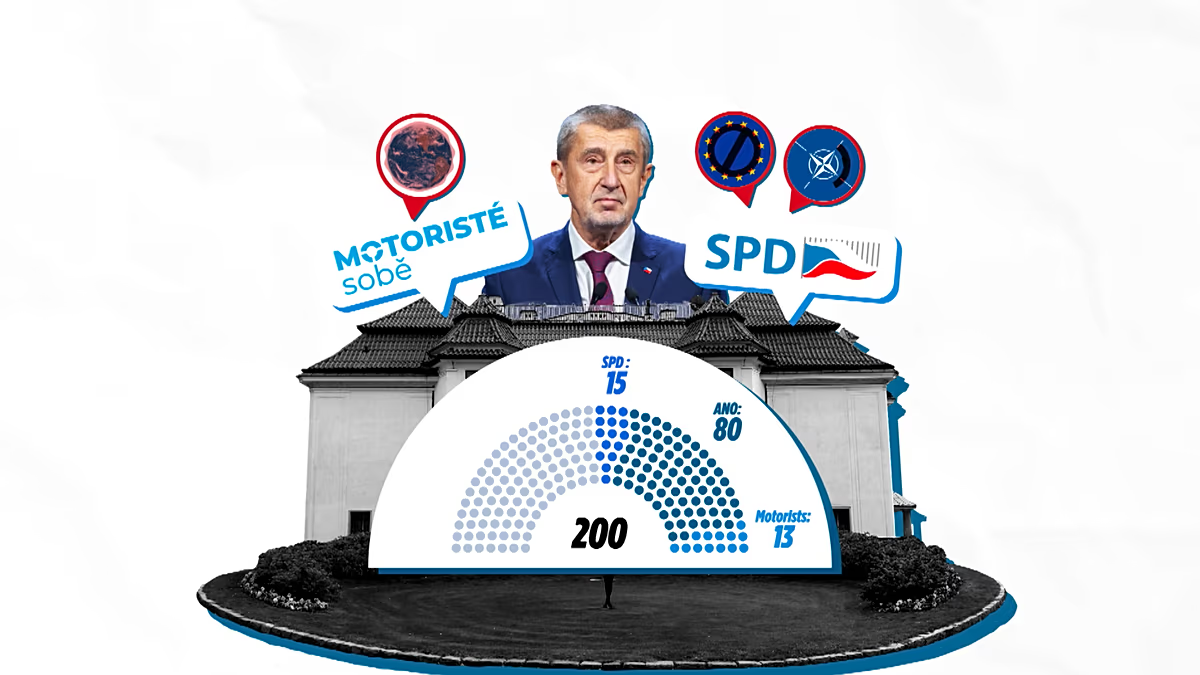

Prague – Andrej Babiš has returned as Prime Minister of the Czech Republic following a recent electoral victory, raising concerns across Europe about the country’s future direction. His appointment, initially blocked by President Petr Pavel, hinged on transferring control of his vast Agrofert conglomerate to independent administrators. This move comes as Babiš forms a coalition government with parties known for their Euroscepticism and climate change denial, prompting questions about the impact on Czech political stability and its relationship with the European Union.
The new government, sworn in on December 9, 2025, is comprised of 16 members and includes significant representation from the ANO party founded by Babiš, the Motorists, and the SPD (Freedom and Direct Democracy). Babiš’s return marks a notable shift in Czech politics given his past controversies and the potential implications for the nation’s alignment with key international partners.
Understanding the Return of Andrej Babiš
Babiš, a billionaire businessman, previously served as Prime Minister from 2017 to 2021. His political ascent has been marked by populist rhetoric and a focus on economic nationalist policies. Concerns over potential conflicts of interest stemming from his ownership of Agrofert, a major player in the Czech economy involved in agriculture, chemicals, and food processing, have consistently dogged his career.
President Pavel’s initial reluctance to appoint Babiš underscores the severity of these concerns. The condition for his appointment – the transfer of Agrofert’s administration – aimed to address accusations of improper influence and ensure the government’s independence from Babiš’s business interests. According to reports from Reuters, the details of the independent administration are still being finalized and are subject to ongoing scrutiny.
Coalition Dynamics and Key Players
The composition of the governing coalition is equally significant. The Motorists, a relatively new party focused on infrastructure and representing drivers’ interests, are vocal critics of the EU’s Green Deal. The SPD, led by Tomio Okamura, openly opposes both the European Union and NATO.
However, Babiš seems to have strategically positioned his party to maintain control. Despite ceding some cabinet positions to coalition partners – four to the Motorists and three to the SPD – ANO retains nine key ministerial posts, ensuring Babiš can steer the overall policy agenda. This effectively mirrors a corporate takeover, prioritizing control over ideological purity.
Implications for Czech Policy and EU Relations
Analysts suggest Babiš’s return won’t necessarily lead to radical departures from existing policies. While he has expressed skepticism toward providing further support for Ukraine, experts believe Czech arms manufacturers will likely continue to fulfill existing contracts with Kyiv, driven by profit motives. This pragmatic approach distinguishes him from some other populist leaders.
Furthermore, the Czech automotive industry, a crucial component of the nation’s economy representing around 10% of GDP and a quarter of its exports, could significantly influence Babiš’s stance on the Green Deal. He is expected to advocate for modifications or exemptions that would protect the sector from potentially disruptive regulations. The potential impact on green initiatives within the Czech Republic warrants future observation.
The potential for friction with the European Union remains. Babiš has previously used confrontational tactics to negotiate concessions from Brussels. While he may not seek a complete dismantling of the EU, observers anticipate he could leverage threats of non-cooperation to secure favorable terms for the Czech Republic. This strategy could add further complexity to the EU’s internal dynamics, particularly in a period characterized by rising nationalist sentiment.
The renewed focus on economic policy and potential clashes over EU regulations will be pivotal in defining the next phase of the Babiš government. The European Parliament provides further background on the Czech Republic’s role within the EU.
Looking ahead, the stability of the coalition itself will be a key indicator of the government’s effectiveness. Maintaining control over more hardline factions within the coalition will require careful political maneuvering from Babiš. Businesses and investors will be closely monitoring developments to assess the potential risks and opportunities. Understanding the nuances of this complex political landscape is essential for anyone with a stake in the Czech Republic or the future of the European Union.
Stay informed about ongoing developments and their impact on the Czech Republic’s place in Europe. Subscribe to our newsletter for regular updates on this evolving situation.