






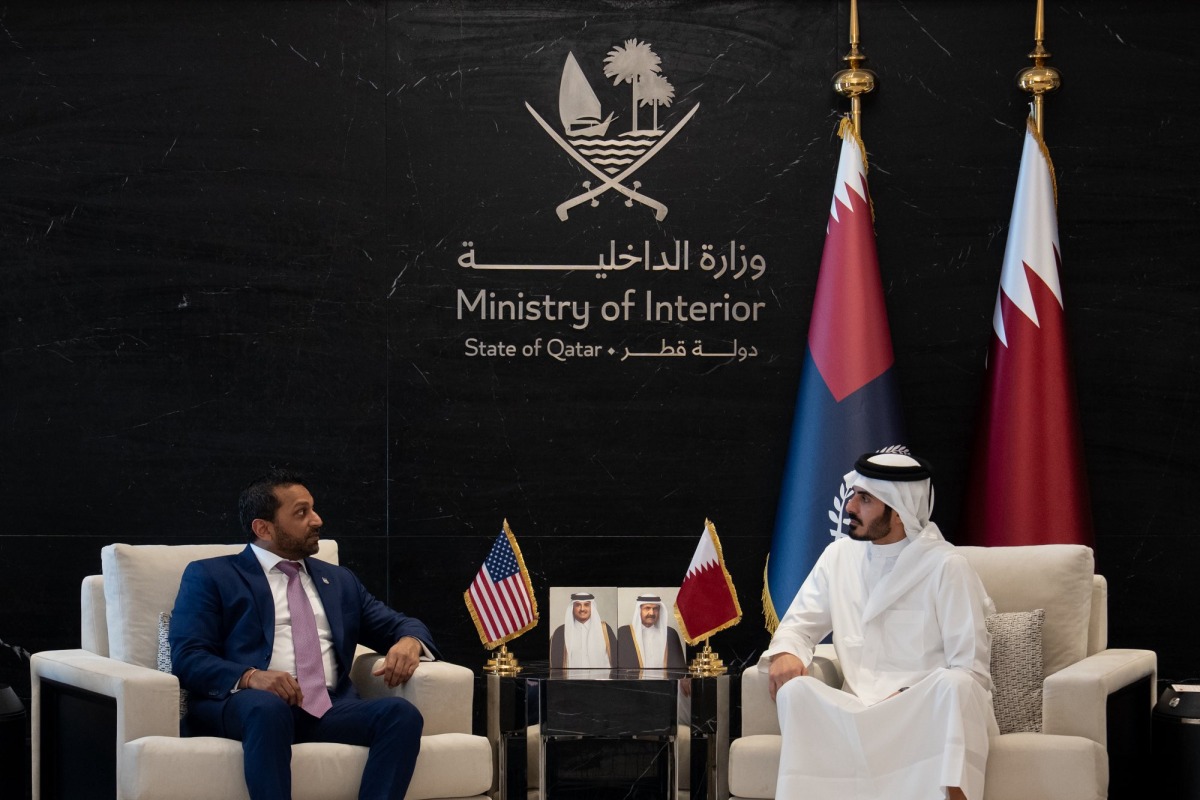

Doha, Qatar – A strengthened security partnership between Qatar and the United States was formalized today with the signing of two Memoranda of Understanding (MoUs). The agreements, inked on December 9, 2025, between Qatar’s Minister of Interior and Commander of the Internal Security Force (Lekhwiya), Sheikh Khalifa bin Hamad bin Khalifa Al-Thani, and U.S. Federal Bureau of Investigation (FBI) Director Kash Patel, aim to enhance cooperation in critical areas like training, information sharing, and overall security cooperation. The move is particularly relevant as preparations intensify for the 2026 FIFA World Cup, which will be co-hosted by the U.S., Canada, and Mexico.
The meeting took place in Doha and included discussions on mutual security interests. According to official statements, the MoUs signify a commitment from both nations to collaborate more effectively in addressing evolving threats. The agreements follow directives from His Highness the Amir of Qatar, Sheikh Tamim bin Hamad Al Thani, prioritizing national safety and international collaboration.
Boosting Security Through Enhanced US-Qatar Cooperation
The newly signed MoUs represent a significant escalation in the long-standing security cooperation between Qatar and the United States. Relations between the two countries have been deepening for decades, built on shared strategic goals, including regional stability and counter-terrorism efforts. These agreements build upon previous partnerships and aim to streamline communication and response mechanisms.
Specifically, the MoUs focus on three key pillars: training opportunities for Qatari security personnel within the FBI’s framework, detailed information exchange regarding potential threats, and collaborative capacity building initiatives. These efforts are expected to strengthen Qatar’s ability to prevent and respond to security incidents, especially those related to large-scale international events. Qatar has invested heavily in its security infrastructure in recent years.
Focus on the 2026 FIFA World Cup
A primary impetus for this increased collaboration is the upcoming 2026 FIFA World Cup. The event, which will draw millions of visitors across North America, presents substantial security challenges. The Qatari Ministry of Interior explicitly linked the agreements to bolstering joint efforts in securing the tournament.
Qatar successfully hosted the FIFA World Cup in 2022, showcasing its capabilities in managing large-scale events and ensuring the safety of attendees. However, the 2026 tournament’s unique logistical complexity – spanning three countries – necessitates a broader and more coordinated international security approach.
Additionally, the agreements are expected to address broader concerns related to cybersecurity and counter-intelligence. Modern security threats increasingly transcend national borders, requiring real-time information sharing and joint investigations. The current geopolitical climate emphasizes the importance of strong intelligence sharing, according to analysts.
While the specific details of the MoUs have not been publicly released, experts suggest they likely include provisions for joint exercises and simulations to prepare for a range of security scenarios. This practical training is considered crucial for ensuring a unified and effective response to potential crises. Moreover, the United States continues to view Qatar as a vital partner in regional security.
The timing of this agreement also comes amidst ongoing efforts to de-escalate tensions in the Middle East. Maintaining regional stability is a shared objective of both the United States and Qatar, and enhanced security partnerships are seen as a way to contribute to that goal. The U.S. maintains a significant military presence in Qatar, further solidifying the bilateral relationship.
Moving forward, the implementation of these MoUs will be closely monitored. The initial phase will likely involve establishing working groups and protocols for information exchange. A key indicator of success will be whether these agreements lead to concrete improvements in Qatar’s security preparedness for the 2026 FIFA World Cup. Further details regarding the scope and duration of the MoUs are expected to be announced in the coming months, and the effectiveness of the collaboration will be continually assessed in light of evolving regional and global security dynamics.
The next step involves ratifying the agreements through each country’s respective legal processes. Though timelines are uncertain, both governments have expressed a strong commitment to swift implementation. Observers will be watching for any potential challenges related to data privacy or jurisdictional issues as the collaboration takes shape.