
Dubai-based entertainment journalist Manjusha Radhakrishnan has established herself as a prominent voice in covering the world of film and celebrity news for nearly two decades. Radhakrishnan, currently the Entertainment Editor at Gulf News, has consistently delivered breaking news and insightful interviews with some of the biggest names in Hollywood, Bollywood, and international cinema. Her career reflects a growing demand for dedicated entertainment news coverage in the Middle East, catering to a diverse audience with interests spanning global film industries.
Radhakrishnan’s reporting extends beyond the Gulf region, with extensive coverage of major industry events including the International Indian Film Academy Awards (IIFA) and Zee Cine Awards across Europe, North America, and Macau. Her expertise has also led to appearances as a commentator on international news networks like CNN and hosting panels with influential figures. This broad scope highlights the increasing globalization of entertainment media and the role of regional journalists in connecting local audiences to international stars.
The Rise of a Leading Entertainment News Voice
Radhakrishnan’s influence isn’t solely limited to reporting. Recognition of her impact includes being featured as one of the UAE’s 50 most influential icons in Xpedition Magazine. This achievement demonstrates the rising stature of entertainment journalism within the United Arab Emirates and the wider region.
She has served as a resident Bollywood expert on television programs such as Dubai TV’s Insider Arabia and Saudi TV. This role demonstrates a specific appetite for Indian cinema within the Arab world. Bollywood remains a significant cultural force in the GCC, and Radhakrishnan has consistently provided expert analysis on its trends and stars.
Extensive Interview Portfolio
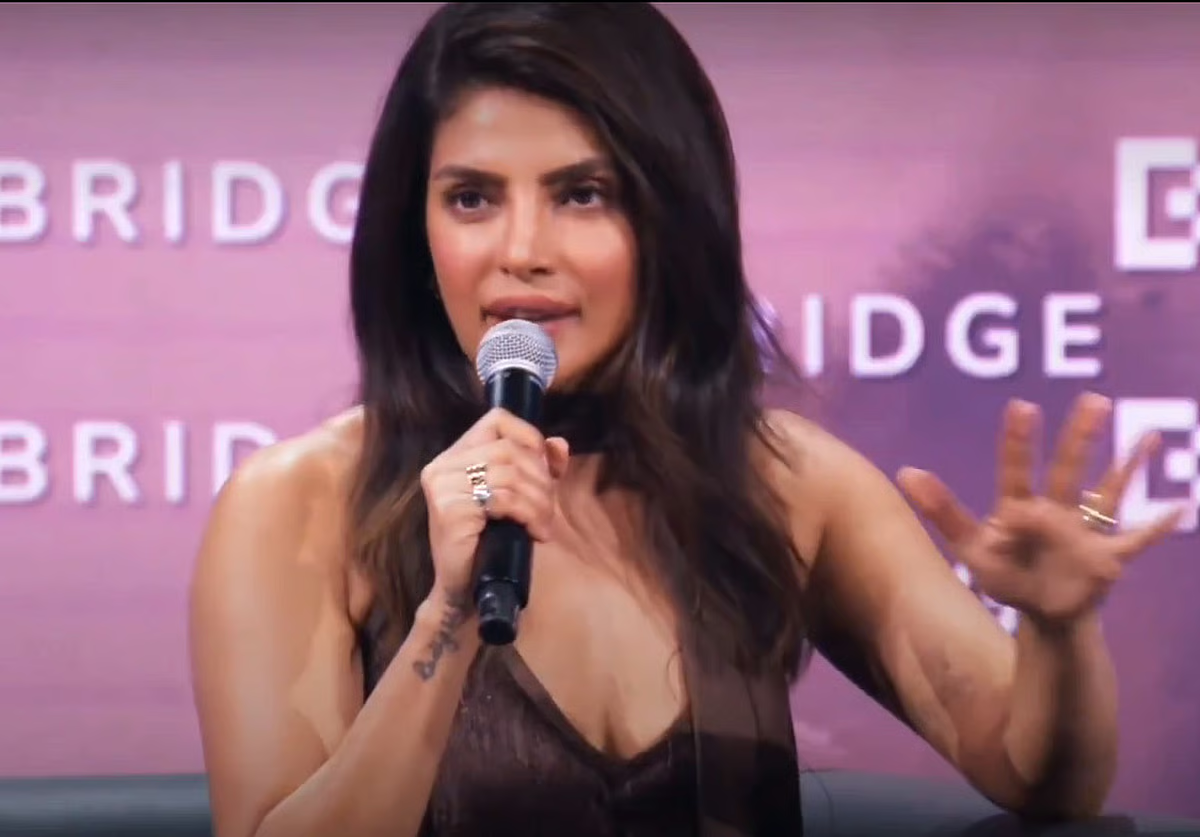
Throughout her 18-year career, Radhakrishnan has interviewed a remarkable array of talent. This includes actors Priyanka Chopra Jonas, Shah Rukh Khan, Deepika Padukone, Alia Bhatt, Joaquin Phoenix, Morgan Freeman, and musician Robbie Williams. These interviews provide valuable insights into the lives and work of global celebrities.
Her approach often differs from standard promotional interviews, delving into significant industry events, such as the Salman Khan Black Buck hunting conviction – a topic she discussed on CNN. This willingness to tackle complex issues distinguishes her reporting.
Impact of Digital Platforms & Content Consumption
The growth of Radhakrishnan’s platform parallels the greater expansion of digital media consumption in the region. Social media and online streaming services have dramatically altered how audiences access film news and celebrity updates. Traditional media outlets like Gulf News have adapted by strengthening their online presence, and journalists like Radhakrishnan play a crucial role in attracting and engaging a digital audience.
Additionally, the demand for diverse content – including Bollywood, Hollywood, Pakistani dramas, and world cinema – has increased significantly. This trend necessitates journalists with a broad understanding of various film industries, something Radhakrishnan consistently demonstrates in her coverage.
Navigating the Changing Media Landscape
The entertainment journalism field has undergone substantial changes in recent years. The rise of influencer marketing and citizen journalism present both challenges and opportunities for established reporters. However, Radhakrishnan’s commitment to factual reporting and in-depth interviews remains highly valued.
In contrast to fleeting social media trends, Radhakrishnan’s work offers a level of journalistic scrutiny and analysis that many online sources lack. This focus on credibility builds trust with audiences and solidifies her position as a leading voice.
The entertainment industry’s reliance on public relations and carefully managed narratives means that access to authentic stories is increasingly difficult. A seasoned reporter like Radhakrishnan, with long-established relationships, is therefore well-positioned to break through the noise and deliver meaningful celebrity coverage.
Furthermore, her coverage of film festivals around the world – places where emerging talent and independent films gain exposure – showcases a commitment to a wider range of cinematic works beyond mainstream blockbusters. This broader perspective differentiates her reporting and appeals to a sophisticated audience.
Looking ahead, the continued fragmentation of media and the growing importance of regional content will likely shape the future of entertainment journalism in the Middle East. Radhakrishnan’s ability to adapt to these changes, while maintaining a high standard of journalistic integrity, will be key to her continued success. Ongoing developments in streaming platforms and the evolving relationship between Hollywood and regional cinemas will also be critical areas to monitor in the coming months.