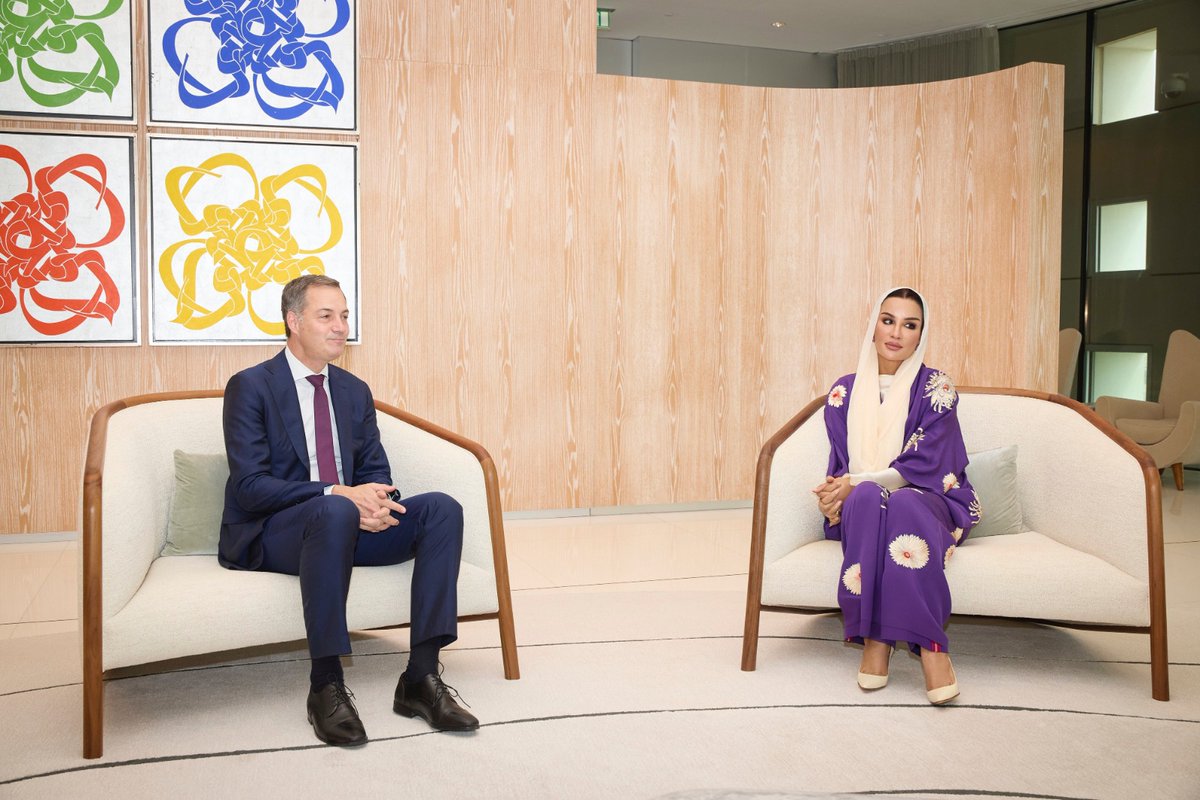

Doha, Qatar – Her Highness Sheikha Moza bint Nasser, Chairperson of Qatar Foundation, met with Alexander De Croo, Administrator of the United Nations Development Programme (UNDP), on Monday to discuss expanded collaboration. The meeting focused on bolstering the UNDP partnership with Qatar Foundation, particularly in areas of innovation and youth development, and advancing joint educational initiatives. Discussions took place at a time when Qatar is increasingly focused on its role in global development and humanitarian aid.
The meeting, held in Doha, underscored the importance of collaborative efforts to address pressing global challenges. Both parties expressed a commitment to strengthening existing programs and exploring new avenues for cooperation. This comes as the UNDP seeks to broaden its network of partners to achieve its Sustainable Development Goals (SDGs).
Strengthening Qatar’s Role Through UNDP Partnership
Qatar Foundation and the UNDP have a history of working together on various projects, but this meeting signals a renewed emphasis on strategic alignment. According to sources familiar with the discussions, a key focus was identifying opportunities to leverage Qatar Foundation’s expertise in education and research to support the UNDP’s work in developing countries. This includes potential collaborations on technology-driven solutions for educational access and quality.
Focus on Innovation and Youth
Innovation was a central theme of the discussion. Qatar Foundation has established itself as a hub for technological advancement and entrepreneurship, and the UNDP is keen to tap into this potential. The aim is to develop and implement innovative approaches to sustainable development, particularly those that empower young people.
Youth empowerment is a critical component of the UNDP’s strategy, recognizing that young people are essential agents of change. Qatar Foundation’s extensive programs aimed at nurturing talent and fostering leadership skills align well with this objective. The discussion likely included exploring ways to scale up successful youth-focused initiatives.
Expanding Access to Education
The meeting also addressed the ongoing collaboration between Qatar Foundation, the UNDP, and the Education Above All (EAA) Foundation. This joint initiative focuses on providing educational opportunities to vulnerable communities around the world. The EAA Foundation, founded by Sheikha Moza, is a leading organization in the field of global education.
Specifically, the conversation revolved around accelerating the implementation of existing projects and identifying new areas where support is most needed. The report indicates that the initiative is currently active in several countries across Africa and Asia, providing access to primary and secondary education for children affected by conflict and displacement.
Qatar has significantly increased its investment in international development in recent years, with a particular emphasis on education and humanitarian assistance. This commitment is reflected in the country’s National Vision 2030, which prioritizes global engagement and sustainable development. The UNDP partnership is seen as a key vehicle for achieving these goals.
Meanwhile, the UNDP is actively seeking to diversify its funding sources and build stronger relationships with partners in the Gulf region. The organization faces increasing demands for its services as global challenges such as climate change, poverty, and inequality intensify. This collaboration with Qatar Foundation represents a significant step in that direction.
In contrast to some traditional aid models, the approach being discussed emphasizes capacity building and sustainable solutions. The goal is not simply to provide short-term relief, but to empower communities to take ownership of their own development. This aligns with the evolving principles of international aid effectiveness.
The long-term implications of this strengthened collaboration are potentially far-reaching. Successful implementation of joint initiatives could serve as a model for other partnerships between the UNDP and regional organizations. Furthermore, it could contribute to achieving the SDGs and improving the lives of millions of people around the world. The focus on sustainable development and global education are key areas to watch.
Looking ahead, a joint working group is expected to be formed within the next month to develop a detailed action plan for implementing the agreed-upon initiatives. The plan will likely outline specific projects, timelines, and funding mechanisms. The success of this partnership will depend on effective coordination and a shared commitment to achieving tangible results, but uncertainties remain regarding the scale of future funding and the geopolitical context in which these projects will be implemented.