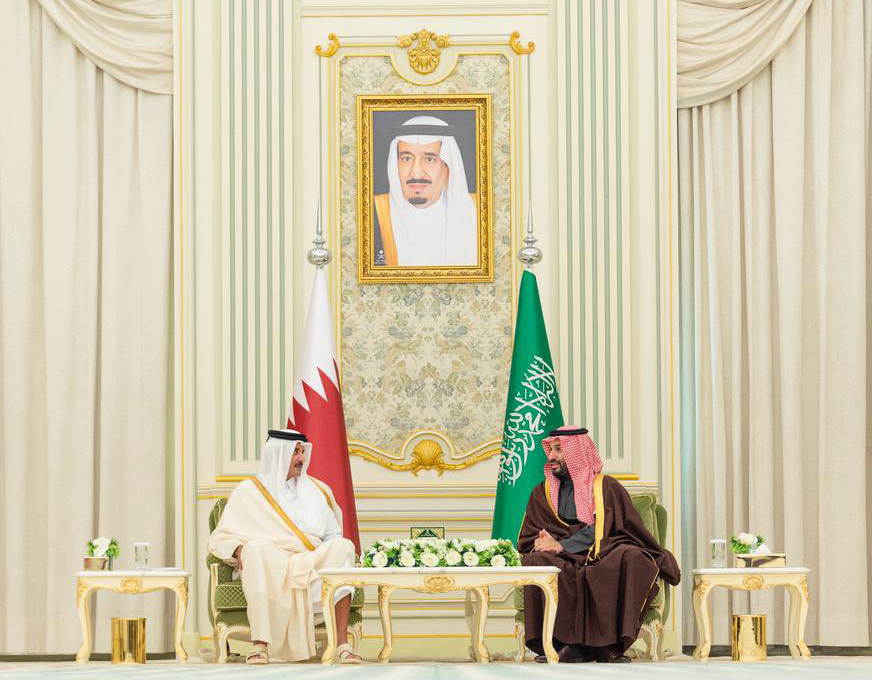

Riyadh – A significant strengthening of ties between Saudi Arabia and Qatar was demonstrated this week with a high-profile visit by the Amir of Qatar, Sheikh Tamim bin Hamad Al-Thani, to the Kingdom, at the invitation of Crown Prince Mohammed bin Salman. The visit, occurring on December 8, 2025, underscored a commitment to deepened bilateral relations and expanded cooperation across multiple sectors, signaling a new era of collaboration between the two Gulf states. This follows a period of improved diplomatic relations after a previous regional dispute.
The Amir’s visit included an official session of talks at Al-Yamamah Palace in Riyadh, where both leaders reviewed existing partnerships and explored new avenues for joint initiatives. According to official statements, the discussions focused on enhancing cooperation in areas critical to both nations’ economic and security interests. The visit also coincided with the Eighth Meeting of the Qatari-Saudi Coordination Council.
Boosting Economic Ties: A Key Focus of Qatar-Saudi Arabia Relations
A major outcome of the discussions was a renewed emphasis on economic collaboration. Trade exchange between Saudi Arabia and Qatar reached USD 930.3 million in 2024, a remarkable 634 percent increase compared to 2021, according to data released following the meeting. Both sides expressed a desire to further diversify and expand trade, particularly within the frameworks of Saudi Vision 2030 and Qatar National Vision 2030.
Investment cooperation, particularly through sovereign wealth funds and investment companies, was also highlighted. Officials from both countries agreed to facilitate reciprocal visits and host investment forums to promote opportunities. This builds on existing investments in sectors like real estate and infrastructure, and aims to attract further foreign direct investment.
Expanding Cooperation Beyond Economics
The scope of cooperation extends far beyond economics. Discussions encompassed a wide range of areas, including energy, security, technology, and cultural exchange. Both nations reaffirmed their commitment to ensuring the stability of global energy markets and exploring collaboration in renewable energy sources.
In the realm of security, both sides pledged to strengthen their defense partnership and coordinate efforts to address regional challenges, including counter-terrorism and cybersecurity. This includes continued information sharing and joint training exercises. The leaders also agreed to enhance collaboration in areas like youth programs, sports, education, and media, fostering closer ties between their populations.
Additionally, a landmark agreement was signed for the construction of a high-speed electric rail link connecting Riyadh and Doha, via Dammam and Al-Hofuf. This project, aligned with both nations’ visions, is expected to significantly boost tourism and trade. Several other agreements and memoranda of understanding were also signed, covering railway transport, investment promotion, food security, and collaboration in the non-profit sector.
The two countries also aligned on the importance of climate policies focused on emissions reduction, rather than source-based restrictions. This reflects a growing consensus on the need for pragmatic approaches to environmental sustainability. Discussions also touched upon international affairs, with both sides reaffirming their commitment to safeguarding international peace and security. Qatar’s ratification of the Charter of the World Water Organization was also welcomed by the Saudi side.
The strengthening of regional partnerships is seen as crucial for stability in the Gulf region, particularly amidst ongoing geopolitical tensions. This improved relationship could also have implications for broader regional initiatives, such as efforts to resolve conflicts and promote economic integration. The increased economic activity is expected to benefit both economies, creating new jobs and opportunities for growth.
Looking ahead, the implementation of the agreements signed during the Amir’s visit will be closely watched. The success of the high-speed rail project, in particular, will be a key indicator of the deepening Saudi-Qatar cooperation. Further details on specific investment projects and timelines are expected to be announced in the coming months. The continued momentum in diplomatic relations will be essential to sustaining this positive trajectory.
While the visit signals a significant step forward, challenges remain, including navigating potential economic competition and addressing differing regional priorities. However, the demonstrated commitment from both leaderships suggests a strong foundation for a long-term, mutually beneficial partnership.