
Saudi Arabia and Qatar have solidified their growing partnership with the signing of an agreement to construct a high-speed rail link between their capitals. The project, announced on Monday following a visit by Qatari Emir Sheikh Tamim bin Hamad Al Thani to Riyadh, will connect Doha and Riyadh via Dammam and Al-Ahsa. This development signals a broader trend of increased economic and security cooperation between the two Gulf nations after a period of strained relations.
The new rail link is intended to boost tourism, facilitate trade, and strengthen overall ties, aligning with the ambitious Saudi Vision 2030 and Qatar National Vision 2030. The agreement represents a significant step in the normalization of relations, which saw a full diplomatic thaw in 2021 after a three-and-a-half-year blockade of Qatar by Saudi Arabia and its allies.
Boosting Regional Connectivity with the New Rail Link
The planned high-speed rail link aims to significantly reduce travel time between Saudi Arabia and Qatar, currently reliant on air travel or lengthy road journeys. Details regarding the exact route, technology to be employed, and construction timeline remain forthcoming, but the project is expected to be a major infrastructure undertaking. According to the joint statement, the railway will contribute to a more integrated regional transportation network.
Economic Implications
The economic benefits of the railway are anticipated to be substantial. Bilateral trade between Saudi Arabia and Qatar has already seen a dramatic increase, reaching $930.3 million in 2024 – a 634% jump compared to 2021. This growth is expected to accelerate with improved connectivity, fostering greater investment and collaboration in key sectors.
The agreement also highlighted a commitment to expanding cooperation in areas like digital economy, industry, mining, youth, sports, culture, education, media, cybersecurity, and health. These diversified partnerships aim to reduce reliance on hydrocarbons and promote sustainable economic development, a key tenet of both national visions. Investment promotion and business forums will be prioritized to further these goals.
Strengthening Security Cooperation
Beyond economic ties, the two nations reaffirmed their commitment to enhancing their defense partnership. This collaboration is framed within the context of supporting regional and international security. Existing cooperation in fields like information sharing, border security, cyber defense, counterterrorism, and joint training programs will be bolstered.
The deepening security relationship is notable given shared concerns about regional stability, particularly related to conflicts in Yemen and Sudan. The joint statement indicated a shared desire to play a constructive role in resolving these and other international disputes. Qatar’s recent ratification of the World Water Organization charter was also lauded by Saudi officials as a positive step towards addressing global challenges.
Energy and Climate Collaboration
Saudi Arabia and Qatar, both major energy producers, agreed to strengthen cooperation within the global energy market. This includes ensuring secure supplies, advancing collaboration in electricity and renewable energy, and jointly developing projects. This move is particularly relevant as the world transitions toward lower-carbon energy sources.
Interestingly, the two nations emphasized a focus on emissions reduction rather than limiting energy sources. This aligns with a broader strategy within OPEC+ to advocate for continued investment in all forms of energy while pursuing technologies to mitigate environmental impact. Coordinating climate policies in international forums is now a stated priority. Experts suggest this approach reflects an interest in maintaining influence over global energy policies.
Several other agreements and memorandums of understanding were signed during the Emir’s visit, encompassing rail transport specifics, food security initiatives, and media cooperation. Agreements regarding the non-profit sector were also secured, indicating broader societal engagement. These documents, while not immediately public in full detail, suggest tangible commitments beyond the headline rail project.
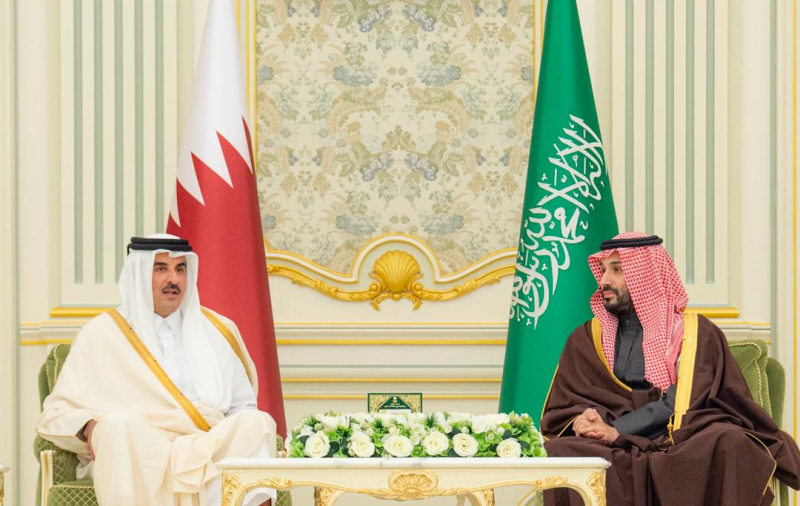
The meeting between Crown Prince Mohammed bin Salman and Emir Sheikh Tamim involved a detailed review of bilateral relations and discussed avenues for deepening cooperation. The eighth meeting of the Saudi-Qatari Coordination Council praised the progress achieved under its framework and emphasized continued alignment of priorities.
However, challenges remain in fully implementing these agreements. Bureaucratic hurdles, potential funding constraints, and the need for coordinated regulatory frameworks could present obstacles. Additionally, geopolitical factors in the region could influence the long-term sustainability of the partnership.
Next steps will likely involve establishing working groups to develop detailed plans for the rail link and other collaborative initiatives. A timeline for the commencement of construction and a projected completion date are anticipated in the coming months. The evolution of this relationship and the realization of these projects will be a significant indicator of the shifting dynamics in the Gulf Cooperation Council (GCC) and the broader Middle East.