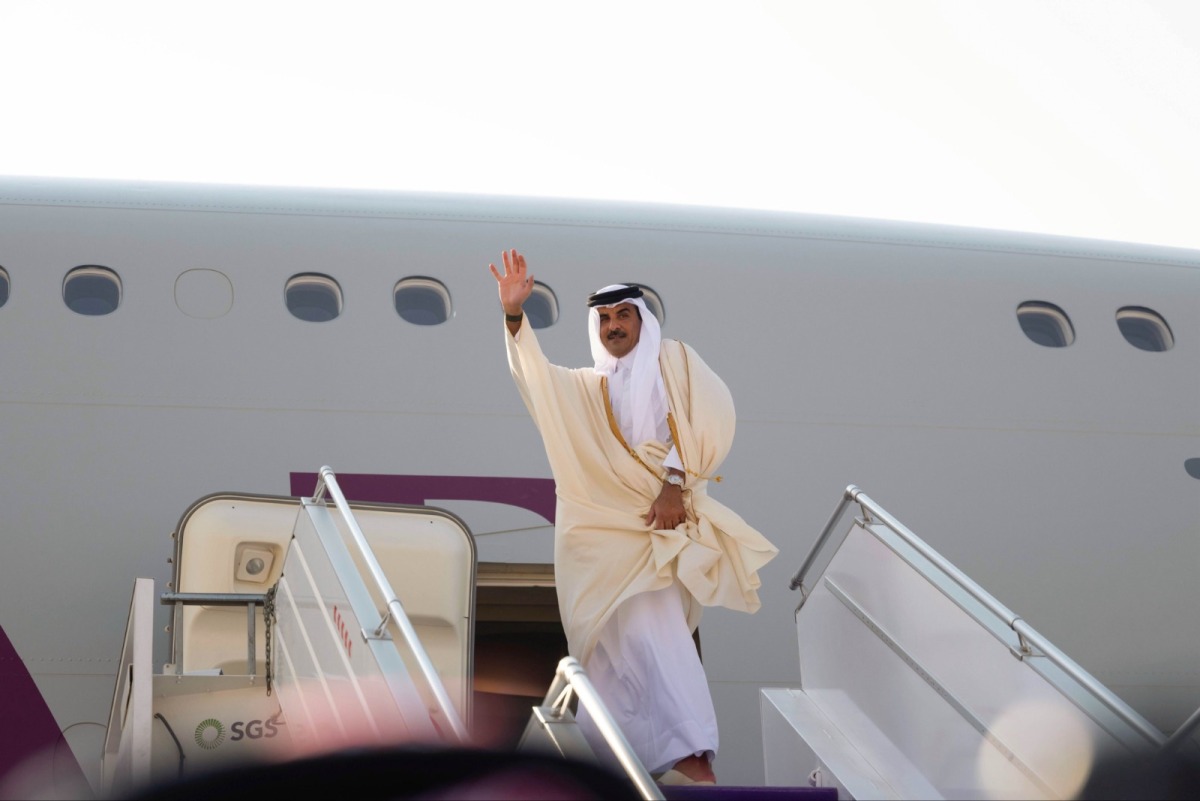

Qatar’s Amir Sheikh Tamim bin Hamad Al-Thani concluded a visit to the Kingdom of Saudi Arabia on Monday, departing from Riyadh following meetings with Saudi Crown Prince and Prime Minister Mohammed bin Salman. The visit, closely watched for its implications on regional diplomacy and economic ties, underscores the ongoing efforts to strengthen Qatar-Saudi relations. The departure signals the end of a formal engagement focused on bilateral cooperation and addressing key regional issues.
The Amir was seen off at King Khalid International Airport by Crown Prince Mohammed bin Salman, leading a Saudi farewell delegation. Several other prominent Saudi officials were present, including Minister of State Prince Turki bin Mohammed bin Fahd bin Abdulaziz Al Saud, Deputy Governor of Riyadh Prince Mohammed bin Abdulrahman bin Abdulaziz Al Saud, and National Guard Minister Prince Abdullah bin Bandar bin Abdulaziz Al Saud. He was accompanied by Qatar’s Prime Minister and Minister of Foreign Affairs, Sheikh Mohammed bin Abdulrahman bin Jassim Al-Thani, and a broader official delegation.
Strengthening Qatar-Saudi Relations Through Direct Engagement
This visit occurs amidst a backdrop of improved, but still developing, relations between Qatar and Saudi Arabia. Diplomatic ties were severed in 2017 as part of a broader regional dispute, with Saudi Arabia, along with the United Arab Emirates, Bahrain, and Egypt, imposing a land, sea, and air blockade on Qatar. Full diplomatic relations were restored in December 2023, setting the stage for increased cooperation and dialogue.
While details of the discussions remain largely undisclosed, it is understood that the agenda encompassed a range of topics, likely including energy cooperation, regional security, and the ongoing conflicts in Gaza and Sudan. Both nations are significant players in the global energy market and share concerns about stability in the wider Middle East. The primary focus appears to have been solidifying the progress made since the restoration of ties.
Economic Cooperation on the Agenda
Analysts suggest that enhancing economic collaboration is a high priority for both countries. Increased investment flows, joint ventures in key sectors like tourism and infrastructure, and coordination on energy policies are all potential areas of focus. Reuters reported in March that the visit aimed to boost cooperation across multiple fronts.
Regional Security Concerns
Beyond economics, the meeting almost certainly addressed pressing regional security issues. Qatar and Saudi Arabia have historically held differing views on several conflicts, but the reconciliation process is fostering a more unified approach to challenges like Iranian influence and counterterrorism efforts. Discussions on de-escalation and diplomatic solutions in Yemen and Libya could also have been part of the agenda, as both nations are involved in mediation efforts related to these conflicts.
The presence of Sheikh Mohammed bin Abdulrahman bin Jassim Al-Thani, who has played a crucial role in Qatar’s mediation efforts, lends credence to the notion that a significant portion of the conversation revolved around resolving regional disputes. Qatar’s role as a mediator between various parties has been increasingly recognized internationally, and Saudi Arabia’s support for this role is vital. This visit highlights the importance of diplomatic relations in the region.
The timing of this visit is also noteworthy, occurring as international efforts to secure a ceasefire in Gaza continue. Both Qatar and Saudi Arabia are actively engaged in these efforts, and coordination between the two countries could be instrumental in achieving a sustainable resolution. Furthermore, with ongoing instability in Sudan, fostering cooperation on humanitarian aid and conflict resolution is another potential area where bilateral ties can be strengthened. The U.S. State Department recognizes Qatar as a key partner in regional stability.
Looking ahead, the success of this visit will be measured by concrete actions taken in the coming months to implement the discussed areas of cooperation. It remains to be seen whether significant breakthroughs in specific projects or policies will emerge. Further announcements regarding joint investments or collaborative initiatives are anticipated, and observers will be watching closely for any signs of deepened coordination on regional security issues, and the advancement of Saudi-Qatar cooperation.
The development of closer ties between Doha and Riyadh is expected to contribute to a more stable and prosperous Gulf region. However, underlying differences in strategic priorities still exist, meaning continued dialogue and compromise will be essential in sustaining this positive momentum. The continuation of this improved relationship is a key factor in judging future developments in the region, and further meetings are likely in the near future to build on this progress in regional politics.