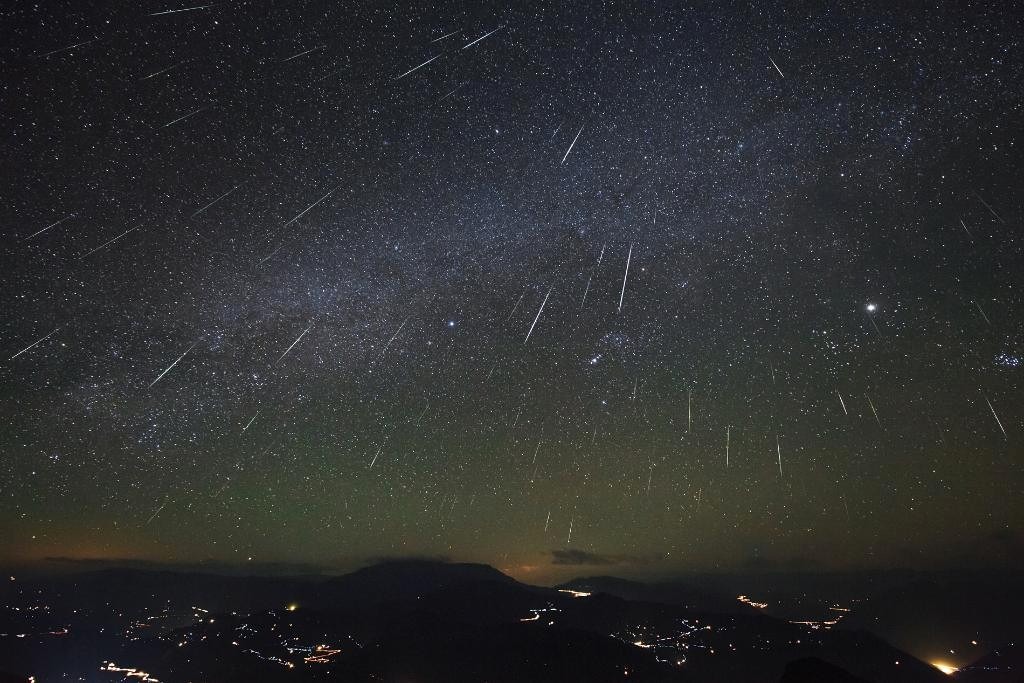

Skywatchers in Qatar are preparing for the peak of the annual Geminid meteor shower on the night of December 13th, with an observation event planned at Al Kharrara in Al Wakrah. Experts predict a strong showing of these fast, yellow-tinted meteors, offering a potentially spectacular display. The event promises optimal viewing conditions due to a minimally illuminated moon.
Prime Viewing for the Geminid Meteor Shower in Qatar
The Geminids are known as one of the most dependable and visually impressive meteor showers of the year, already underway but reaching its maximum activity this Saturday. According to astrophotographers, Qatar offers a particularly advantageous location for observing the shower thanks to anticipated clear skies and limited light pollution in the Al Kharrara area. The Qatar Astronomy and Space Club, affiliated with Everester Observatory, will host a free public viewing event starting at 8 pm.
Understanding the Geminids
NASA classifies the Geminids as a strong annual shower, capable of producing up to 120 meteors per hour under ideal circumstances. However, typical conditions usually yield a lower, but still substantial, rate. The shower’s radiant – the point in the sky from which the meteors appear to originate – is in the constellation Gemini, hence the name.
Unlike most meteor showers that are created by cometary debris, the Geminids originate from the rocky asteroid 3200 Phaethon. As Earth’s orbit intersects Phaethon’s debris trail each December, tiny particles enter the atmosphere at high speed and burn up, creating the streaks of light we observe as meteors. This unique origin makes the Geminids stand out among annual celestial events.
Ajith Everester, founder of Everester Observatory Space Research and Development Company, notes that the moon, rising after 1 am at 33% illumination, will provide minimal interference. He anticipates “ample time of dark sky to observe shooting stars” and a “spectacular night”. Past events at Al Kharrara, even with a full moon impacting visibility last year, still recorded over 1,000 meteors with a large turnout of over 6,000 people.
Navin Anand, an amateur astronomer and partner at Everester Observatory, emphasizes the accessibility of the Geminids. Observing the shower requires no specialized equipment like telescopes or binoculars; it is visible to the naked eye. The estimated rate for peak viewing is around 60 meteors per hour. The Peninsula reports that attendees are advised to dress warmly due to overnight temperature drops.
Planning Your Observation
Registration for the Qatar Astronomy and Space Club’s event is free and available through their website. The event will continue until sunrise, allowing observers to potentially catch meteors throughout the night. Finding a location away from city lights is crucial for maximizing visibility, making Al Kharrara an excellent choice.
While the Geminids are the primary focus, keen observers may also spot occasional Earth-grazing meteors, which appear as long, slow streaks near the horizon. These are less frequent but can be particularly striking. The best viewing experience generally occurs after midnight when the radiant point is higher in the sky.
The intensity of meteor showers can vary slightly from year to year due to unpredictable factors in the debris stream. However, the favorable conditions predicted for Qatar this year suggest a high probability of a rewarding viewing experience. The annual Perseid meteor shower is another popular event, offering a different display in the summer months.
Following the peak of the Geminids, astronomers will be monitoring for potential activity from other minor showers throughout December. The next major meteor shower is expected to be the Quadrantids in early January, though its visibility is often hampered by winter weather. Continued observation and data collection will help refine predictions for future events and better understand the dynamics of these celestial displays.