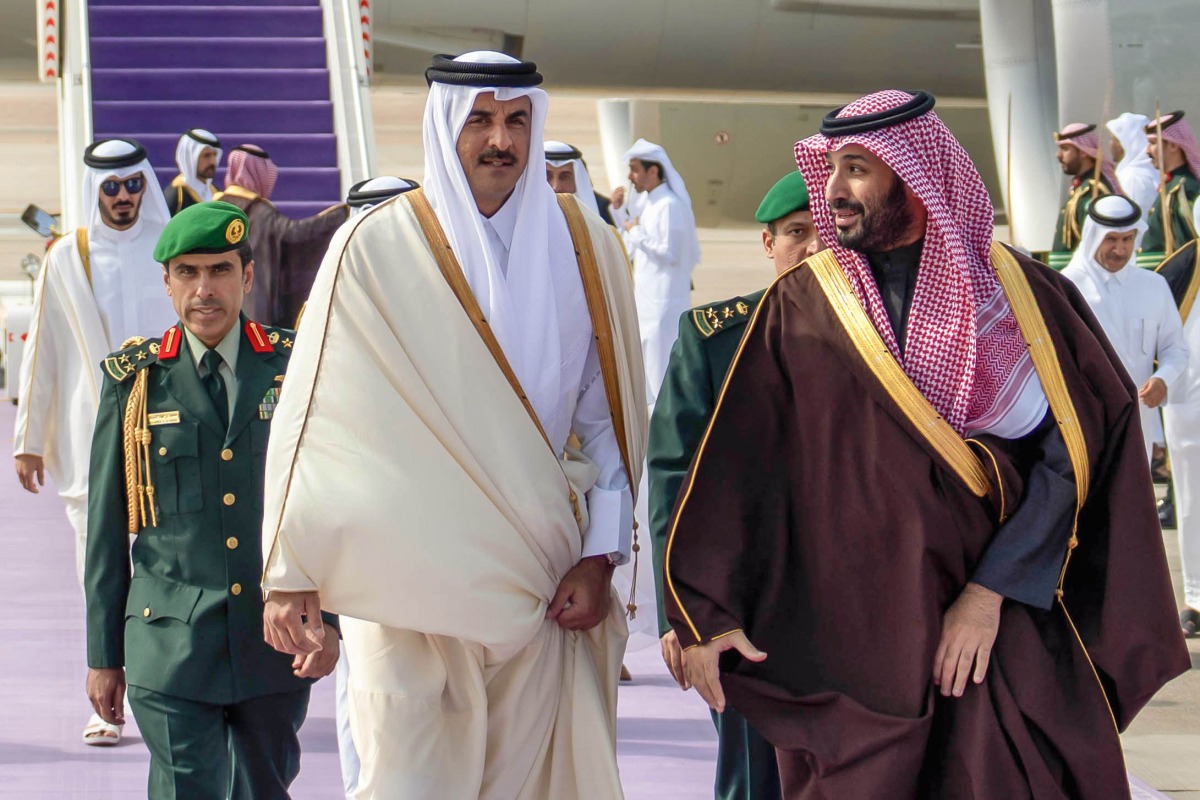

Doha, Qatar – His Highness Sheikh Tamim bin Hamad Al-Thani, the Amir of Qatar, arrived in Riyadh, Saudi Arabia today for talks with the Saudi leadership. This visit, occurring on December 8, 2023, signals continued efforts to strengthen Qatar Saudi relations and address regional issues. The Amir’s arrival and expected discussions are being closely watched by international observers.
The Amir was received at King Khalid International Airport by His Royal Highness Prince Mohammed bin Salman bin Abdulaziz Al Saud, Crown Prince and Prime Minister of Saudi Arabia. Qatar’s Ambassador to Saudi Arabia, Bandar bin Mohammed Al Attiyah, was also present to welcome the Amir. Sheikh Mohammed bin Abdulrahman bin Jassim Al-Thani, Qatar’s Prime Minister and Minister of Foreign Affairs, is accompanying His Highness, along with a high-level official delegation.
Strengthening Qatar Saudi Relations: A Focus on Regional Stability
The visit comes amid ongoing diplomatic efforts to de-escalate tensions and foster cooperation across the Gulf region. While specific agenda items haven’t been publicly disclosed, analysts anticipate discussions will center on the conflict in Gaza, the situation in Yemen, and broader economic partnership opportunities between the two nations. This meeting is a direct continuation of ongoing dialogue, with both countries expressing a shared interest in a stable and prosperous Middle East.
Recent Diplomatic History
Relations between Qatar and Saudi Arabia were strained for several years following a diplomatic crisis that began in 2017. A blockade imposed on Qatar by Saudi Arabia, the United Arab Emirates, Bahrain, and Egypt was lifted in January 2021, paving the way for renewed diplomatic engagement. Since then, both countries have worked to rebuild trust and re-establish ties, including high-level visits and increased economic cooperation.
However, differences in regional policy remain. Qatar has maintained relationships with various actors, including Hamas, while Saudi Arabia has pursued closer ties with the United States and other Western powers. Finding common ground on these complex issues will likely be a key objective of the Amir’s visit.
Additionally, economic collaboration is expected to be a significant topic. Both nations are major energy producers and have expressed interest in diversifying their economies. Potential areas of cooperation include investments in infrastructure, tourism, and technology. The Qatar Investment Authority has previously made substantial investments in Saudi Arabia, and further expansion of these activities is possible.
The Gaza Conflict and Regional Implications
The ongoing conflict between Israel and Hamas is expected to dominate discussions. Qatar has played a prominent role in mediating between the two sides, and has been praised for its efforts to secure the release of hostages. Saudi Arabia has also condemned the violence and called for a ceasefire. Coordination between Doha and Riyadh on a unified approach to the crisis is considered crucial by many regional stakeholders.
The situation in Yemen is another pressing concern. Both Qatar and Saudi Arabia are involved in efforts to find a peaceful resolution to the conflict, but they have supported different sides in the past. A renewed commitment to a comprehensive political process is anticipated to be a key outcome of the talks. The need for humanitarian assistance to the Yemeni people will also likely be addressed.
Meanwhile, broader security concerns in the region, including maritime security and counter-terrorism efforts, are expected to be on the agenda. Increased cooperation in these areas could help to enhance stability and protect shared interests. The presence of the US military in the Gulf is a factor in these considerations, and the perspectives of both Qatar and Saudi Arabia on this issue will be important.
The visit also occurs as Qatar prepares to host the AFC Asian Cup in January 2024, a major sporting event that will draw international attention. Saudi Arabia’s support for the tournament could be a sign of further normalization of relations. Discussions around logistical support, security coordination, and potential fan travel could take place during the Amir’s time in Riyadh, highlighting the growing diplomatic ties. Beyond the immediate issues, the strengthening of bilateral relations is seen as vital for the long-term stability of the Gulf Cooperation Council (GCC).
Following the Amir’s meetings with Prince Mohammed bin Salman, a joint statement outlining key areas of agreement and future cooperation is expected. The timing of any concrete announcements regarding economic partnerships or regional initiatives remains uncertain. Observers will be watching closely for signals of a more unified approach to regional challenges and a sustained commitment to improving Saudi-Qatar cooperation. The success of this visit will be measured by the extent to which it translates into tangible progress on these fronts and reinforces the positive trajectory of Qatar’s foreign policy.