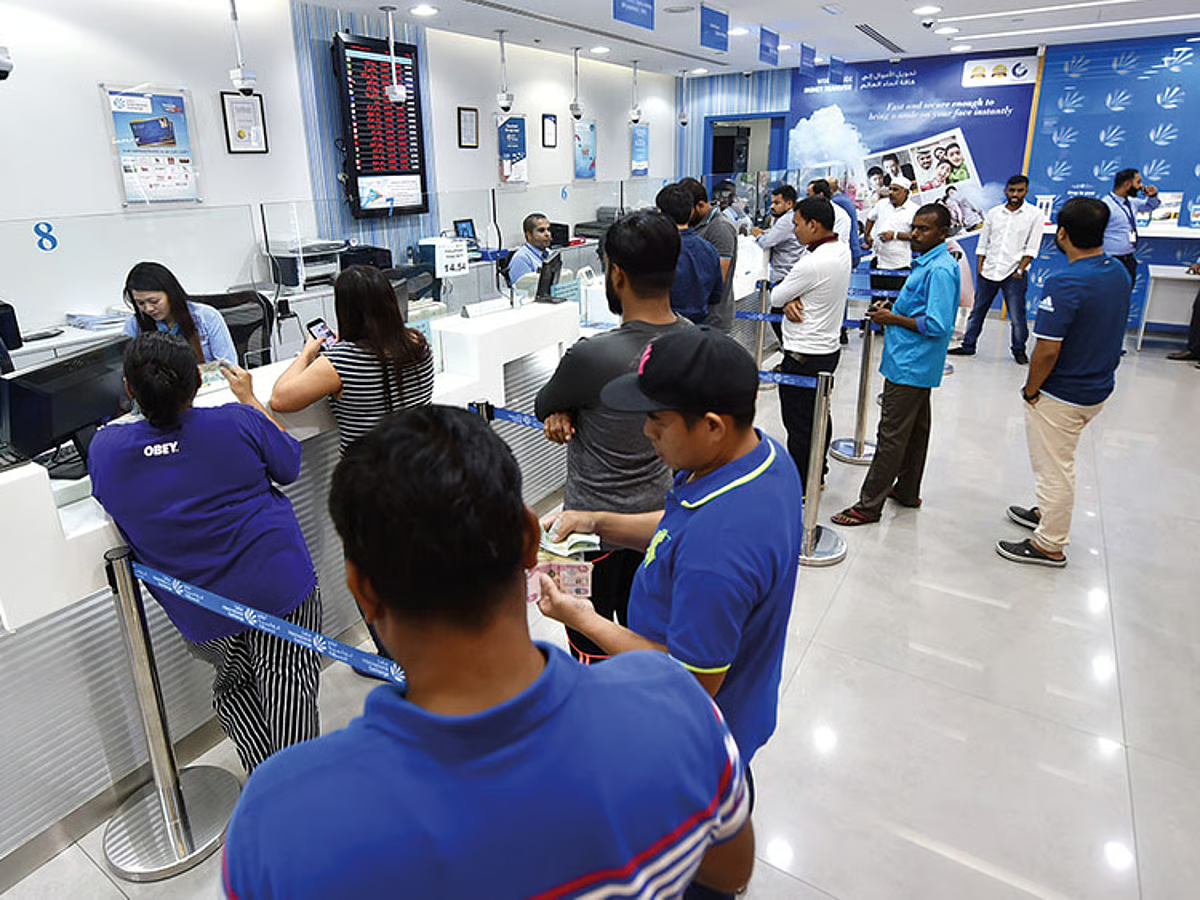

For individuals sending money home to India and the Philippines, understanding the optimal time to remit funds can significantly impact the value received due to fluctuating exchange rates. Recent market analysis suggests specific windows of opportunity for maximizing the value of transfers involving the Indian Rupee and the Philippine Peso. These favorable conditions are driven by a combination of global economic factors and local market dynamics, impacting overseas workers and their families.
Currently, both the Rupee and the Peso are experiencing periods of relative volatility against major currencies like the US Dollar. This presents both challenges and opportunities for remittance senders. Experts recommend monitoring exchange rate trends closely and utilizing services that offer competitive rates and minimal fees to ensure the most beneficial transfer.
Maximizing Your Remittance: Understanding Rupee and Peso Exchange Rates
The exchange rate between the US Dollar and the Indian Rupee has been influenced by several factors in recent months, including crude oil prices, foreign portfolio investment, and the Reserve Bank of India’s (RBI) monetary policy. According to data from the State Bank of India, periods of dollar weakness, often coinciding with positive Indian economic indicators, tend to offer more favorable rates for those remitting funds to India.
However, predicting these fluctuations with certainty is difficult. The global economic outlook, particularly the actions of the US Federal Reserve regarding interest rates, plays a crucial role. Increased US interest rates generally strengthen the dollar, potentially weakening the Rupee and reducing the value of remittances.
Factors Affecting the Indian Rupee
Several key factors contribute to the Rupee’s performance. These include:
- Inflation Rates: Higher inflation in India relative to the US can put downward pressure on the Rupee.
- Trade Balance: A widening trade deficit (more imports than exports) can also weaken the Rupee.
- Geopolitical Events: Global instability and geopolitical tensions often lead to a flight to safety, benefiting the US Dollar.
Similarly, the Philippine Peso’s exchange rate is sensitive to global risk sentiment, US dollar movements, and the country’s own economic fundamentals. Remittances constitute a significant portion of the Philippine economy, representing approximately 8-9% of the nation’s Gross Domestic Product, according to the Bangko Sentral ng Pilipinas (BSP).
Therefore, BSP closely monitors remittance flows and their impact on the Peso. Periods of strong remittance inflows can provide support for the Peso, while declines can create downward pressure. The Philippines’ economic growth, particularly in sectors like Business Process Outsourcing (BPO), also influences the currency’s strength.
Philippine Peso Dynamics and Remittances
The Peso’s performance is also tied to:
- Political Stability: Domestic political events can impact investor confidence and, consequently, the Peso.
- Interest Rate Differentials: The difference in interest rates between the Philippines and the US can attract or deter foreign investment.
- Global Commodity Prices: As a net importer of certain commodities, changes in global prices can affect the Peso.
The best time to remit isn’t a fixed point, but rather a window of opportunity that requires consistent monitoring. Financial institutions often publish daily exchange rate forecasts, which can serve as a guide, though these are not always accurate. Utilizing online platforms that compare money transfer services can also help identify the most competitive rates at any given moment.
Additionally, some services offer rate alerts, notifying users when the exchange rate reaches a desired level. This proactive approach can be particularly beneficial for those with larger sums to transfer. It’s important to note that these services may charge fees, so factoring those into the overall cost is essential.
Meanwhile, the timing of remittances can also be influenced by seasonal factors. For example, remittances to the Philippines often increase during the holiday season as overseas Filipino workers (OFWs) send money home for Christmas. This increased demand can sometimes lead to slightly less favorable exchange rates.
In contrast, remittances to India may see a surge around major festivals like Diwali, potentially impacting rates. Understanding these seasonal patterns can help remitters plan their transfers strategically. The overall trend in international money transfers is towards increased digitalization and lower costs, benefiting both senders and recipients.
The impact of these exchange rate fluctuations extends beyond individual remittances. A weaker Rupee or Peso can increase the cost of imports for both countries, potentially contributing to inflation. Conversely, a stronger currency can boost purchasing power and support economic growth. Therefore, the time to remit is not just a personal financial decision, but also has broader macroeconomic implications.
Furthermore, the rise of fintech companies offering online remittance solutions has increased competition and transparency in the market. These platforms often provide lower fees and more convenient transfer options compared to traditional banks. However, it’s crucial to choose reputable and regulated providers to ensure the security of funds.
Looking ahead, the outlook for the Rupee and Peso remains uncertain. The ongoing global economic slowdown, coupled with geopolitical risks, is expected to continue to drive volatility in exchange rates. The BSP and RBI are likely to intervene in the foreign exchange market to manage excessive fluctuations and maintain financial stability. The next policy meetings of both central banks, scheduled for [Insert Date/Month], will be closely watched for indications of future monetary policy direction and potential impacts on currency values.
The continued monitoring of global economic indicators, domestic policy decisions, and remittance trends will be crucial for individuals seeking to optimize their time to remit and maximize the value of their transfers.