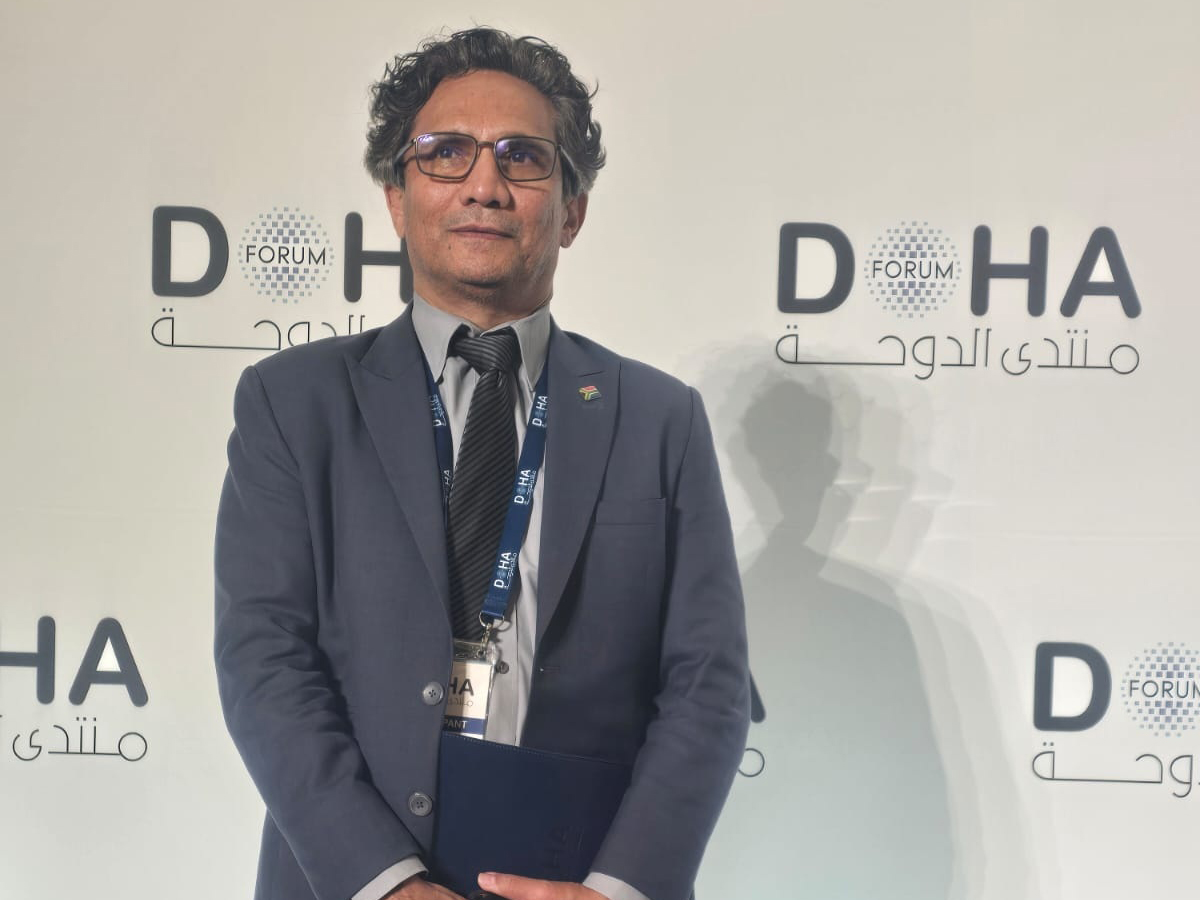

Doha, Qatar – South Africa’s Director-General of the Department of International Relations and Cooperation (DIRCO), Zane Dangor, has emphasized the critical need for global accountability and equitable diplomacy during the 2024 Doha Forum. Dangor highlighted the forum as a vital platform for discussing international justice amidst escalating global conflicts and perceived impunity. His remarks came as international leaders gather in Qatar to address pressing geopolitical challenges.
Speaking on the sidelines of the forum, Dangor underscored the importance of upholding international law, particularly in the context of the ongoing war in Gaza. He expressed concern that the conflict could undermine established legal frameworks and norms governing warfare, leading to a more chaotic and unjust world order. The Doha Forum, which concluded on February 29, 2024, brought together policymakers, business leaders, and civil society representatives from around the globe.
The Urgent Call for International Justice
Dangor warned that the situation in Gaza poses a significant threat to the principles of international justice. He cited the extensive civilian casualties and the lack of accountability for actions taken during the conflict as deeply troubling. According to reports from humanitarian organizations, the scale of suffering in Gaza is immense, with a significant portion of the population displaced and facing severe shortages of essential supplies.
He further elaborated on South Africa’s recent role as G20 chair, describing the negotiations as productive despite the absence of the United States during certain sessions. The G20 summit, held in Johannesburg in August 2023, resulted in a declaration prioritizing the beneficiation of critical minerals within Africa and addressing the continent’s growing debt burden.
G20 Successes and Subsequent Disputes
The declaration championed by South Africa aimed to promote economic development and value addition within African nations, rather than simply exporting raw materials. This initiative seeks to empower African economies and create more sustainable employment opportunities. However, Dangor noted a subsequent disagreement with the U.S. regarding South Africa’s participation in future G20 activities, a move he indicated contradicted established protocols.
Dangor also praised Qatar’s active involvement as a guest at the G20 summit, noting a shared commitment to peace and justice between the two nations. He highlighted the growing coordination between Doha and Pretoria on mediation efforts in various conflict zones. This shared focus has led to increased dialogue and cooperation on issues of mutual concern, including regional stability and humanitarian assistance.
Regarding the Gaza crisis specifically, Dangor emphasized a convergence of views between South Africa and Qatar. Both countries are actively engaged in diplomatic efforts to achieve a ceasefire and facilitate humanitarian aid delivery. Qatar’s role as a key mediator has been widely recognized, and its ongoing discussions with all stakeholders are crucial to de-escalating the conflict.
Dangor articulated that a resolution to the conflict must encompass not only a cessation of hostilities but also address issues of accountability and international law. He suggested this “justice and peace” model could be applied to other ongoing conflicts, including those in Sudan, the Democratic Republic of Congo, and Ukraine. The aim, he said, is to prevent situations where aggressors are rewarded for their actions and to establish a foundation for lasting peace.
Beyond the formal agenda of the Doha Forum, Dangor described the environment in Qatar, particularly in the Lusail’s Al-Andorra district, as conducive to open dialogue and collaboration. He characterized the city as a welcoming and vibrant space that facilitates meaningful interactions between leaders and stakeholders and contributes to global cooperation.
Looking ahead, the effectiveness of the proposed “justice and peace” mediation model remains to be seen. Continued efforts to translate shared principles between nations like South Africa and Qatar into concrete actions will be central to resolving ongoing conflicts. The international community will be watching for further developments in mediation initiatives, particularly regarding timelines for achieving ceasefires and establishing mechanisms for accountability in affected regions.